
A bottle of wine rarely stays “just a bottle” for long. One anniversary vintage turns into a small collection. A few memorable trips lead to rare finds that deserve proper storage.
Before long, homeowners run out of safe places to keep their wine. Bottles end up stacked in kitchen cabinets, tucked into basement corners, or squeezed onto generic racks that do little to protect the investment.
The problem is not simply lack of space. Wine is sensitive to temperature swings, excess light, vibration, and humidity changes. A standard storage shelf may look fine at first, yet poor conditions can slowly damage flavor, aroma, and aging potential.
Many Medina homeowners discover this after noticing dried corks, spoiled bottles, or cluttered entertaining areas that never quite feel finished.
That is where professionally designed custom wine cellars change everything. A properly built wine room combines preservation, organization, and craftsmanship into one cohesive feature. It protects valuable collections while adding personality and architectural detail to the home.
At Top Grain Interiors, custom cabinetry and millwork are designed around how homeowners live, entertain, and store their collections.
From climate-controlled basement wine rooms to sleek glass storage displays connected to custom bars, every detail is built with purpose.
Why More Medina Homeowners Are Investing in Custom Wine Cellars
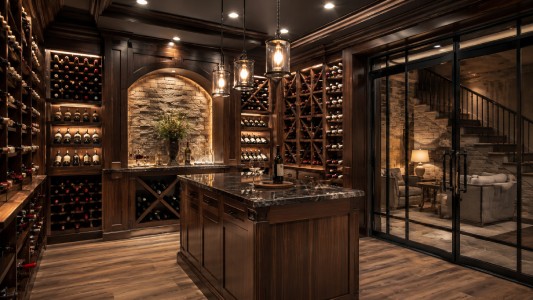
Luxury home design has shifted over the last decade. Homeowners are placing greater value on personalized spaces that support entertaining, collecting, and everyday comfort.
A wine cellar fits naturally into that trend because it combines practical storage with visual impact.
Many Medina homes already have underused basement space that can support a climate-controlled room or custom tasting area.
Instead of unfinished storage zones filled with seasonal boxes, homeowners are transforming basements into polished entertainment spaces with wine displays, bars, lounge seating, and custom cabinetry.
A well-designed wine cellar also contributes to long-term property appeal. Buyers looking at luxury home remodel projects often notice custom millwork immediately.
Features like built-in shelving, display cabinets, and temperature-controlled storage create a strong impression because they feel permanent and thoughtfully planned.
Unlike freestanding wine racks purchased online, a professionally built cellar becomes part of the home itself. The cabinetry, lighting, wood species, and layout are all tailored to the architecture of the property.
What Makes a Custom Wine Cellar Different From Standard Wine Racks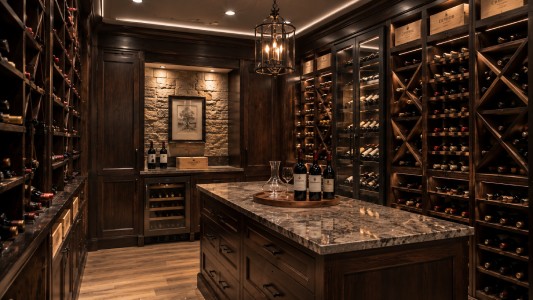
Many homeowners begin with a prefabricated wine rack, then realize its limitations once the collection grows. Standard racks may provide bottle storage, but they rarely address environmental control, organization, or visual presentation.
A professionally built custom wine cellar focuses first on preservation. Wine requires consistent conditions to age correctly.
Industry recommendations generally place ideal storage temperatures around 55°F with humidity levels between 50% and 70%. Poor environmental control can damage corks and affect wine quality over time.
Custom cabinetry also allows storage to match the homeowner’s collection habits. Some collectors prefer label forward displays for easy identification. Others prioritize bulk storage bins for case purchases. A custom layout can accommodate both.
Another major difference is craftsmanship. Custom wood cabinets are built to fit exact dimensions, eliminating wasted space while creating a polished appearance. This level of detail matters in luxury basement ideas and upscale entertaining rooms where storage must feel intentional, not improvised.
The Best Places to Build a Wine Cellar in a Medina Home
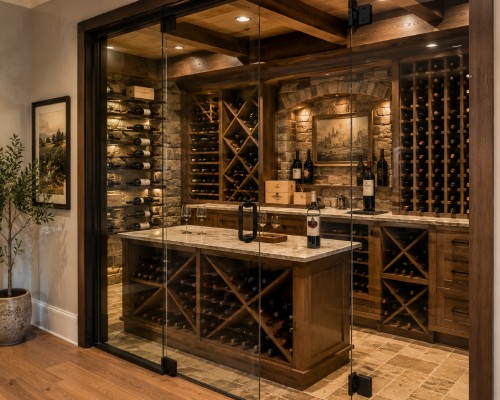
Location plays a major role in the success of a wine cellar project. Some homes naturally support large walk in storage room designs, while others benefit from compact integrated displays.
Basement Wine Cellars
Basements remain one of the most practical locations for wine storage because they offer stable temperatures and additional square footage. Many Medina homeowners combine a basement remodel with a custom wine room to create a complete entertainment area.
A basement wine cellar can include:
- Floor-to-ceiling custom display cabinets
- Built-in shelving for glassware and accessories
- Tasting counters
- Home bar design features
- Glass-enclosed wine rooms
- Accent lighting and wood beams
Dining Room Wine Displays
Modern homes increasingly feature wine storage directly within entertaining spaces. A glass storage room near the dining area creates strong visual impact while keeping bottles accessible during gatherings.
These designs often incorporate:
- Frameless glass doors
- White oak or walnut cabinetry
- LED shelf lighting
- Feature wall cabinets
- Floating bottle displays
Under Stairs Wine Storage
Unused stair cavities offer excellent opportunities for compact wine storage. Custom cabinetry can transform awkward square footage into a striking focal point without requiring a full room addition.
This approach works especially well in homes seeking home storage design solutions that blend style and functionality.
7 Custom Wine Cellar Design Styles That Stand Out
Every wine cellar should reflect the architecture of the home and the personality of the owner. Material choices, lighting, and cabinetry profiles all influence the final appearance.
1. Traditional Wine Cellars
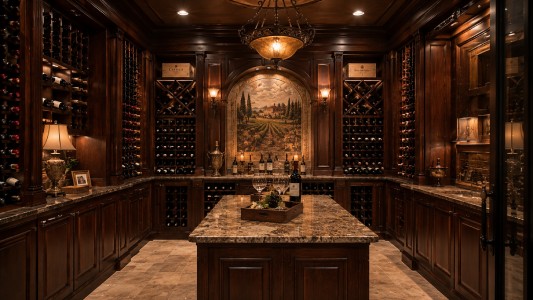
Traditional wine rooms often feature darker hardwoods such as mahogany, walnut, or cherry. Raised panel cabinetry, decorative moldings, and warm lighting create a classic atmosphere suited for older Medina homes.
2.Modern Glass Wine Rooms
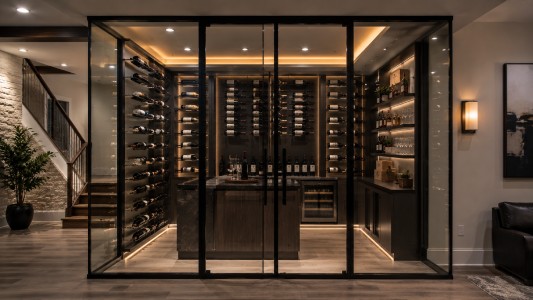
Contemporary wine cellars lean toward clean lines and open visibility. Glass walls paired with matte black steel frames create a dramatic showcase effect. These spaces frequently appear in luxury basement ideas and modern home renovation projects.
3. Rustic Wine Cellars
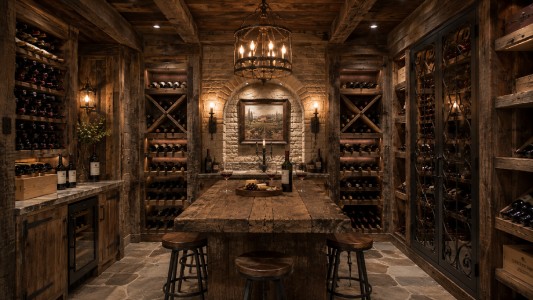
Rustic designs emphasize texture and warmth. Reclaimed wood, stone accents, and wrought iron details work particularly well in farmhouse inspired interiors.
4. Transitional Wine Rooms
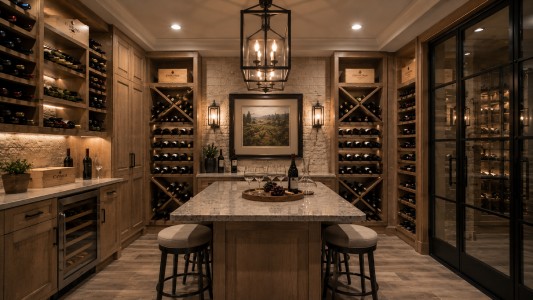
Transitional spaces blend traditional warmth with modern simplicity. This style has become increasingly popular because it adapts well to many home layouts and resale preferences.
5. Contemporary Wood and Metal Displays
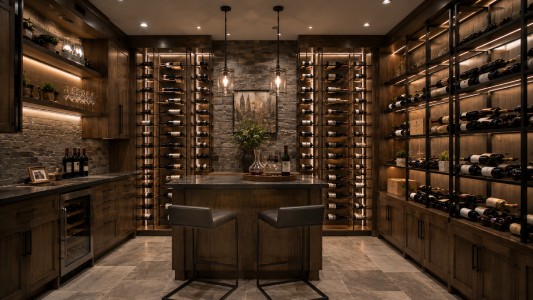
Mixed material wine racks combine hardwood cabinetry with powder-coated steel systems. The result feels sleek without becoming cold or industrial.
6. Tasting Room Inspired Layouts
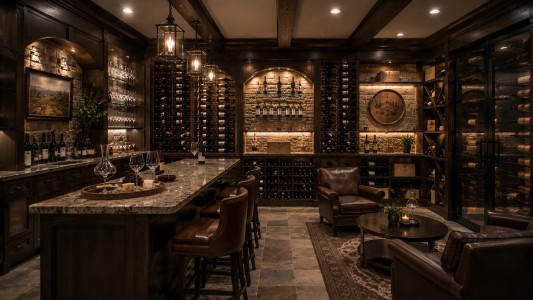
Some homeowners want their wine room to feel more immersive. These layouts often include seating, custom bars, display lighting, and decorative shelving.
7. Hidden Wine Storage
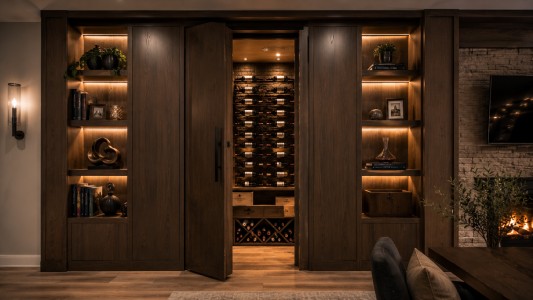
Concealed wine rooms hidden behind cabinetry or feature walls create a more private experience while preserving a clean architectural appearance.
Choosing the Right Wood and Cabinet Finishes for Your Wine Cellar
Wood selection affects both appearance and long-term durability. Temperature and humidity fluctuations can stress lower-quality materials, which is why professional cabinet makers prioritize stable hardwoods and quality joinery.
The table below compares common cabinetry materials used in custom wine cellars.
| Material | Appearance | Best Use | Maintenance |
| White Oak | Clean grain, versatile | Modern and transitional wine rooms | Occasional wood conditioning |
| Walnut | Rich dark tones | Luxury wine displays | Protect from prolonged direct light |
| Maple | Smooth, uniform finish | Painted cabinetry | Easy to clean |
| Mahogany | Deep classic appearance | Traditional wine cellars | Requires humidity stability |
| Rift Cut Oak | Linear grain pattern | Contemporary cabinetry | Low maintenance |
Finish selection also matters. Matte finishes reduce glare and fingerprints, making them popular for modern basement design projects. Stained wood finishes highlight natural grain patterns and create warmth. Painted cabinetry offers flexibility but requires careful surface preparation to resist moisture exposure.
Soft-close hinges and drawer systems are strongly recommended for wine cellar cabinetry because they reduce vibration and improve long-term durability.
Wine Storage Features That Improve Both Function and Appearance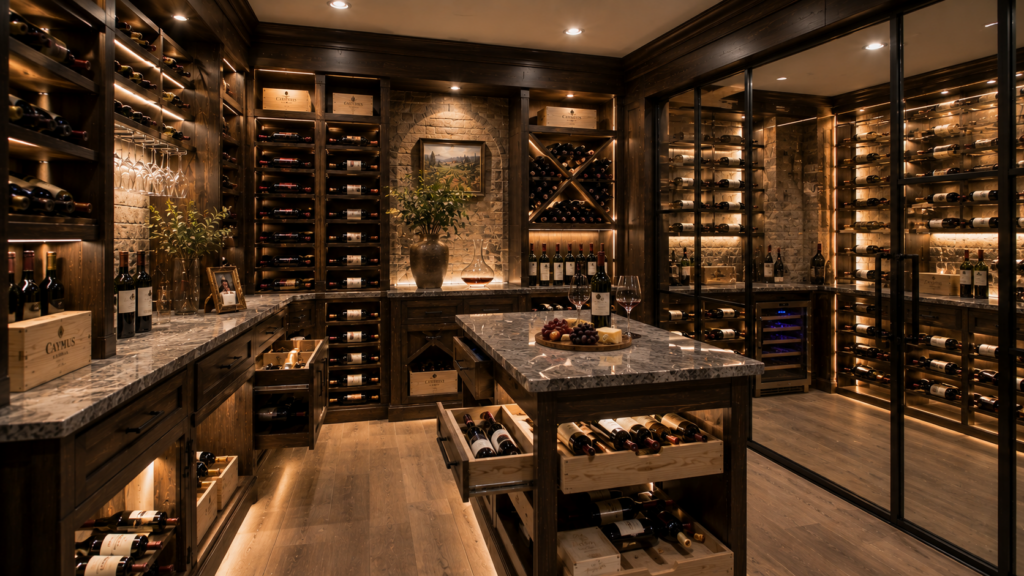
The best wine cellars balance storage capacity with presentation. A room packed tightly with bottles may maximize storage, but it can lose the inviting atmosphere homeowners want for entertaining.
Custom storage cabinets often include:
- Adjustable wine racks
- Display cubbies
- Slide out shelves
- Stemware holders
- Built in refrigeration zones
- Decorative lighting
- Tasting counters
Lighting deserves special attention. UV exposure can damage wine over time, which is why LED systems are preferred. Recessed shelf lighting and indirect cabinet illumination provide visibility without producing excessive heat.
Glass doors also continue to grow in popularity. A custom glass room creates openness while still protecting bottles inside a controlled environment.
Cooling Systems and Climate Control Essentials
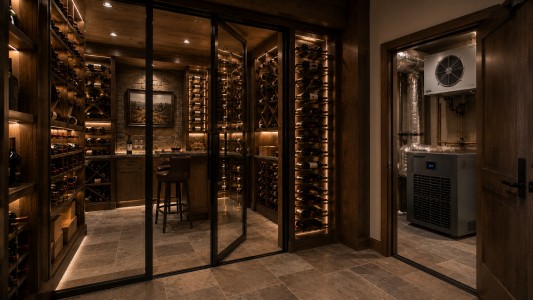
A wine cellar without proper climate control is simply a decorative storage room. Preserving wine requires consistency above all else.
Professional wine cellar construction usually includes:
- Vapor barriers
- Closed-cell insulation
- Dedicated cooling systems
- Humidity management
- Sealed entry doors
There are two primary cooling system types used in residential wine storage.
Self-Contained Cooling Units
These systems are easier to install and work well for smaller spaces. They are commonly used in compact residential cabinetry projects or closet wine rooms.
Split Cooling Systems
Split systems separate the evaporator and condenser, reducing noise and improving flexibility. They are often preferred in larger luxury home remodel projects.
Homeowners should avoid relying on standard HVAC systems for wine storage. Residential heating and cooling systems are designed for human comfort, not long term wine preservation.
Pairing a Wine Cellar With a Custom Home Bar
Many of today’s most successful basement remodel projects combine wine storage with a fully integrated bar area. This creates a complete entertaining environment rather than an isolated storage room.
A custom home bar may include:
- Beverage refrigeration
- Built-in shelving
- Quartz or stone countertops
- Display cabinets
- Ice makers
- Hidden storage
- Floating shelves
- Accent woodwork
When cabinetry is designed together, the wine cellar and bar feel cohesive rather than pieced together over time.
At Top Grain Interiors, custom wood cabinets are built to complement surrounding spaces, whether the project includes shiplap walls, ceiling beams, wainscoting, or decorative trim details.
Small Space Wine Cellar Ideas for Medina Homes
Not every homeowner needs a large walk-in wine room. Some of the most effective projects use compact square footage creatively.
Closet conversions remain one of the most practical options. A spare storage closet can become a temperature-controlled wine room with insulated walls, custom shelving, and glass doors.
Another smart approach involves under-stairs storage. Angled cabinetry layouts can follow stair geometry while creating dramatic bottle displays.
Wall-mounted wine displays also work well in dining areas, kitchens, and basement lounges. These installations often combine custom display cabinets with floating shelves and integrated lighting.
Small wine storage projects still benefit from professional craftsmanship because precision matters when every inch counts.
The Custom Wine Cellar Design Process With a Cabinet Maker
Every successful wine cellar begins with planning. An experienced cabinet maker evaluates both the collection and the space before recommending layouts or materials.
The process typically includes:
- In-home consultation
- Space measurement and planning
- Collection size evaluation
- Material and finish selection
- Cooling and lighting coordination
- Fabrication
- Installation and finishing
During the design phase, homeowners should discuss:
- Current bottle count
- Future collection growth
- Preferred display styles
- Entertaining habits
- Lighting preferences
- Budget expectations
Custom cabinetry projects require coordination between millwork professionals, electricians, HVAC specialists, and installers. Proper sequencing prevents delays and protects finish quality during installation.
Common Wine Storage Mistakes That Can Damage Your Collection
Even expensive wine collections can suffer from preventable storage mistakes.
- Inconsistent Temperatures – Frequent fluctuations stress wine and accelerate aging problems.
- Low Humidity – Dry environments can shrink corks, allowing oxygen into bottles.
- Excessive Light Exposure – Direct sunlight and strong UV lighting may damage wine quality.
- Poor Ventilation – Stale air and trapped moisture can affect both the wine and cabinetry materials.
- Weak Shelving Systems – Cheap racks may sag or fail under weight over time.
- Improper Bottle Organization – Crowded layouts make collections difficult to access and maintain.
Professional wine cellar builders design around these risks from the start.
Why Custom Cabinetry Makes a Major Difference in Wine Cellar Projects
Cabinetry quality affects more than appearance. It directly influences storage performance, durability, and daily usability.
Custom cabinetry allows:
- Exact fitment
- Better material selection
- Improved load support
- Cleaner architectural integration
- Personalized layouts
- Greater design flexibility
High-end cabinetry also ages more gracefully. Solid wood construction and quality finishes hold up better in controlled humidity environments than mass-produced alternatives.
Many homeowners also appreciate the continuity created when wine cellar cabinetry matches nearby kitchens, bars, mudrooms, or built-in shelving throughout the home.
What Medina Homeowners Should Look for in a Wine Cellar Builder
A wine cellar combines cabinetry, climate management, finish carpentry, and interior design. Choosing the right builder matters.
Homeowners should look for:
- Proven custom cabinetry experience
- Detailed project portfolios
- Knowledge of wine storage conditions
- Finish carpentry expertise
- Strong communication throughout the project
- Full-service design and installation support
It also helps to work with a local company familiar with Medina homes and regional construction practices.
Top Grain Interiors has served Medina and surrounding Ohio communities since 2003, providing personalized custom cabinetry and interior woodwork solutions designed around each client’s space and lifestyle.
Frequently Asked Questions About Custom Wine Cellars
How much space do I need for a custom wine cellar in Medina?
A wine cellar can be as compact as a converted closet or as large as a dedicated basement room. The ideal size depends on collection goals, storage needs, and entertaining preferences.
What temperature should a wine cellar maintain?
Most professionals recommend keeping wine around 55°F with controlled humidity between 50% and 70%.
Can a wine cellar be added during a basement remodel in Medina?
Yes. Many Medina homeowners include wine storage during a basement remodel because it allows electrical, insulation, and cooling systems to be planned together.
Are glass wine rooms safe for wine storage?
Yes, when they are properly insulated and climate-controlled. Modern insulated glass systems are commonly used in luxury residential cabinetry projects.
What wood is best for custom wine cellar cabinetry?
White oak, walnut, maple, and mahogany are all popular choices. The right material depends on the desired style and environmental conditions.
How long does a custom wine cellar project take in Medina?
Smaller projects may take several weeks, while large custom wine rooms with cooling systems and specialty millwork can take several months from design through installation.
Final Words – Create a Wine Cellar That Becomes the Centerpiece of Your Home
A thoughtfully designed wine cellar does more than store bottles. It creates a dedicated space for collecting, entertaining, and enjoying craftsmanship that feels personal to the home.
From custom display cabinets and built-in shelving to complete basement entertainment spaces, every detail should support both preservation and everyday use.
Quality materials, proper climate control, and experienced craftsmanship all play a role in protecting the collection for years to come.
For Medina homeowners looking to invest in premium custom cabinetry and luxury home storage, a professionally designed wine cellar offers lasting value that extends far beyond appearance alone.
Contact us today for more info!