
You invite a few friends over, pour a drink, and then it happens. Bottles are scattered across the kitchen counter, glassware is tucked into random cabinets, and you find yourself stepping around guests just to mix a simple cocktail.
What should feel relaxed starts to feel cramped and impaired.
That frustration builds over time. You want a space that feels intentional, a place where everything has its spot and hosting feels effortless. Instead, you are working around your home rather than enjoying it.
A well-designed home bar changes that completely. With the right layout, custom cabinetry, and thoughtful storage, your space becomes a natural gathering point.
This guide walks you through proven home bar designs and the craftsmanship behind them, so you can build something that works as good as it looks.
Why More Medina Homes Are Adding Custom Bars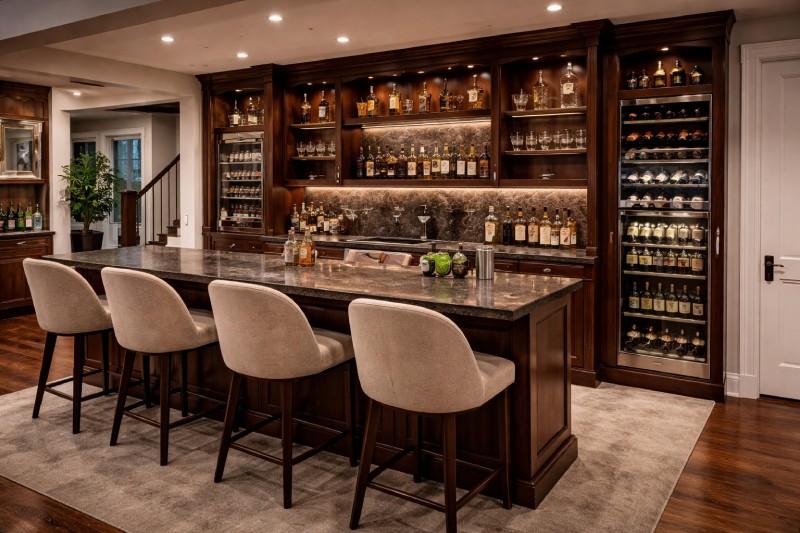
Homeowners in Medina are putting more thought into how they entertain at home. Instead of relying on kitchen counters or temporary setups, many are investing in a custom home bar that becomes part of the home’s structure. It is not just about drinks, it is about creating a destination inside the house.
A built-in bar brings order to what is often a scattered setup. Bottles, glassware, and tools all have dedicated storage.
With proper bar cabinets and shelving, everything stays accessible without clutter. This alone changes how a space feels during gatherings.
There is also a strong resale benefit. Buyers consistently respond to well-designed built-ins, especially when paired with features like a wine bar or beverage center.
These additions signal quality and thoughtful planning, which can set a home apart in a competitive market.
From a craftsmanship standpoint, custom bars allow full control over proportions, finishes, and integration.
At Top Grain Interiors, each project is designed to match the home’s architecture, whether that means traditional woodwork or a clean modern home bar aesthetic.
What Defines a Well-Designed Home Bar
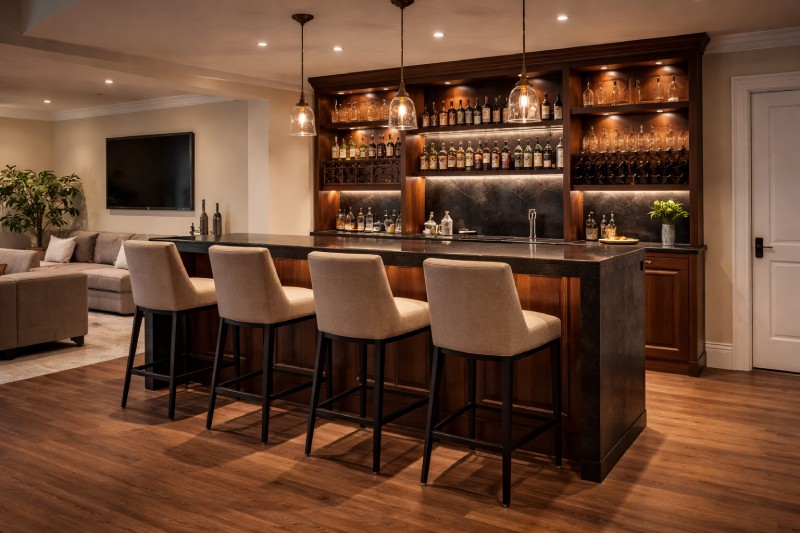
A great bar is not defined by size. It is defined by how well it works. Before exploring specific home bar ideas, it helps to understand the fundamentals that separate a basic setup from a truly functional space.
Layout That Matches the Space
Every home has its own rhythm. A basement bar may allow for a full layout with seating, while a dining room installation might require a more compact footprint. The key is designing within the space, not forcing a layout that does not belong.
Built-in configurations are often the most effective. A built-in bar anchors the design and allows cabinetry to be tailored wall to wall. This avoids wasted space and creates a finished, architectural look.
Storage That Works for Real Use
Storage should reflect how you actually entertain. That means planning for:
- Glassware of different sizes
- Bottles and mixers
- Tools and accessories
- Hidden storage for less-used items
Custom home bar cabinets solve this by adjusting shelf height, depth, and internal organization. A well-planned liquor cabinet keeps everything visible and easy to reach.
Flow and Accessibility
A bar should support movement, not interrupt it. There should be enough clearance behind the counter for preparation, and enough space in front for guests to gather comfortably.
If seating is included, the bar counter height and overhang need to be precise. Poor proportions here can make the space feel awkward. Good design keeps everything balanced and intuitive.
9 Home Bar Designs That Fit Medina Homes
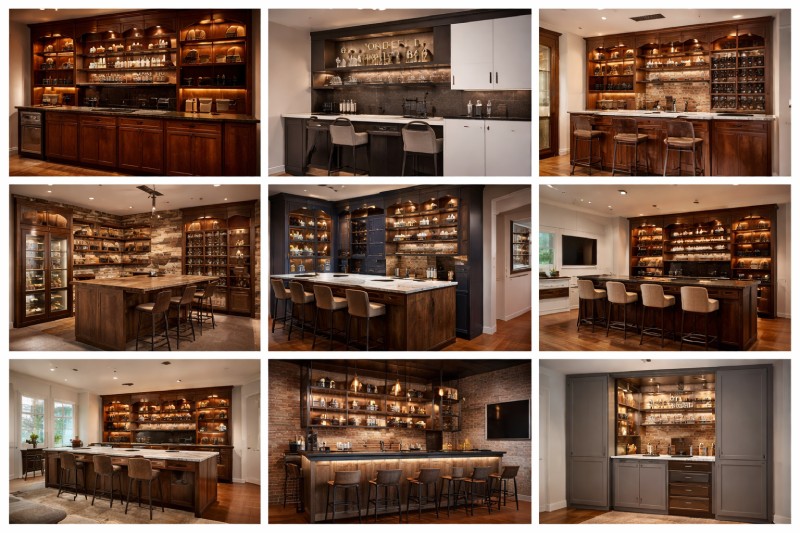
Design style should reflect both the home and the homeowner. These nine home bar designs offer distinct directions, each with its own advantages.
1. Classic Wood Built-In Bar
This style focuses on rich wood tones, raised panel cabinetry, and detailed trim. It pairs well with traditional homes and creates a warm, inviting atmosphere. Custom millwork allows for deep storage and integrated display shelving.
2. Modern Minimalist Bar
Clean lines, flat-panel cabinets, and subtle hardware define this look. A modern home bar often uses matte finishes or high-gloss lacquer. Lighting plays a major role, especially under-cabinet LED strips that highlight glassware.
3. Rustic Farmhouse Bar
Reclaimed wood, open bar shelving, and natural textures create a relaxed feel. This style works well in homes with exposed beams or shiplap walls. It is less formal, but still benefits from precise cabinetry construction.
4. Wine-Focused Bar with Cellar Integration
For wine enthusiasts, combining a bar with dedicated storage is key. This may include a built-in wine fridge or a full custom cellar. Proper temperature control protects the collection while keeping it accessible.
5. Compact Corner Bar
A small home bar can still deliver strong functionality. Corner installations use otherwise unused space and rely on smart cabinetry layouts. Pull-out shelves and vertical storage help maximize capacity.
6. Basement Entertainment Bar
A basement bar often serves as a full entertainment hub. This can include seating, a beverage center, and even integrated media. With fewer space constraints, the design can be more expansive.
7. Open-Concept Kitchen Bar Extension
Extending kitchen cabinetry into a bar area creates continuity. Matching finishes and materials help the space feel unified. This is a strong option for homeowners who want a bar without dedicating a separate room.
8. Industrial Style Bar
Metal accents, darker finishes, and bold hardware define this look. It pairs well with modern or loft-style interiors. Durable materials are important here, especially for high-use surfaces.
9. Hidden or Convertible Bar
For those who prefer a cleaner look, a concealed bar is a smart choice. Cabinet doors or sliding panels hide the bar when not in use. Inside, the space can still function as a full wet bar or dry bar.
Custom Cabinetry: The Backbone of Every Great Bar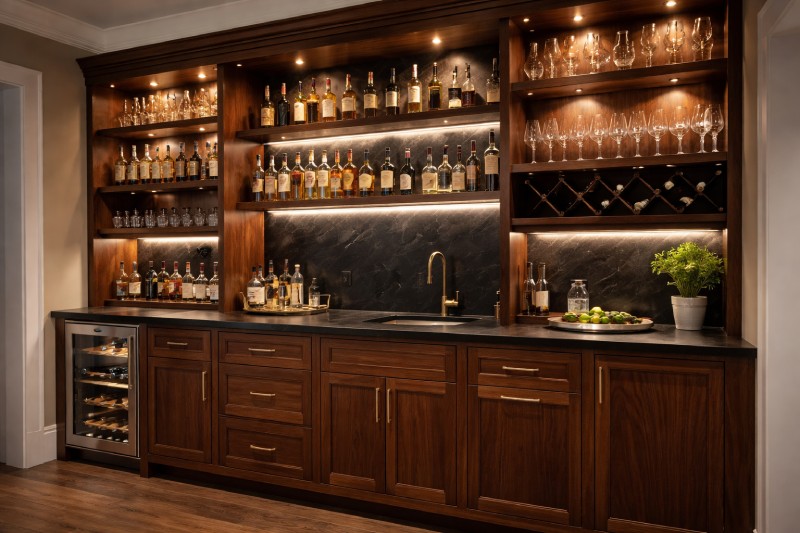
Behind every successful home bar design is strong cabinetry. This is where craftsmanship matters most.
Why Stock Cabinets Fall Short
Stock cabinets are built for general use, not for the specific demands of a bar. Shelf heights may not fit bottles, and depths often waste space. Over time, this leads to clutter and frustration.
Benefits of Fully Custom Millwork
Custom cabinetry allows every dimension to be adjusted. This includes:
- Shelf spacing for bottles and glassware
- Integrated racks and dividers
- Hidden storage compartments
A custom home bar built this way feels intentional and functions without compromise.
Design Details That Make a Difference
Features like soft-close hinges, full-extension drawer slides, and integrated lighting improve daily use. Frameless cabinets offer a clean, modern look, while inset cabinetry provides a more traditional feel with precise door alignment.
Proper finishing is just as important. A durable lacquer or conversion varnish protects the wood and makes cleaning easier.
Integrating Wine Storage Into Your Bar Design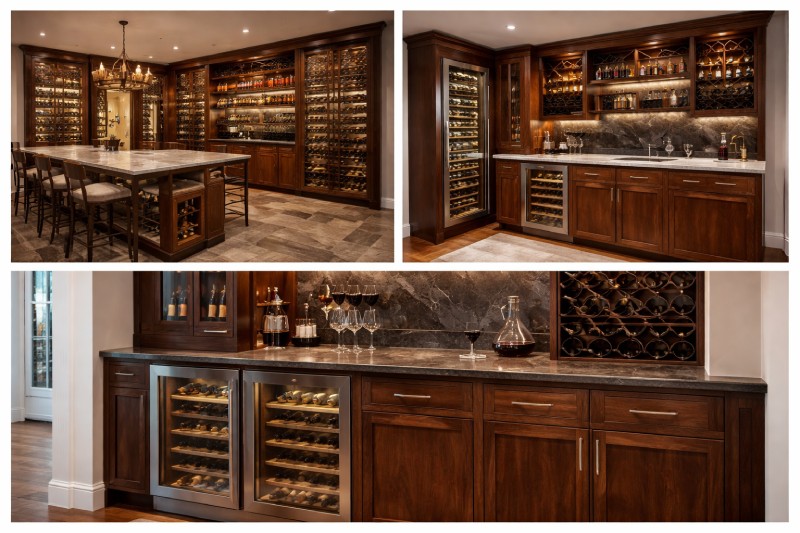
A bar and wine storage often go hand in hand. The question is how far to take it.
When a Wine Cellar Makes Sense
If you collect wine regularly, a dedicated cellar offers better long-term storage. Temperature and humidity control protect the integrity of each bottle.
Built-In Wine Racks vs Full Cellars
For smaller collections, built-in racks within the bar may be enough. These can be designed into home bar cabinets without taking up extra space.
Temperature and Preservation Considerations
A wine fridge is often the most practical solution. It keeps wine at a consistent temperature and can be integrated into lower cabinetry. Proper ventilation must be planned during installation to avoid overheating.
Home Bar Material Choices That Shape the Look and Longevity
Materials define both appearance and durability. Choosing the right combination is key to a lasting result.
Wood Species and Finishes
Common choices include:
- Oak for durability and visible grain
- Maple for a smoother, more uniform finish
- Walnut for deeper tones and a premium look
Matte finishes tend to hide fingerprints, while gloss finishes reflect light and feel more contemporary.
Countertop Options
| Material | Best For | Key Benefit |
| Quartz | High-use bars | Non-porous and easy to maintain |
| Granite | Natural stone appeal | Heat and scratch resistance |
| Butcher Block | Warm, rustic designs | Adds character, requires maintenance |
Hardware and Accents
Handles and pulls should match the overall style. Brushed brass adds warmth, while matte black creates contrast in modern spaces.
Lighting Elements
Lighting shapes the mood. Under-cabinet lighting improves visibility, while backlit shelves highlight glassware and bottles.
Smart Features That Elevate Functionality
A well-built bar should feel effortless to use. The right features make that possible.
Integrated Appliances
A beverage center or under-counter fridge keeps drinks chilled without taking up space. Ice makers are another popular addition for frequent hosts.
Hidden Storage Solutions
Pull-out trays and vertical dividers help organize smaller items. These features are especially useful in a small home bar.
Built-In Seating and Comfort
If seating is included, spacing matters. Standard bar height is around 42 inches, with enough overhang for comfort. Footrests can add support during longer gatherings.
Technology Add-Ons
Lighting controls and sound systems can be integrated into the design. This keeps controls accessible without cluttering the space.
Designing for Your Lifestyle, Not Just the Look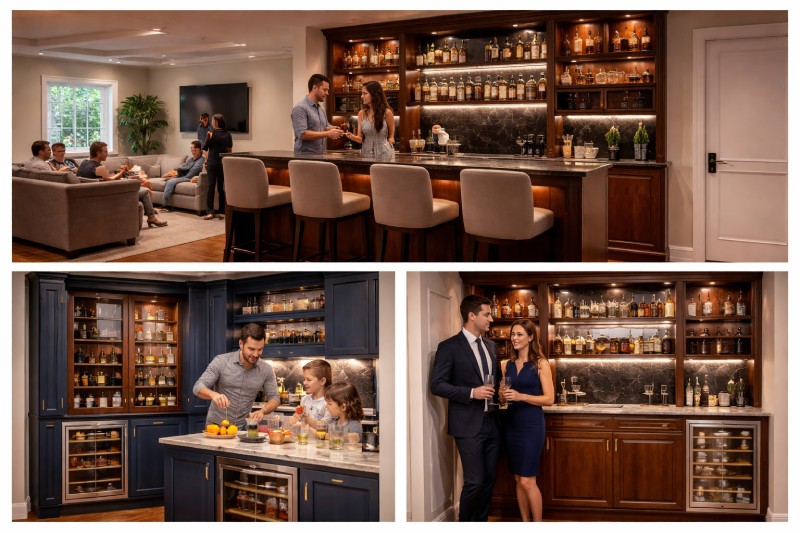
A bar should reflect how you live, not just how it looks in photos.
Casual Hosting vs Formal Entertaining
If you host often, prioritize durability and easy access. For occasional use, you may focus more on visual impact and display.
Family-Friendly vs Adult-Focused Spaces
Homes with children may benefit from concealed storage or lockable cabinets. This keeps the space safe without sacrificing design.
Frequency of Use
Daily-use bars need materials that can handle wear. Occasional-use bars can lean more toward decorative finishes and open shelving.
Common Design Mistakes to Avoid
Even well-intentioned designs can fall short without proper planning.
- Oversizing the bar for the space
- Ignoring storage needs
- Poor lighting placement
- Choosing style over function
- Skipping professional input
Each of these issues can affect long-term satisfaction. Working with experienced craftsmen helps avoid costly corrections later.
The Custom Design Process: From Idea to Installation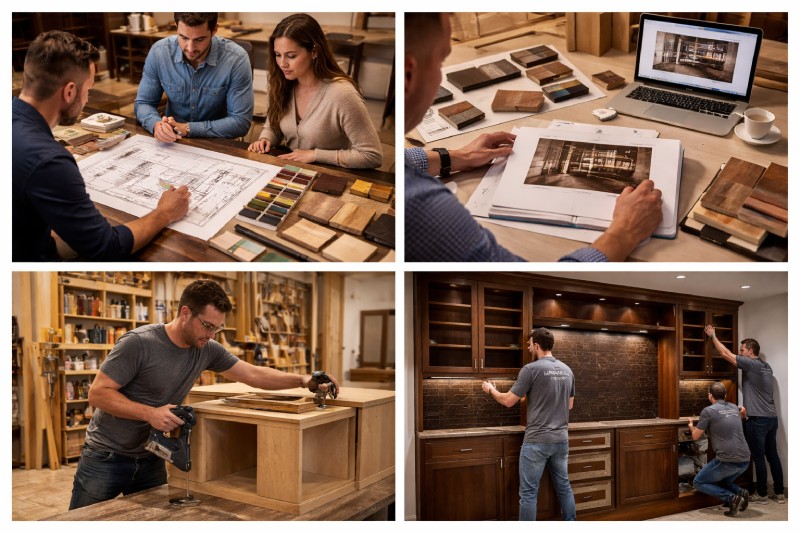
At Top Grain Interiors, the process is built around precision and communication.
Initial Consultation and Space Evaluation
The first step is understanding how the space will be used. Measurements, layout, and existing finishes are all reviewed.
Design and Material Selection
Clients are guided through layout options, wood species, finishes, and hardware. This ensures the design aligns with both style and function.
Craftsmanship and Fabrication
Cabinetry is built with attention to detail, using high-quality materials and proven joinery methods. Each piece is made to fit the space exactly.
Installation and Finishing Touches
Installation completes the process. Care is taken to ensure alignment, fit, and finish meet professional standards.
Why Work with a Local Medina Cabinet Maker
Local expertise brings practical advantages. Homes in Medina often have unique layouts that benefit from custom solutions.
Working with a local team allows for direct communication and faster adjustments during the project. It also ensures accountability, from design through installation.
Top Grain Interiors has been serving the area since 2003, with a focus on craftsmanship and long-term client relationships. Each project reflects that experience.
FAQs About Home Bar Designs
What is the difference between a wet bar and a dry bar?
A wet bar includes a sink and plumbing, which allows for easier cleanup and drink preparation. A dry bar does not have plumbing and focuses on storage and serving.
How much space do I need for a home bar in Medina?
It depends on the design. A small home bar can fit within a few feet of wall space, while a full basement bar may take up an entire section of the room.
Are custom home bar cabinets worth the investment?
Yes, especially for long-term use. Custom cabinets provide better storage, fit, and durability compared to stock options.
What is the best countertop material for a home bar in Medina?
Quartz is a popular choice because it resists stains and requires minimal maintenance. Granite and wood are also strong options depending on the design.
Can I add a wine fridge to an existing bar?
In many cases, yes. It requires proper measurements and ventilation planning. A professional can confirm if your current setup can support it.
Final Words – Build a Space That Brings People Together
A well-designed home bar is more than a feature, it becomes part of how you live and entertain.
With the right layout, materials, and craftsmanship, it turns everyday moments into something more intentional.
If you are planning a custom home bar in Medina, working with experienced professionals makes all the difference.
From the first sketch to the final installation, every detail should serve both form and function.
Get in touch today, and let’s build your ideal home bar.