
A modern mudroom should make everyday routines easier, not just add more storage.
The right layout gives shoes, coats, bags, keys, and seasonal gear a practical place without making the entry feel crowded.
Good mudroom design also considers how people actually move through the space. Cabinet depth, bench seating, open hooks, closed storage, durable surfaces, and lighting all need to work together.
These modern mudroom ideas cover practical ways to plan the layout, choose cabinetry, add lockers and bench storage, select durable finishes, and make better use of both large and compact entry spaces.
1. Let Daily Traffic Shape the Modern Mudroom Layout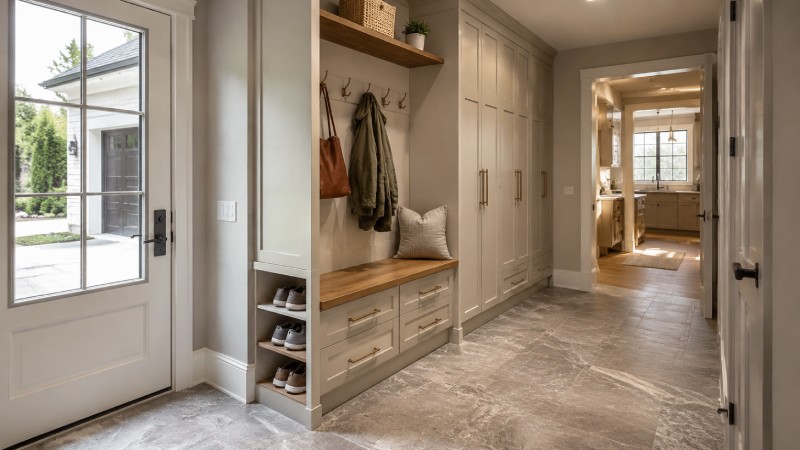
A strong mudroom design starts with movement, not a cabinet catalog. The cabinet plan should follow the way people enter, unload, remove shoes, and continue into the home.
Map the Route From the Door
Identify the entrance the household uses most and list what comes through it. Place shoe storage nearest the exterior door, followed by coat storage, bag hooks, and a small drop zone for keys or mail.
A narrow mudroom entryway may need shallow entryway cabinets, while a wider room can accept deeper storage lockers.
Verify Clearances Before Fabrication
Measure door swings, trim, vents, outlets, ceiling changes, and finished floor height. Drawers and doors must not block the main walking route.
The Architectural Woodwork Institute treats design, fabrication, finishing, and installation as connected parts of quality casework.
A cabinetmaker should confirm project-specific requirements before approving shop drawings.
2. Combine Open Mudroom Storage With Closed Cabinets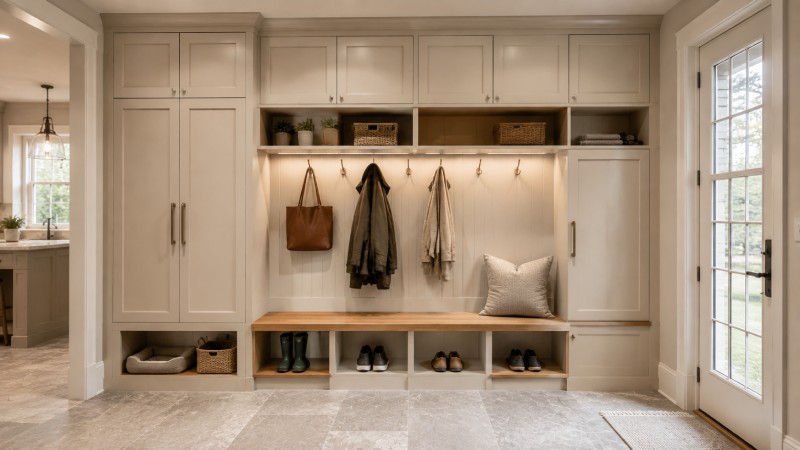
Modern mudroom storage works best when quick access and concealment are planned separately. Daily gear needs to be close at hand, while seasonal items need a place behind doors.
Keep Everyday Gear in the Open
Use coat hooks, wall hooks, mudroom shelving, and storage cubbies for items that leave the house most days.
Hooks should fasten into framing or a properly built cabinet back, not only a thin decorative panel. Open storage still needs limits, since displaying every coat, helmet, and bag can make the entry look crowded.
Hide Bulk Behind Mudroom Cabinet Doors
Closed mudroom cabinets suit off-season clothing, cleaning supplies, and spare items. Upper cabinets use wall height without taking more floor area, while tall cabinets hold coats and larger gear.
Let damp items dry before closing them inside. Top Grain Interiors’ guide to mudroom storage cabinets covers more storage options.
3. Give Each Person a Dedicated Mudroom Locker
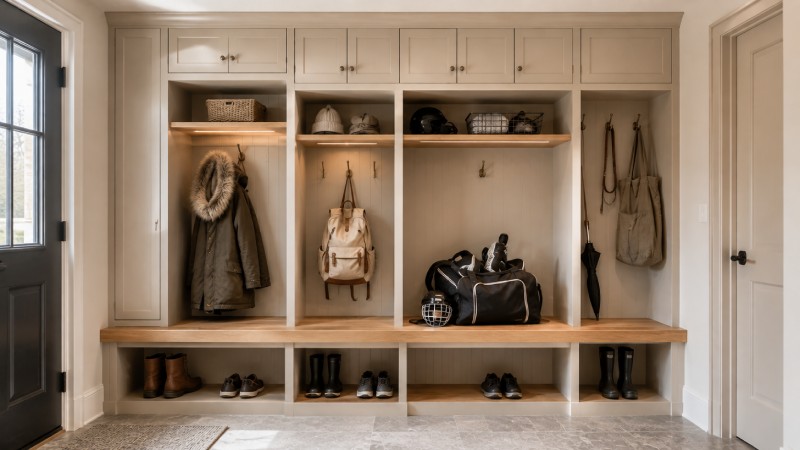 Shared storage often becomes unclaimed storage.
Mudroom lockers create clear ownership while keeping one consistent cabinet composition across the wall.
Size Locker Bays Around Their Users
An adult winter coat, a child’s backpack, and a hockey bag need different openings. Measure bulky items and decide whether they will hang, sit on mudroom shelving, or rest below the bench. Children’s hooks should be reachable without climbing, while adult sections need enough height for longer coats.
Allow Locker Storage to Change
Adjustable shelves help custom cabinets respond as children grow or hobbies change. Heavy equipment belongs lower, where it is safer to lift. Keep dog leashes, umbrellas, reusable bags, and guest coat storage in a shared section.
A clear common zone stops personal storage lockers from turning back into one general pile.
4. Turn the Mudroom Bench Into a Complete Shoe Station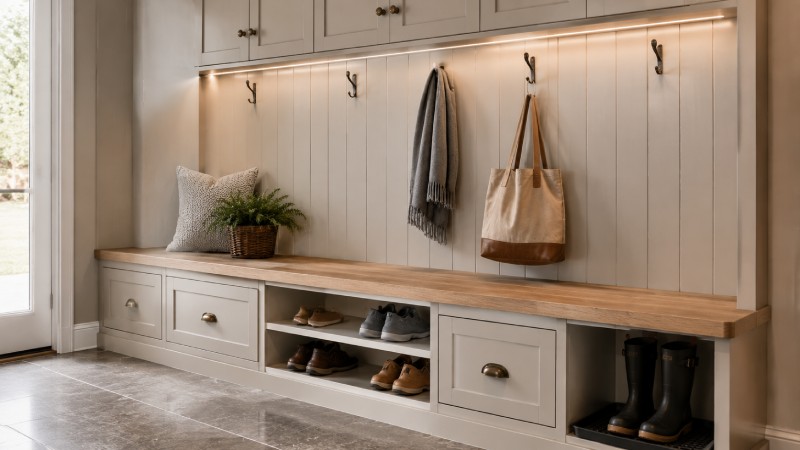
A mudroom bench marks the point where outdoor footwear comes off. It should provide safe seating, suitable shoe storage, and surfaces that can handle grit and moisture.
Choose the Right Bench Structure
A built-in bench supported by cabinet bases can combine seating with drawers or mudroom cubbies. Its structure must be designed for seated use.
A floating bench leaves the floor easy to clean and suits a narrow entry, but its mounting must connect to suitable structure inside the wall.
Follow the maker’s load guidance and investigate any movement promptly.
Match Storage to the Footwear
- Open cubbies offer quick access and airflow. Vacuum grit regularly.
- Pull-out drawers conceal footwear. Keep slides free of sand.
- Lift top storage holds light, bulky items. Use a proper lid stay and check hinge screws.
- Open floor space leaves room for wet boots on a removable tray.
Soft-close hardware reduces slamming and suits a busy family mudroom when rated for the intended load. Keep tracks clean, tighten loose fasteners, and replace damaged parts rather than forcing them.
5. Choose Modern Mudroom Cabinets With Quiet Lines and Warm Materials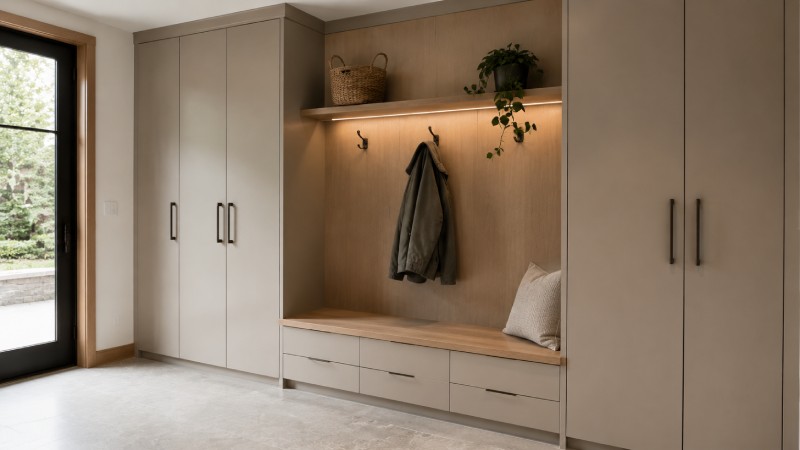
Modern cabinets gain character from proportion, consistent gaps, wood grain, color, and restrained hardware. Simple does not mean generic.
Compare Cabinet Construction and Finish Choices
| Choice | Advantage and best use | Care needs |
| Frameless cabinet | Broad interior access and close door spacing for compact modern mudroom built-ins | Keep hinges clean, correct uneven gaps, and dry exposed edges promptly |
| Flat panel door | Calm, easy-to-wipe surface for small rooms and contemporary homes | Use a soft damp cloth, then dry edges and corners |
| Slim Shaker door | Light architectural detail that suits modern and traditional millwork | Clean the inner frame gently and repair finish chips before moisture enters |
| Matte painted finish | Soft appearance that tends to show fewer fingerprints than gloss | Use approved mild cleaner, avoid abrasive pads, and dry joints |
| Clear-coated oak or oak veneer | Warm grain for bench tops, doors, and tall cabinets | Remove water quickly and follow the coating maker’s care directions |
Frameless cabinetry provides direct interior access and close door spacing. Flat panel doors create the calmest look, while slim Shaker doors connect well with nearby kitchen cabinets or traditional trim.
A custom shop can adjust rail widths and edge details to suit the house.
Pair painted cabinets with a natural wood mudroom bench for warmth. View color and oak samples beside the flooring and under the planned lighting.
The KCMA quality program assesses structure, doors, drawers, and finish performance for qualifying products. Those categories provide useful questions even when custom work does not carry the certification.
6. Pair Wainscoting or Shiplap With Durable Mudroom Surfaces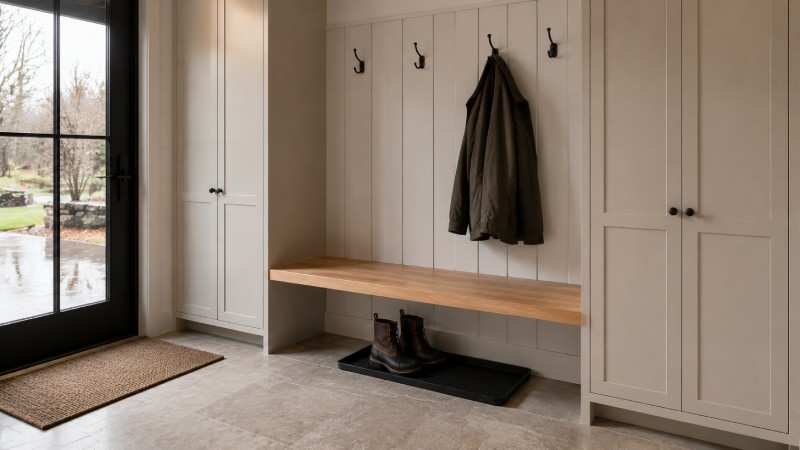
The wall behind the hooks and the floor beneath wet boots must handle touch, dirt, water, and repeated cleaning. Their details should be planned with the cabinetry.
Finish the Wall Behind the Bench
Wainscoting protects lower walls and can repeat the proportions of entryway cabinets. Painted shiplap adds narrow shadow lines behind coat hooks and open shelving. Line the panel pattern up with locker widths where possible.
Use cleaners approved for the paint and dry joints where moisture can sit. Top Grain Interiors offers custom wainscoting and shiplap alongside cabinet work.
Select Mudroom Flooring for Wet Conditions
Tile flooring is a practical choice for mudrooms because it can handle routine cleaning from dirt, moisture, and salt. Choose tile intended for floor use and suitable for areas where wet footwear is common.
For better traction, compare the manufacturer’s slip resistance ratings and installation recommendations before choosing a tile.
Cabinet bases and trim should be protected from standing water. Confirm finished floor height, door clearances, and mat placement before installation.
7. Plan Mudroom Lighting Before Cabinet Fabrication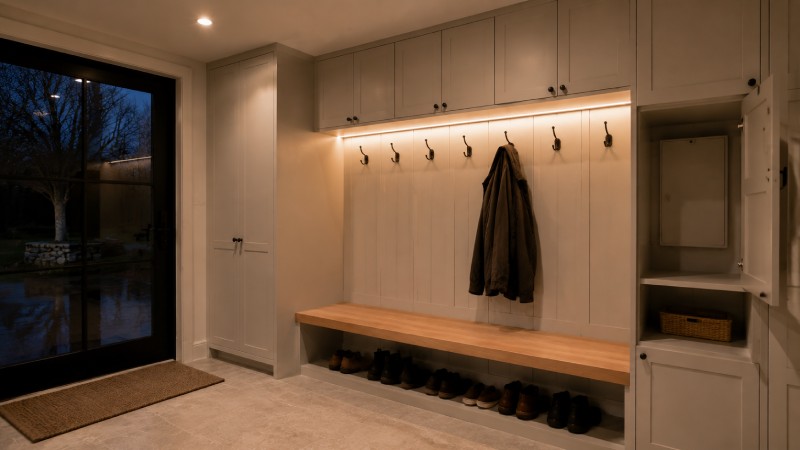
Upper cabinets can cast a shadow over a mudroom bench. Lighting positions belong in the cabinet drawings, not in a last minute discussion during installation.
Layer General and Task Lighting
General ceiling light should cover the walking area. LED lighting beneath upper cabinets can make it easier to find gloves, read labels, and clean the bench.
A suitable channel and diffuser soften visible light points and reduce harsh reflections on painted surfaces. ENERGY STAR reports that LEDs can produce light with far less electricity than incandescent sources.
Keep Electrical Parts Accessible
Compare the proposed lamp color with actual cabinet samples because oak, white paint, gray, and green can change under different light. Plan serviceable locations for drivers, wiring, switches, and outlets.
A qualified electrician should complete electrical work to current local requirements, while the cabinetmaker confirms clearances before fabrication.
8. Adapt Modern Mudroom Ideas to Small and Shared Spaces
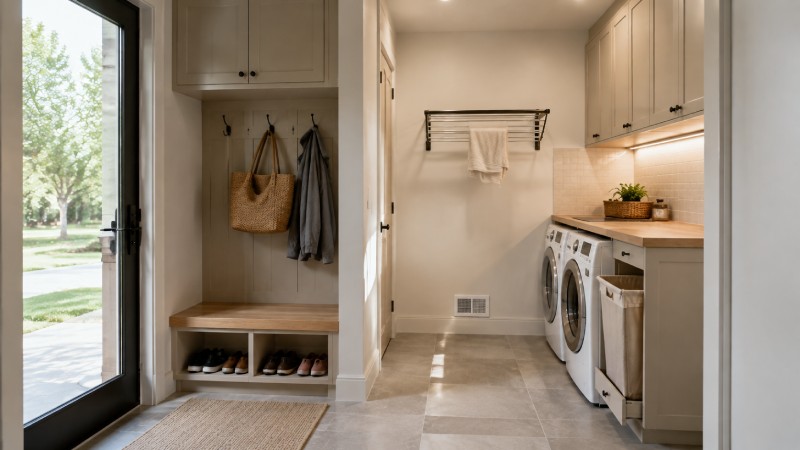
A dedicated room is useful, but it is not required. One wall, an alcove, or part of a laundry room can hold a convincing modern mudroom when each inch has a clear purpose.
Build a Small Mudroom Along One Wall
Combine shallow entryway storage with wall hooks, a compact shoe bench, and upper cabinets. A short floating bench preserves visible floor area. If swinging doors narrow the passage, keep selected sections open.
A mudroom closet can also become a hall tree or cabinet wall, but wiring, plumbing, vents, and structure must be checked first.
Separate Entry and Laundry Tasks
In a laundry mudroom, keep coats and shoe storage near the exterior door. Place detergents, hampers, and laundry room storage closer to the appliances. Cleaning products should follow their label directions and stay away from children’s open mudroom cubbies.
Matching doors and finishes make the shared room feel coherent without mixing its contents.
Top Grain Interiors can design laundry cabinets, folding counters, drying racks, and an ironing station alongside mudroom lockers and benches.
Relevant professionals must review appliance, electrical, plumbing, ventilation, and clearance requirements.
Frequently Asked Questions About Modern Mudroom Design
What Makes a Mudroom Look Modern?
Simple cabinet fronts, controlled color, consistent gaps, and a planned balance of open and closed storage create a modern appearance.
Flat panel or slim Shaker doors both work. Natural wood, simple hardware, and focused lighting add warmth without making the room busy.
Are Open Cubbies or Closed Mudroom Cabinets Better?
Open cubbies and hooks suit dry gear used most days. Closed cabinets suit seasonal items and objects that create visual clutter. Most households need both, with damp coats and footwear allowed to dry before storage behind a door.
Can a Small Entryway Become a Functional Mudroom?
Yes, if cabinet depth and door operation suit the passage. Shallow entryway cabinets, wall hooks, upper shelving, and a compact entryway bench can create a useful drop zone.
Custom sizing helps around casing, corners, vents, and uneven walls.
What Is the Best Material for a Mudroom Bench?
The answer depends on construction, finish, expected moisture, and use. Properly coated hardwood provides a durable seat with visible grain.
A painted bench can match the cabinets but may show edge chips sooner. Ask how the substrate, supports, joinery, and coating are intended to handle seated use and routine cleaning.
Final Words – Create a Modern Mudroom Built for Daily Life
The best entryway ideas begin with the door people use, the items they carry, and the point where wet gear needs to stop.
From there, mudroom cabinets, lockers, a storage bench, durable surfaces, and lighting can be planned as one complete room.
Top Grain Interiors has served homeowners in Medina, Wadsworth, and surrounding Ohio communities since 2003.
The team provides personalized mudroom, laundry room, and closet design, custom cabinetry, woodwork, and installation from the first plan through the finished fit.
Contact Top Grain Interiors to discuss your space, storage needs, style, and project-specific requirements.