
Picture this: backpacks on the floor, jackets piled over one another, and shoes trailing into the kitchen. It’s the scene Medina families know all too well.
The mudroom becomes the default drop zone, but without structure, it quickly turns chaotic.
Now imagine every bag, boot, and umbrella having a place. Each child knows exactly where their coat goes. Wet gear never touches the hardwood.
That’s the magic of a properly designed mudroom locker system – it doesn’t just clean up clutter, it keeps it away for good.
At Top Grain Interiors, we’ve spent years helping homeowners in Medina rethink their mudroom layout with smart, custom-built locker systems.
This guide breaks it all down: what works, what doesn’t, and how to get a design that fits your space, your stuff, and your style.
Understanding the Medina Home Context
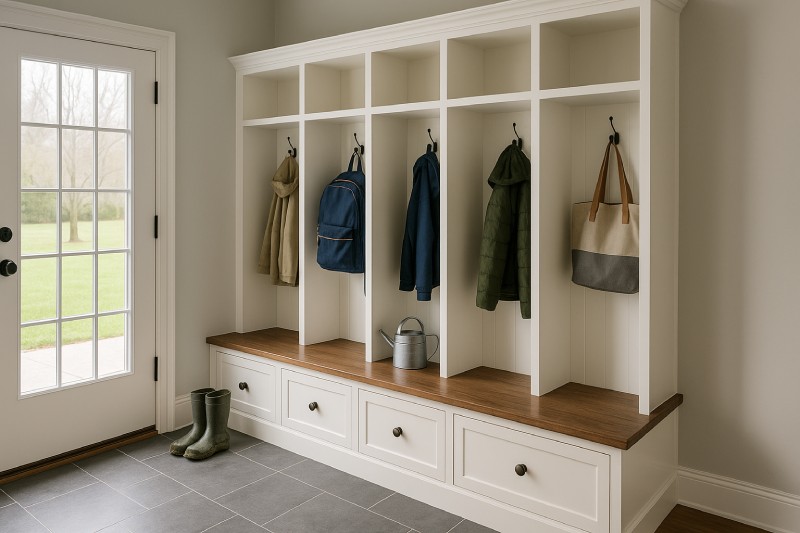
Medina homes often strike a balance between historic charm and the needs of growing families and active lifestyles.
Whether it’s snowy boots from winter sports, backpacks from school drop-offs, or garden tools from weekend projects, your mudroom sees it all.
That means your locker setup needs to account for year-round gear. In this area, spring rains and Ohio winters require moisture-resistant materials and layouts that prevent wet items from coming into contact with the floor.
Homes here also come with a range of architectural styles from century homes to modern new home builds, which affects how built-ins need to be designed to match the interior trim, ceiling lines, and baseboards.
Customization is critical. Stock units rarely fit odd nooks, sloped walls, or deep-set laundry areas.
That’s why local homeowners turn to shops like ours to design mudroom lockers that feel like part of the home, not furniture squeezed into a hallway.
Locker System Fundamentals
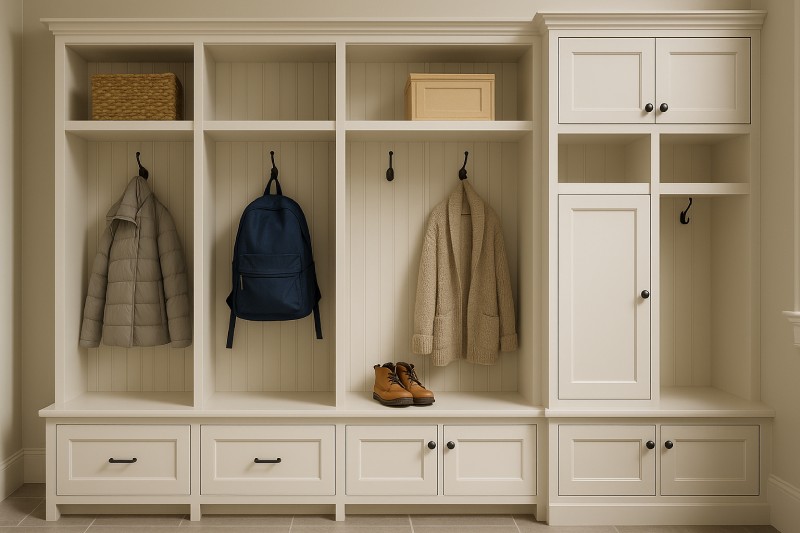
There’s no one-size-fits-all design. At its core, a mudroom locker is a tall cabinet structure that provides vertical storage for coats, bags, and shoes. But beyond that, it’s highly flexible.
- Open lockers keep items visible and easy to grab, ideal for kids or busy mornings.
- Closed lockers with cabinet doors hide visual clutter and give a clean, polished look.
- Hybrid systems mix both: open cubbies on top or bottom, with closed compartments at eye level.
Size matters too. A locker should fit the person using it. Small children need lower hooks and shallow drawers, while adults might prefer taller compartments and higher upper shelves.
You can build a single unit or create a full locker bank wall-to-wall.
Material choice affects durability. We often recommend pre-finished birch plywood for strength and aesthetics.
MDF can work for painted surfaces but needs edge banding and careful prep to resist swelling. Solid wood, such as poplar or maple, adds warmth and detail, especially with exposed-grain finishes.
Design Drivers for Mudroom Clutter-Free Lockers
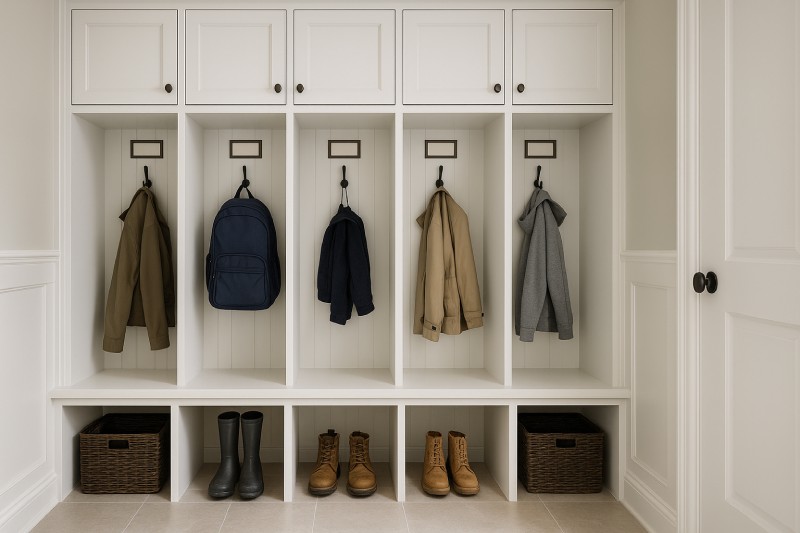
Smart mudroom lockers start with function. Here’s how we keep them working long after installation:
Individual Zones
Each locker gets its own compartment with a nameplate or label. This eliminates the drop-and-run habit. Kids have accountability.
Adults know exactly where things are.
Open vs Closed Storage
Open lockers invite daily use, but need to be tidy. Closed doors help when you want your entryway storage to look polished without daily maintenance.
Consider a shaker-style face frame with soft-close hinges for a clean but classic locker look.
Bench Seating Built In
Add a deep storage bench under each locker to tuck away seasonal items, gloves, or bins. Lift-lid benches are great for easy access. You can even add pneumatic hinges to prevent slams.
Cubbies, Drawers, and Dividers
Smaller compartments help separate dirty shoes from clean gear. A shoe cubby near the floor, a drawer for hats and scarves, and upper shelves for out-of-season storage all help you stay organized without trying.
Functional Add‑Ons to Level Up
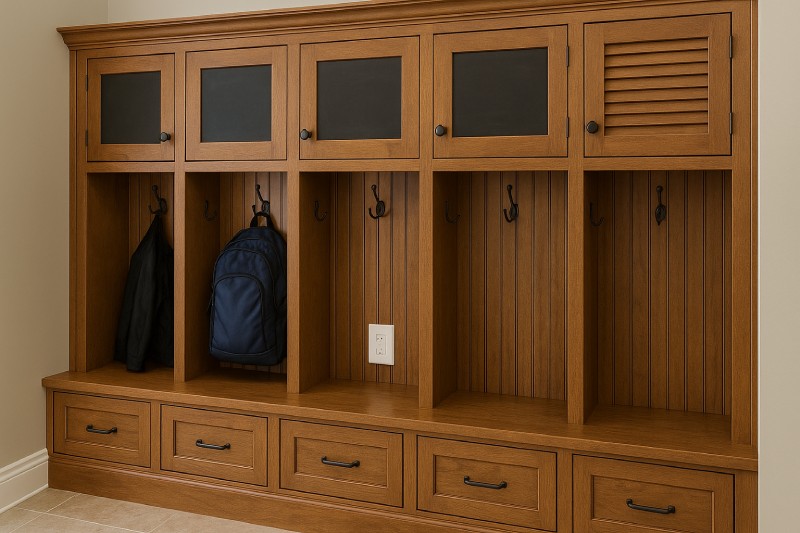
Here’s where custom beats anything off-the-shelf.
- Hooks & Pegs: Place them at both kid and adult heights. Use double hooks to hang both the jacket and the backpack.
- Charging Station: Built-in outlets or USB ports inside a drawer keep devices ready to go.
- Ventilation: Louvered cabinet doors or small air vents prevent mildew from wet coats or gym bags.
- Personalization: Chalkboard paint inside doors. Name plaques on each locker. Custom stain to match your living area trim or ceiling color.
Materials, Finishes & Durability
Let’s talk construction. For Medina’s climate and daily wear, we use:
|
Material |
Best Use Case |
Finish/Notes |
|
Birch plywood |
Structure, exposed interiors |
Holds screws well, stable in humidity |
|
Poplar |
Painted face frames, trim |
Smooth grain, ideal for enamel |
|
MDF |
Painted cabinet doors |
Use edge banding, sand with 220 grit |
|
Maple veneer |
Premium look, stain grade |
Matches well with baseboard accents |
Avoid particle board it doesn’t handle screws or moisture.
For assembly, pocket holes and applied wood glue at joints add lasting strength. Screws into wall studs or support pieces beneath the bench are essential to ensure stability.
Custom vs Stock Lockers
Custom-built lockers offer tailored solutions that match your space and décor. At Top Grain Interiors, we measure your nook, check ceiling height, and align the crown molding and baseboard trim so everything feels like it was always meant to be there.
Stock lockers, even with plans to make adjustments, often require shims, fillers, or scrap wood just to fit and still won’t look built-in.
Custom means you pick everything: dimensions, door style, stain color, drawer depth, and basket size. That flexibility is worth the difference when you want lasting quality.
Space Optimization Strategies
Whether you’re working with a wide mud room or a narrow entryway, layout makes or breaks your locker plan.
- Small entryway? Go vertical. Floor-to-ceiling lockers with upper shelves and a narrow bench. Use a brad nailer to attach back panels flush to the wall for a cleaner look.
- L-shaped layouts? Perfect for creating zones: one side for adults, one for kids.
- Shared laundry-mudroom space? Build something multi-use. Locker banks on one wall, sink, and counter on the other.
Consider where the studs are and plan your locker framing around them. A table saw and jig help when cutting long trim and support pieces precisely.
Styling Tips for a Cohesive Look
Your mudroom lockers can be practical without feeling like a preschool.
- Match paint or stain to the living area cabinetry or trim.
- Add beadboard or shiplap backs for texture.
- Use brass or matte black hooks and pulls for contrast.
- Upholster a bench cushion in a durable fabric that won’t show dirt.
- Accent with wall sconces or art that ties the room together.
The right finish elevates the whole feel. Use enamel paint or a professional sprayer for durability and cleanability.
Maintenance & Longevity
A good locker system should last decades. Keep it that way by:
- Wiping down surfaces weekly, especially during snow and salt season.
- Cleaning hardware like drawer slides, coat hooks, and hinges once a month.
- Tightening screws and checking for loose joints twice a year.
If you ever need to touch up paint, lightly sand with 220 grit first, then recoat with matching enamel.
FAQs
How much do mudroom lockers cost in Medina?
Can I install mudroom lockers myself?
What materials for mudroom lockers resist moisture best?
How long does it take to build custom mudroom lockers?
Can mudroom lockers be added to a coat closet or hallway?
Conclusion
Clutter starts at the door.
When your entryway works harder, your whole home feels cleaner. A well-designed mudroom locker system gives every jacket, backpack, and pair of shoes a homekeeping mess off the floor and peace of mind in reach.
Top Grain Interiors specializes in custom cabinetry that fits your life, not just your walls. If you’re ready to turn that cluttered nook into a polished, practical space, let’s talk.
We’ll show you exactly how we build mudroom lockers that last, right here in Medina.