
At first, the books fit. A few hardcovers sit in the living room, paperbacks fill a bedroom bookcase, and favorite titles collect beside the bed.
Then the collection grows. Books compete with photographs, paperwork, and household items for the same limited space.
Another large bookshelf may provide temporary relief, but standard furniture rarely fits the wall, ceiling, trim, or storage needs of the room.
Gaps gather dust, long shelves begin to bow, and mismatched bookcases make the collection feel scattered.
The better answer is a room planned around the books and the people who read them.
Custom library bookshelves can turn a spare room, study, or quiet corner into a comfortable home library that feels connected to the house.
These 9 tips will help Medina homeowners plan the layout, materials, lighting, storage, and installation.
1. Let Your Book Collection Set the Brief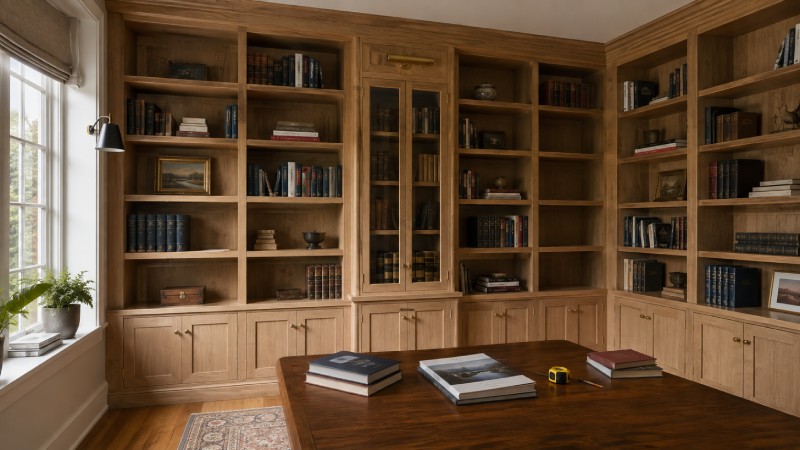
A successful home library starts with an inventory, not a paint color. Your cabinet maker needs to know what the shelves will hold before choosing shelf depth, opening height, support, or cabinet configuration.
Separate Everyday Books From Special Pieces
Group standard novels, oversized art books, albums, magazines, and collectibles. Keep frequently read books within comfortable reach.
Place larger, heavier volumes on lower shelves, and consider a bookcase with doors for valuable editions that need added protection from dust and handling.
Measure examples from each group. A tall bookshelf with identical openings may look orderly, but it wastes space when most books are short. Custom book shelving can include different opening heights based on the collection.
Leave Space for Future Books
Do not fill every shelf on installation day. Leave selected areas open so the collection can grow without spreading into another room. Adjustable bookshelves are useful because shelf pins allow boards to move as book sizes change. Fixed shelves can provide structural support between adjustable sections.
2. Choose the Right Room Before Choosing a Style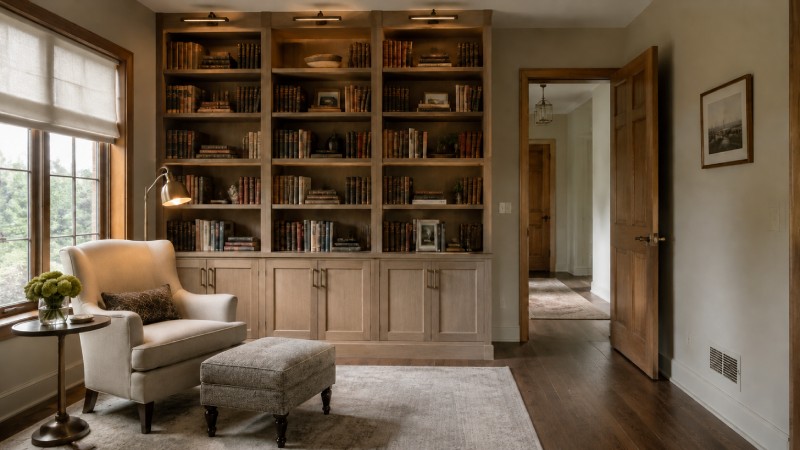
Appearance should not decide the room on its own. Available wall area, household traffic, natural light, temperature, and moisture all affect how well a home library works.
Protect Books From Light and Moisture
Books last longer in a clean, stable interior room. Strong sunlight can fade covers, while excess moisture can damage paper and encourage mold.
Valuable books should be stored in a cool, reasonably dry, clean, and stable environment, away from damp basements and hot attics.
Consider Noise and Household Traffic
A private reading room should sit away from frequent movement. A family library may work better near a shared living area. Mark doors, windows, vents, outlets, and walking routes before planning home library shelving. Cabinetry should not block airflow or make an entrance feel narrow.
3. Give Every Wall a Clear Job
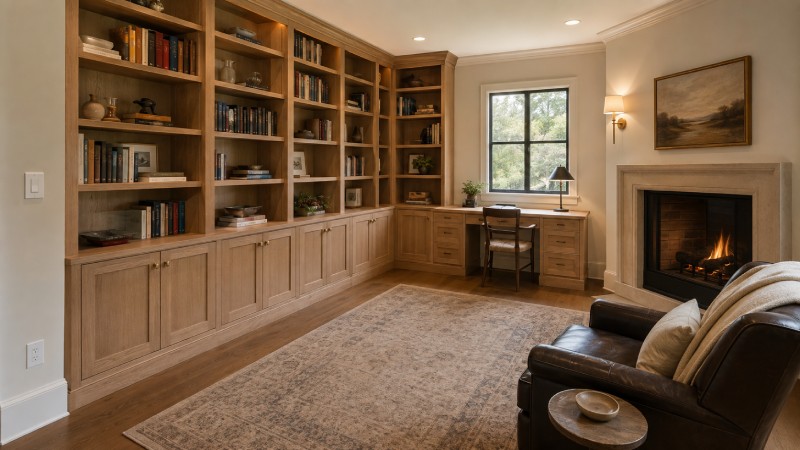
Assign a purpose to each wall. One might hold floor-to-ceiling library shelving, another a reading chair, and a third a window or fitted desk. This keeps cabinetry from consuming more space than the room can comfortably support.
Compare Full Wall and Corner Layouts
Wall-to-wall built-in bookcases provide high storage capacity and a strong architectural presence.
A corner layout can make better use of two shorter walls when a wide bookcase would overpower the room. Alcoves and narrow areas beside doorways can hold smaller books without wasting space.
Design Around Existing Features
Baseboards, crown molding, vents, switches, and uneven walls affect the finished fit. A cabinet maker should measure the room and plan fillers, trim, and service access around them.
Standard bookshelves for sale come in fixed sizes, while custom bookshelves can meet surrounding trim and use the full wall.
If shelves sit near a fireplace, placement must follow the fireplace manufacturer’s clearance instructions and applicable building rules. Appearance should never override fire safety.
4. Size Library Bookshelves for Real Books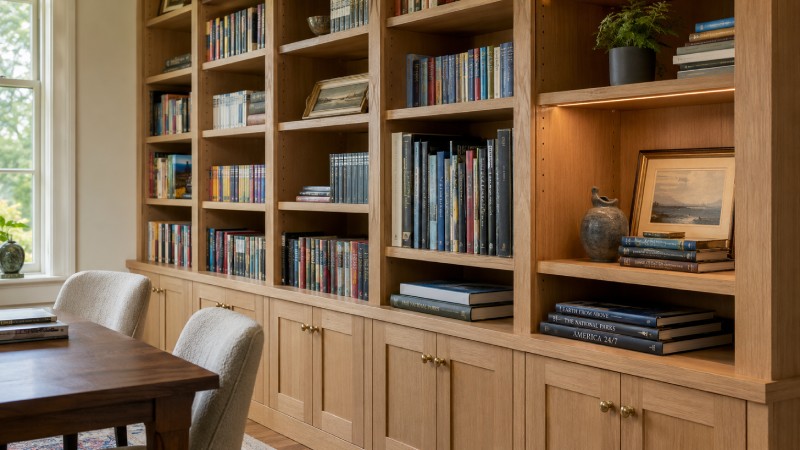
There is no universal shelf dimension for every library. Depth, height, thickness, span, and support depend on what will be stored.
Match Openings to Book Size
Standard novels need less depth than art books, binders, or albums. Building every shelf for the largest item pushes smaller books too far back. A library bookcase can use more than one depth where the room permits it, with taller openings reserved for oversized pieces.
Prevent Shelves From Bowing
Books become heavy across a full shelf. The risk of bending depends on material, shelf thickness, width between supports, edge construction, and attachment.
A skilled cabinet maker may specify shorter spans, thicker boards, fixed dividers, or reinforced edges. Project-specific support should be confirmed after the collection and room are assessed.
5. Balance Open Shelves With Concealed Storage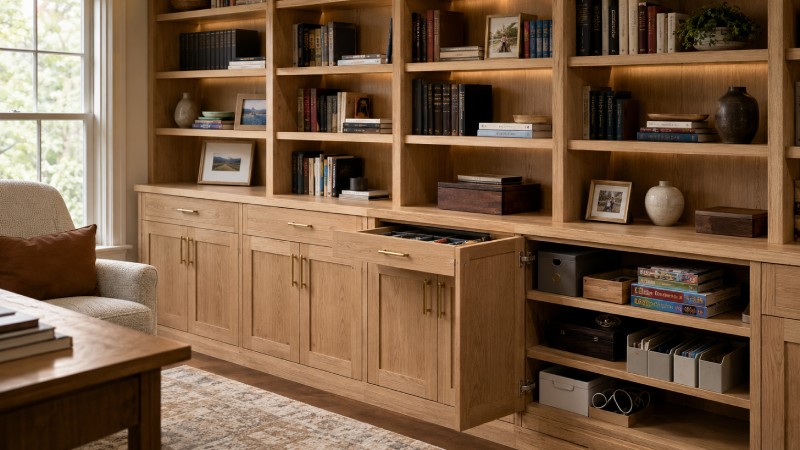
A library does not need to display everything it contains. Open library shelves keep books visible, while lower cabinets can hold paperwork, games, charging cables, and photo boxes.
Pair Shelves With Lower Cabinets
A bookshelf cabinet combines visible book storage above with concealed storage below. It also gives tall library bookcases a stronger visual base. A dedicated reading room may need mostly open shelves, while a library and home office may need more drawers and doors.
Choose Doors and Hardware With Care
A bookcase cabinet with solid doors hides visual clutter and limits dust. Soft-close hinges slow doors near the end of travel, reducing slamming and hardware stress.
They work well on frequently used lower cabinets. Keep hinges clean and request adjustment if door gaps become uneven.
Shaker doors suit many traditional and transitional Medina homes, while plain slab doors create a simpler appearance. The profile should relate to nearby doors, trim, and cabinetry.
6. Make the Woodwork Feel Original to the House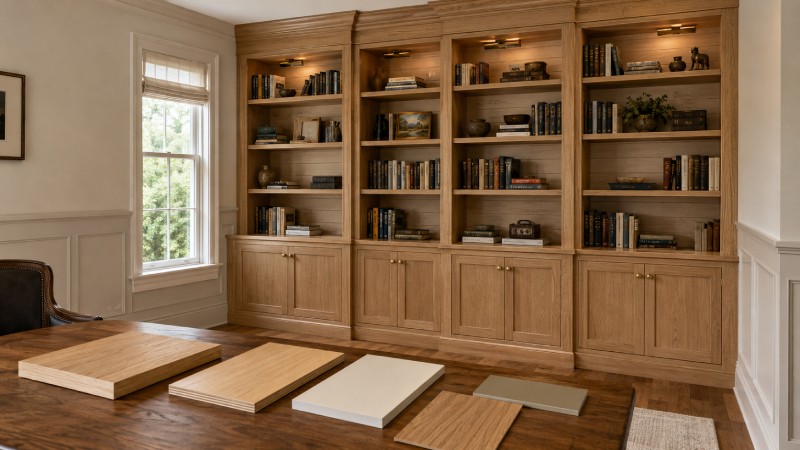
Premium built-in bookshelves should feel connected to the architecture. Material, color, grain, molding, door style, and hardware all shape that result.
Library Cabinet Materials, Benefits, Uses & Care Needs – Table Comparison
| Material or finish | Main benefit | Suitable use | Care needs |
| Solid hardwood | Natural grain and durable edges | Trim, doors, face frames, and shelf edges | Dust gently and avoid standing moisture |
| Cabinet grade plywood | Stable panel with good strength for its weight | Cabinet cases, shelves, backs, and wide panels | Wipe with a lightly damp cloth and keep edges dry |
| Paint grade MDF | Smooth surface for painted work | Doors, end panels, moldings, and selected short shelf sections | Protect edges from impacts and moisture |
| Oak veneer panel | Real wood appearance across broad surfaces | Stained sides, backs, and cabinet panels | Avoid abrasive cleaners and prolonged direct sun |
| Matte painted finish | Low glare and a soft appearance | Modern and transitional library cabinets | Clean gently to prevent polished patches |
A cabinet maker may combine materials because doors need stability, shelves must resist bending, and visible edges need a finished surface. The final specification should reflect shelf spans, finish goals, room conditions, and budget.
New wood bookshelves can repeat existing crown molding, baseboard profiles, paint colors, and door shapes. Stain matching requires physical samples because wood species, age, grain, and sunlight affect color.
Top Grain Interiors also creates shiplap and wainscoting. A shiplap bookshelf back can add controlled texture, while wainscoting may continue around nearby walls.
These details should support the library rather than compete with the books.
7. Plan Lighting and Power Before Installation
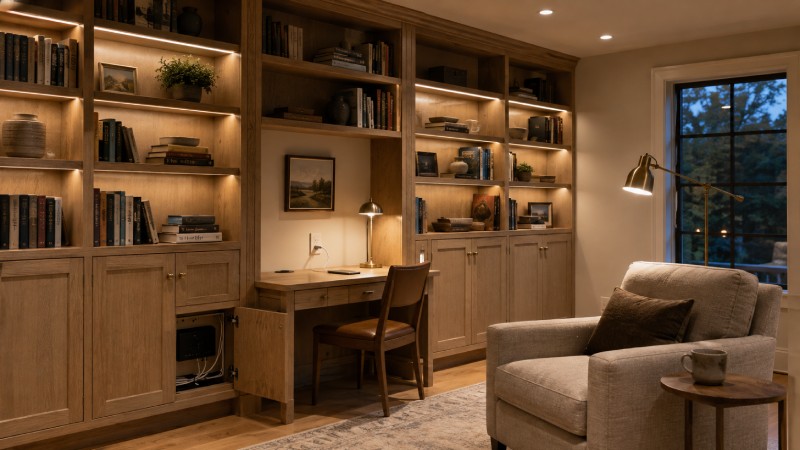
Good library lighting needs more than one ceiling fixture. Readers need focused light near a chair or desk, while the room needs comfortable general lighting. Shelf lights can make titles easier to see and add depth to the cabinetry.
Layer Room, Reading, and Shelf Light
Use general lighting for movement, a reading lamp for focused work, and built-in shelf lighting for selected book displays. Review the light color beside the chosen finish.
Cool light may make warm wood look gray, while very warm light can change the appearance of painted cabinets.
Decide Where Wires and Outlets Belong
Plan power for lamps, chargers, computers, and shelf lighting before fabrication. A home office library may also need cable paths and removable access panels. Any new wiring should be completed or reviewed by a qualified electrical professional under local requirements.
8. Create a Reading or Work Zone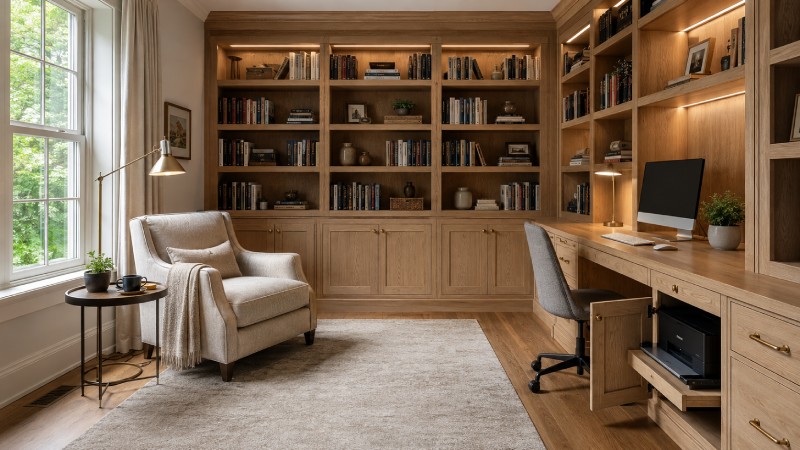
Library furniture should leave a comfortable place to use the books. Plan seating, table space, lighting, and movement alongside the cabinetry.
Protect the Reading Area
Place the chair where it receives useful light without blocking cabinet doors or walkways. Leave space for a small table and lamp.
A window seat can work when window operation, heating vents, cushion height, and storage access have all been checked.
Combine a Library With a Home Office
A fitted desk can connect with home office bookshelves and lower cabinets. Discuss printer storage, files, monitor size, power, and cable access before construction.
Top Grain Interiors offers custom home office solutions alongside handcrafted bookshelves, allowing both areas to share consistent materials and proportions.
9. Build for Safety, Access, and Future Changes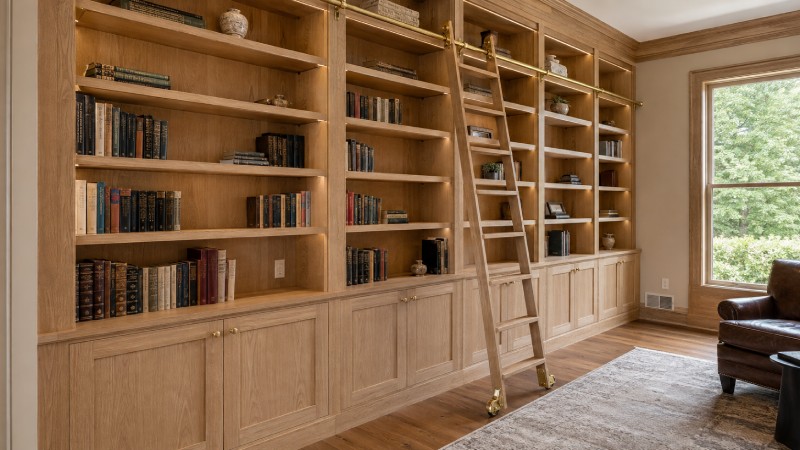
Tall library wall bookshelves must be secured, leveled, supported, and arranged so household members can reach what they use safely.
Keep Active Books Within Reach
Place frequently used titles on middle and lower shelves. Reserve upper sections for lighter books or pieces used less often.
If a rolling ladder is considered, its rail attachment, travel path, floor condition, and clearances require professional review.
Secure the Cabinetry Correctly
Built-in bookcases need proper attachment to suitable framing or another approved substrate.
Doors, drawers, shelf supports, lighting access, vents, and outlets should be checked after installation. Adjustable sections and some unused capacity will help the library accommodate future books.
FAQs About Library Bookshelves in Medina
Are Built-In Bookshelves Better Than Freestanding Bookcases?
Built-in bookshelves offer a fitted appearance, greater use of wall height, and control over shelf dimensions and storage. Freestanding bookcases cost less and can move with the homeowner.
The right choice depends on the room, collection, budget, and expected length of use.
How Much Do Custom Library Bookshelves Cost?
Cost depends on wall size, ceiling height, materials, finish, doors, drawers, trim, lighting preparation, and site conditions.
Compare quotes by scope and confirm what is included in fabrication, delivery, installation, and final adjustment.
Can New Bookcases Match Existing Woodwork?
Yes. A cabinet maker can often reproduce trim details, door profiles, and paint colors. Stained wood needs closer inspection and sample approval because species, age, and light exposure affect the final tone.
What Material Is Best for Library Shelves?
No single material suits every component. Hardwood is useful for visible grain and durable edges, while cabinet-grade plywood provides stable case construction. Shelf span and expected load are just as important as the material name.
How Long Does a Custom Bookshelf Project Take?
Top Grain Interiors aims to complete custom built-in projects within about six to eight weeks. The final schedule depends on design, materials, finish, project size, and current workload, and is agreed when the contract is signed.
Conclusion – Build a Library That Belongs in Your Medina Home
The best library bookshelves begin with practical questions. What do you own, what will you collect next, and which books need easy access?
Once those answers are clear, custom cabinetry can give every wall, shelf, and cabinet a defined purpose.
Top Grain Interiors has served Medina and surrounding Ohio communities since 2003.
The team handles custom cabinetry from design through installation, with close attention to fit, materials, finish, and daily use.
Contact Top Grain Interiors to discuss library bookshelves planned for your room and collection.