
Picture this: you’re on a video call, ready to present your best work, yet behind you sits a stack of papers, a crooked lamp, and cables snaking across the floor. Instead of focusing on the conversation, you find yourself distracted by the mess.
This is the reality for many Medina homeowners trying to work from home in spaces that were never designed for the task.
Cluttered desks, poor lighting, and generic furniture don’t just look unprofessional.
They chip away at focus, reduce productivity, and make your workday feel longer than it should. A poorly planned office can make even short tasks feel like a burden.
The solution is a home office built with intention. With custom cabinetry, fitted shelving, and thoughtful design choices, you can create a workspace that is organized, comfortable, and polished.
Here are seven ideas to help you design a home office that supports productivity while reflecting your style.
1. Room-First Planning: Layouts That Support Daily Work
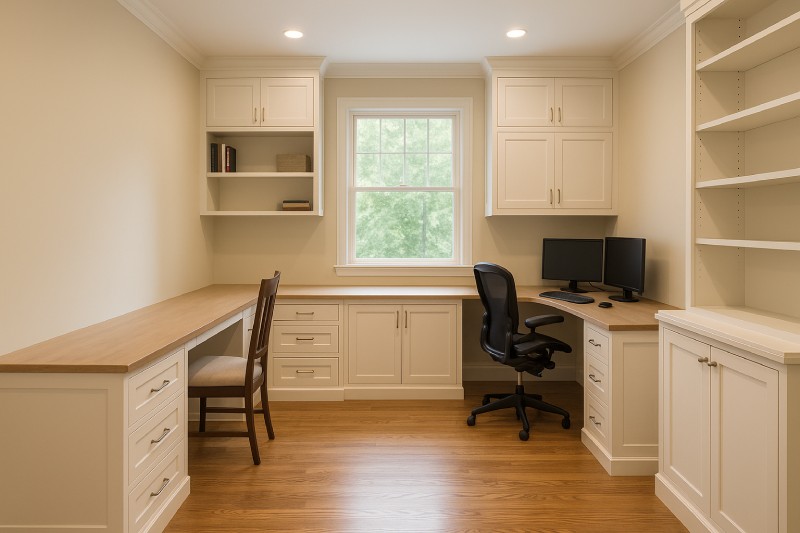
Before you think about finishes or wall colors, map the room. The right home office layout begins with flow. Doors, windows, and heating vents dictate where a desk can sit. Outlets and natural light influence how you’ll power and position equipment.
For many homes, a single-run desk along one wall is enough, especially for a small home office or guest room office. This keeps the center of the room open for seating or storage. An L-shaped desk creates a natural division between computer work and paperwork.
For those with heavy equipment or multiple monitors, a U-shaped layout wraps storage and surfaces around you for easy access.
Clearances matter. Allow at least 42 inches behind a desk chair so you can stand and move comfortably. File drawers need swing space, and walkways should remain open. At Top Grain Interiors, we design cabinetry around these measurements so you never feel cramped.
2. Built-Ins That Work: Mix Open Display With Closed Storage
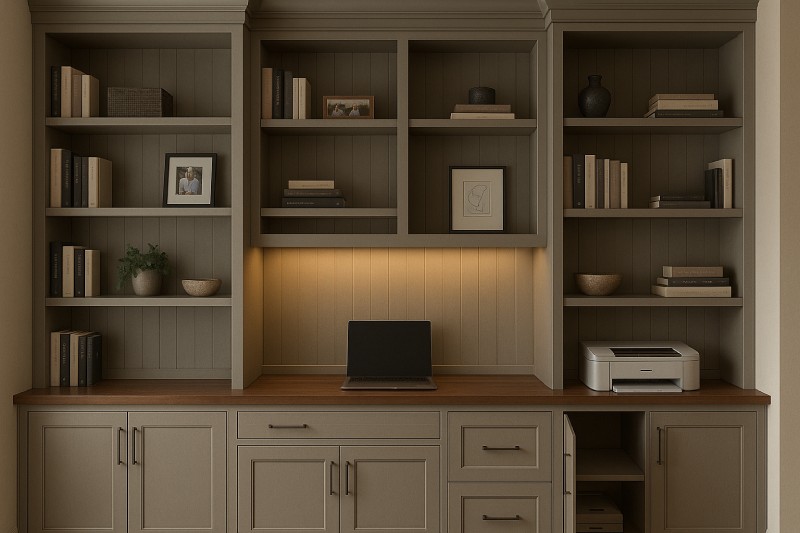
One of the strongest home office ideas is to build storage that feels like part of the house. Floor-to-ceiling built-ins maximize capacity and add architectural presence. Open shelving above is perfect for books, décor, or a gallery wall of family photographs. Closed bases keep paperwork, supplies, and electronics tucked away.
Custom cabinets allow for details that stock furniture can’t match. Full-extension drawers let you see contents without reaching into shadows. Soft-close hinges prevent slamming, keeping the workspace quiet. Adjustable shelving adapts as your storage needs change.
An appliance garage is another smart feature. Printers, routers, and modems disappear behind pocket doors, with ventilation slots to prevent overheating. Cord pass-throughs and removable backs mean tech is accessible but never visible.
3. The Worksurface: Materials, Finishes, and Ergonomic Heights
Your desk surface gets more use than any other part of the office, so material choice is critical. Solid hardwoods such as maple or oak with a protective finish resist wear. For longer spans, furniture-grade veneer cores provide stability against warping.
Walnut offers rich grain for a more traditional look, while paint-grade maple delivers a smooth canvas for lighter tones.
Finish selection also plays a role. Matte or satin finishes reduce glare from lighting, helping you focus longer without eye strain. Glossy surfaces may look striking but show fingerprints quickly. For families using the office daily, durability and easy touch-ups matter more than sheen.
Ergonomics should guide design. A typical desk height is 29 to 30 inches, but measuring to your seated elbow height ensures comfort. Knee space should be generous, with at least 27 inches of clearance, and footrests can support proper posture. By tailoring cabinetry to your body and tasks, discomfort never becomes a distraction.
Quick Reference Table: Worksurface Options
| Material | Best Use | Advantages | Care Needs |
| Solid hardwood | Traditional or classic offices | Durable, refinishable | Occasional polishing |
| Veneer on plywood | Long spans, modern designs | Stable, cost-effective | Gentle cleaning only |
| Paint-grade maple | Contemporary painted finishes | Smooth surface, customizable | Touch-up paint as needed |
| Walnut/oak stained | Warm, natural look | Visible grain, timeless appeal | Oil or wax maintenance |
4. Power, Data, and Cable Management Built Into the Millwork
Few things break focus faster than tangled cords. Planning power and data during cabinetry design avoids frustration later. Grommets, brush plates, and vertical chases route cables neatly through the furniture.
At Top Grain Interiors, we build removable back panels and label cable paths so servicing routers or monitors is straightforward. For sit-stand workstations, slack channels prevent cords from pulling when height adjusts. Ventilation cutouts keep electronics cool without compromising style.
Good cable management doesn’t just improve looks. It extends equipment life and reduces safety risks, creating a workspace that is both attractive and reliable.
5. Light for Focus and On-Camera Presence
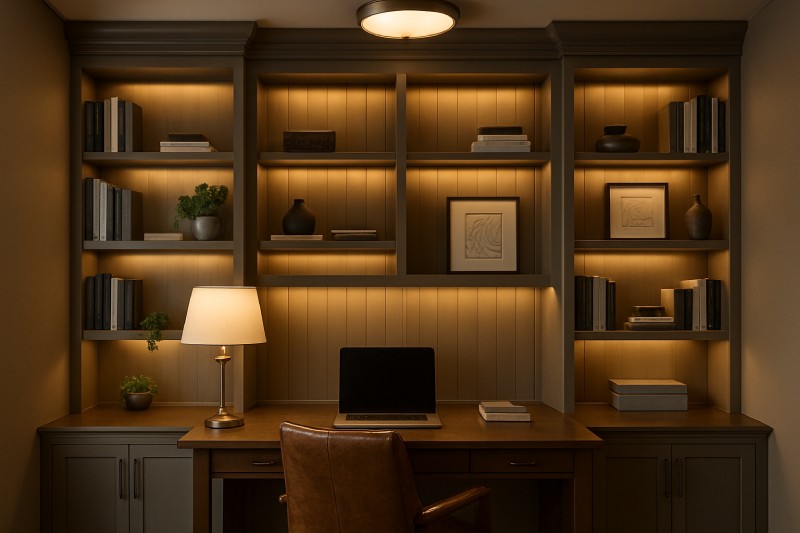
Lighting has a direct effect on productivity and how you appear on camera. A three-layer plan is best:
- Ambient lighting from ceiling fixtures to brighten the whole room
- Task lighting under shelves or with a table lamp at the desk for paperwork and reading
- Accent lighting inside display cabinets or highlighting artwork to add depth
For video calls, think about your backdrop. A symmetrical shelving wall with warm LED strips creates a polished look. Avoid harsh overhead lights that cast shadows on your face. Dimmers allow you to adapt lighting for day or evening work.
When lighting is built into the cabinetry, the office feels intentional, not improvised. Your space becomes comfortable for long hours and professional for every meeting.
6. Sound and Privacy: Keep Calls Clear Without Echo
With multiple family members working or studying at home, acoustics matter. Books and built-ins naturally absorb sound, preventing echoes. Lined cabinet doors or fabric pinboards further soften noise.
Simple additions like rugs and draperies support sound control, but cabinetry carries most of the load. For two-person offices, mirrored work bays with tall storage in between can provide subtle separation. Each station gets its own drawer system, lamp, and file storage.
These design decisions make phone calls clearer, reduce distractions, and create a calm environment for focus.
7. Small-Space Solutions: Cloffices, Nooks, and Multi-Use Rooms
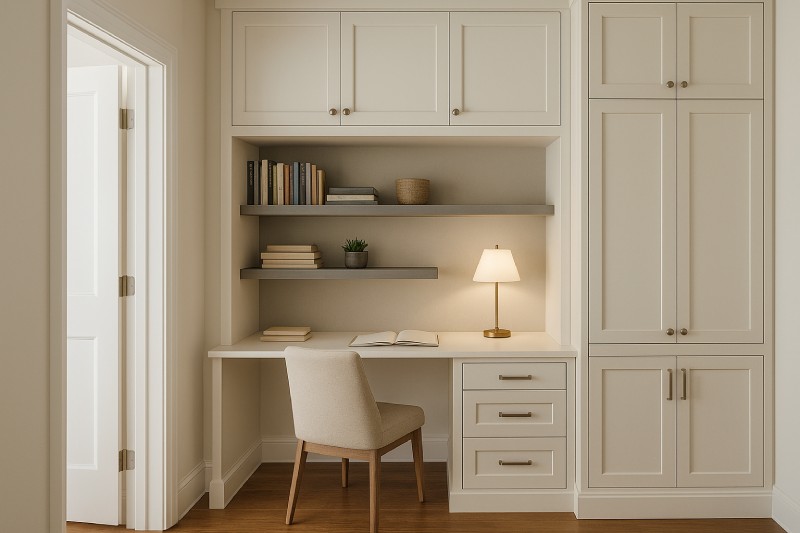
Not everyone has a spare bedroom to dedicate to a home office. That doesn’t mean you have to settle for the kitchen table. A cloffice-a home office built into a closet, can deliver surprising function. A shallow desk, floating shelves, and pocket doors create a workspace that disappears when not in use.
In guest rooms, wall-to-wall cabinetry can serve both roles. Closed cabinets hold bedding and seasonal storage, while the desk and shelves create a daily workspace.
For hall alcoves or small spaces under stairs, custom depth desks with drawers turn unused corners into productive zones.
The advantage of custom cabinetry is precision. Odd dimensions, sloped ceilings, and alcoves that frustrate store-bought furniture become opportunities for fitted design.
Style & Finish Direction: Door Types, Profiles, and Color Stories
Every home office should reflect the rest of the house. Inset doors with furniture-style gaps suit traditional interiors, while frameless cabinets offer a clean, modern home office idea with maximum storage inside.
Profiles and moldings matter too. A simple shaker profile looks timeless, while slab fronts deliver a contemporary look. Crown moldings at the top of shelving create continuity with adjacent rooms.
Painted finishes in white or beige keep small spaces bright, while dark wood stains like walnut add warmth and depth. The choice depends on whether you want your office to blend quietly into the home or make a bold design statement.
Lighting, Power, and Tech Spec Checklist
When planning with a cabinetmaker, keep this quick list in mind:
- Outlets: At least two quad outlets at desk height, plus a floor outlet for a central desk.
- Data: Runs for Ethernet or hidden Wi-Fi boosters inside cabinetry.
- Lighting: Under-shelf LEDs, puck lights for display, and a dimmer switch near the desk.
Bringing this checklist to your consultation helps ensure every detail is captured.
Budget Tiers and Phasing Without Regret
Not every project has to be completed at once. Many Medina homeowners start with a desk run and base storage, then add upper shelves and lighting later.
Phasing works best when the entire design is planned upfront. That way, finishes and proportions remain consistent. At Top Grain Interiors, we often build with future phases in mind, so each addition feels like it was part of the original plan.
This approach lets you balance investment with immediate needs, without sacrificing long-term quality.
FAQs
What’s the minimum space needed for a home office?
Even a 4-foot-wide alcove can support a built-in desk with shelves. For a full dedicated room, aim for at least 8 feet of wall length.
Are built-ins better than freestanding furniture?
Yes. Built-ins fit your space precisely, provide more storage, and look like part of the home’s architecture, adding long-term value.
Can I add cable management to an existing office?
Yes, but it’s cleaner when planned from the start. A cabinetmaker can retrofit grommets, access panels, and cable chases into existing cabinetry.
Which finish lasts longest in a busy home office?
Paint-grade maple with a satin lacquer holds up well to daily use and allows for touch-ups. For natural wood lovers, walnut or oak with a protective topcoat is equally durable.
Conclusion
A well-designed home office does more than give you a place to sit with your laptop. It supports focus, hides clutter, and reflects the style of your home. Whether you have a dedicated room or a small nook, the right cabinetry makes the difference between a stressful workday and one that feels productive.
At Top Grain Interiors, we’ve been designing and installing custom cabinetry across Medina and Wadsworth since 2003.
From built-in desks and bookshelves to kitchens, mudrooms, and closets, our team crafts spaces that fit your home perfectly.
If you’re ready to design a home office that works as hard as you do, we’d be glad to help bring your vision to life.
Contact us today!