
Picture this. It is a wet Ohio morning, the kids rush in through the garage, a dog shakes off rain near the door, shoes pile up underfoot, and someone drops a backpack right in the path everyone needs to use. Before the day even gets going, the entry already feels chaotic.
For many Medina homeowners, the issue is not having too much stuff. The real issue is having no built in system to manage the things that enter and leave the house every single day.
That kind of clutter does more than make a room look messy. It slows down busy mornings, makes cleaning harder, and creates constant frustration in a space that should support the home.
Coats end up on chairs, boots stay on the floor, and sports gear, pet supplies, and school bags drift into nearby rooms. Once the drop zone stops working, the disorder spreads fast.
A well-planned custom mudroom design solves that problem at its source. Instead of relying on pieces that almost fit, homeowners can invest in custom mudroom cabinetry, built in benches, storage lockers, and cabinets designed around the way their family actually lives.
At Top Grain Interiors, that means creating mudrooms that feel tailored, practical, and visually connected to the rest of the home.
Why Medina Homes Need a Better Drop Zone
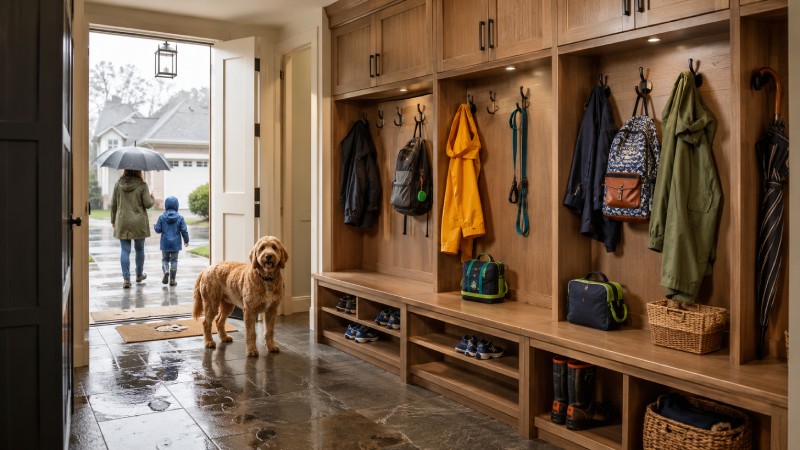
In Medina, the mudroom has to do real work. Snow, slush, rain, grass clippings, and road salt all make their way indoors through the year. A plain wall with a few hooks rarely keeps up with that kind of traffic. Homes need storage that handles wet gear, heavy daily use, and the natural rhythm of family life.
Many households also use the garage entry more than the formal front door. That changes how the space should be planned.
The first few feet inside the home become the true arrival point, which makes entryway storage, coat storage, shoe control, and bag storage much more important than people first expect. A built-in mudroom turns that overlooked space into an organized transition area that supports the whole house.
A stronger drop zone also protects nearby rooms from clutter. When jackets, umbrellas, boots, lunch bags, and dog leashes have a dedicated place near the entry, they are less likely to spill into the kitchen, family room, or hallway.
Good mudroom organization is not just about appearance. It helps the home function better from the moment someone walks in.
What Custom Mudroom Design Includes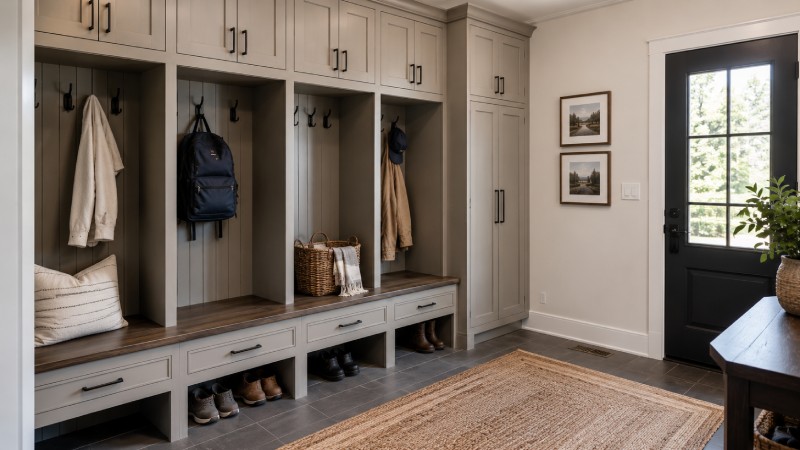
A true custom mudroom design begins with fit. That means measuring wall width, ceiling height, door swings, walking paths, and the size of the items the room needs to hold.
Ready-made furniture often leaves awkward gaps, wasted vertical space, and poor proportions. Custom work solves those problems by building specifically to the room.
It also begins with routine. One family may need custom mudroom lockers for three children, while another may need a bench with hidden shoe drawers, a tall broom cabinet, and extra storage for pet supplies.
A household with athletes may need deeper mudroom cubbies and space for bags and gear. A home with dogs may need quick access to towels, leashes, and cleaning items.
The finish side matters just as much. A mudroom should not feel like a utility corner that was ignored. Cabinet style, wood tone, painted finishes, trim details, and hardware should connect with nearby spaces so the room feels like a natural part of the home.
When the design is done well, the mudroom looks intentional and works hard every day.
7 Mudroom Features Medina Families Ask For Most
The most practical mudroom ideas are usually the ones that make everyday life easier from the moment someone walks in.
The seven features below are the ones Medina homeowners ask for most often because they solve clutter, improve comfort, and make the room easier to maintain over time.
1. Custom Mudroom Lockers
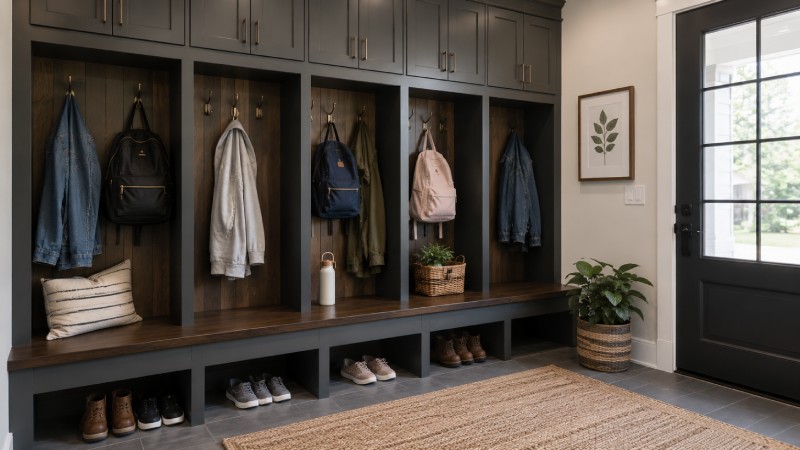
Custom mudroom lockers give each family member a dedicated vertical zone for coats, backpacks, and daily grab and go items.
This setup helps stop clutter from mixing together and gives the room a clear structure. It is one of the best ways to support better daily habits, especially in homes with children.
Lockers also help define how the room functions. Instead of one open wall where everything gets dropped, each person has an assigned place for the items they use most.
That makes busy mornings easier and reduces the time spent looking for shoes, jackets, or school gear.
2. A Mudroom Bench With Storage
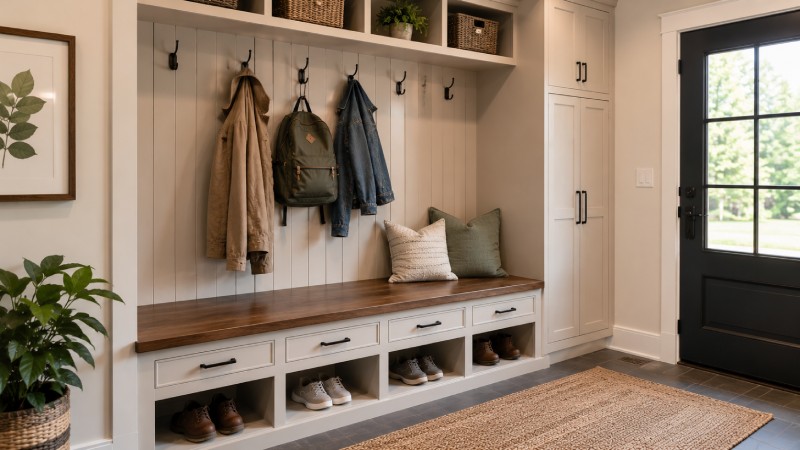
A mudroom bench with storage is one of the hardest working features in the room. It gives people a place to sit while putting on shoes, which is especially useful for children, guests, and older adults. A bench also helps the mudroom feel more complete and comfortable.
When built as a built in mudroom bench, it can include drawers, open cubbies, or lift up storage below the seat.
That creates room for shoes, seasonal accessories, or everyday items without adding extra furniture. In smaller layouts, this kind of dual purpose feature is especially valuable.
3. Upper and Lower Mudroom Cabinets
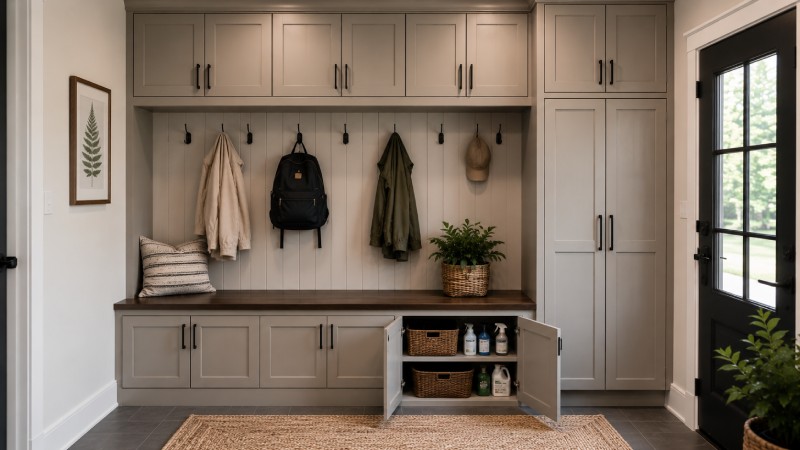
Closed mudroom cabinets are ideal for the items homeowners do not want sitting in plain view all day. Cleaning products, reusable shopping bags, pet supplies, and seasonal gear can all be tucked behind cabinet doors, which helps the room feel calmer and more polished.
A mix of upper and lower cabinets also improves how the room handles overflow. Lower cabinets keep frequently used items within easy reach, while upper cabinets make use of wall height for backup or less frequently used storage.
This is one reason custom mudroom cabinets perform so much better than pieced together solutions.
4. Open Shelves for Grab and Go Storage
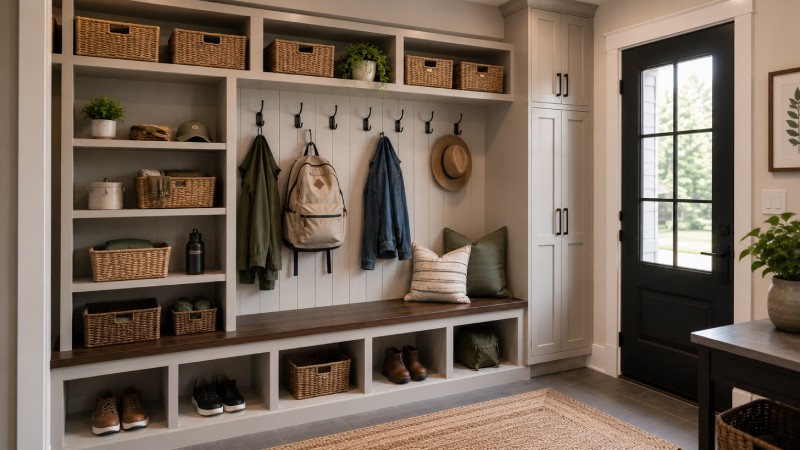
Open shelves are useful for baskets, hats, gloves, lunch bags, and other items that need to stay easy to access. Not everything belongs behind a cabinet door. A good mudroom needs a mix of visible and hidden storage so it can stay both practical and tidy.
Shelving also adds flexibility. Homeowners can use baskets to group seasonal accessories, assign one shelf per family member, or reserve open space for items that change throughout the year.
In many mudroom storage systems, shelves act as the link between the visual order of cabinetry and the convenience of everyday access.
5. Wall Hooks for Coats, Bags, and Pet Gear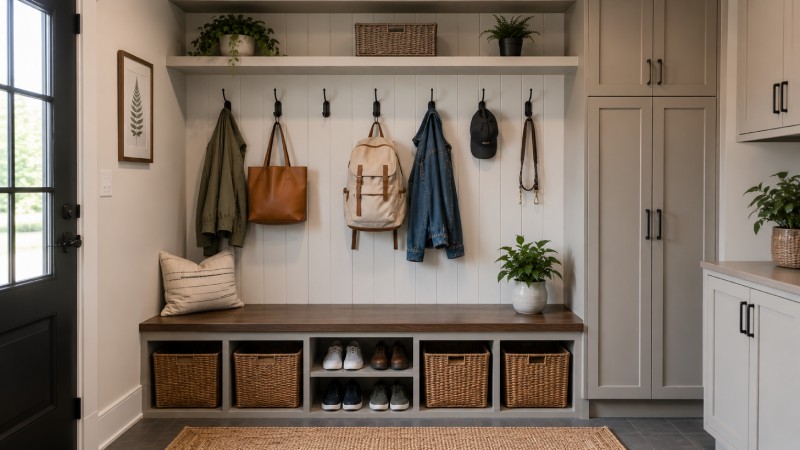
Wall hooks are simple, though they do a lot of work in a busy home. They keep coats, bags, and pet leashes easy to grab and easy to put away.
For children, lower mounted hooks are often more practical than hangers inside a cabinet because they can use them without help.
Hooks also support faster daily movement. A coat worn every day should not have to be tucked deep into storage each time it comes off.
By combining hooks with nearby cabinets or cubbies, the room stays more functional without turning into visual clutter.
6. Dedicated Shoe and Boot Storage
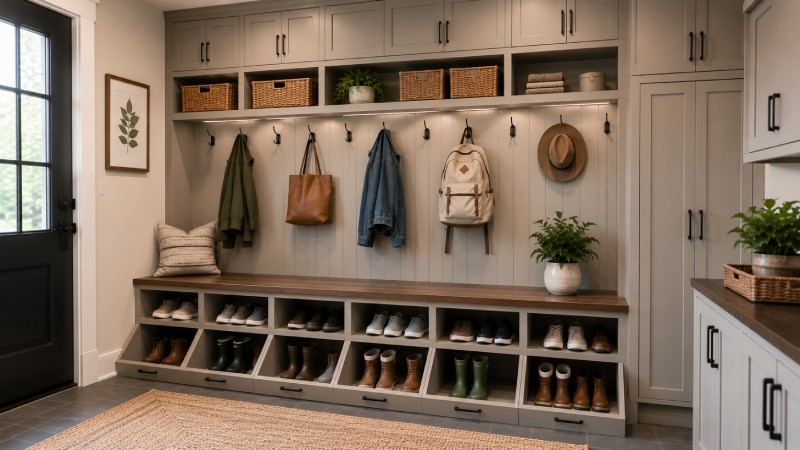
Shoes left loose on the floor can make even a beautiful mudroom feel messy. Dedicated shoe storage keeps traffic paths clear, protects flooring, and helps the room look organized even on busy days.
This feature becomes even more valuable during wet Ohio weather when boots and outdoor shoes need a defined place to land.
Built in cubbies, angled shelves, and lower compartments all work well, depending on the size of the household and the type of footwear being stored.
In a family mudroom, a shoe storage plan should account for more than everyday sneakers. Boots, sandals, sports shoes, and seasonal footwear all need room too.
7. Tall Utility Storage for Overflow Items
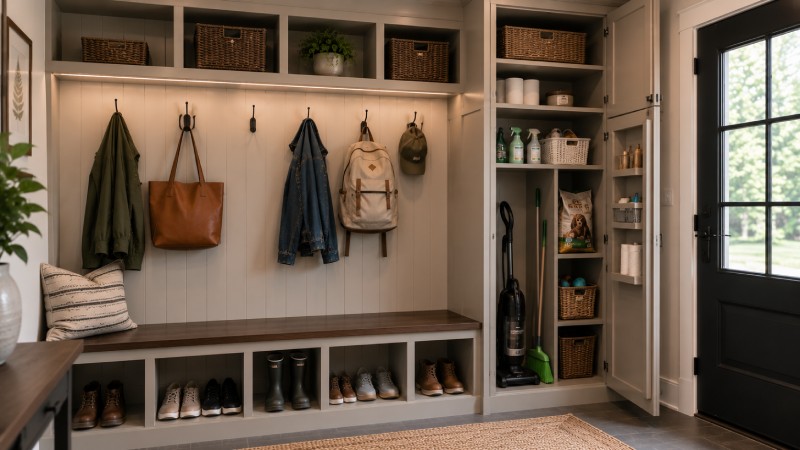
A full-height utility cabinet adds long-term control to the room. It can hold vacuums, mops, paper goods, sports equipment, pet food, or seasonal supplies that do not belong out in the open. This kind of storage often becomes the feature that keeps the mudroom from slipping back into clutter after the first few weeks.
Tall storage also makes the room more adaptable. As a family’s needs shift, the cabinet can support different items without changing the full layout.
That flexibility is one of the biggest benefits of a well-planned, built-in mudroom storage system.
Choosing the Right Mudroom Layout for Your Home
The best mudroom layout depends on where the space sits and how the household moves through it. A narrow hallway mudroom usually works best with shallow cabinetry, vertical storage, and carefully sized bench placement so the path stays open. In tighter rooms, every inch of depth matters.
A garage entry mudroom often allows deeper cabinetry and more ambitious organization. This is where garage mudroom storage can make a major difference, especially for families carrying in sports gear, groceries, work boots, and school bags.
Tall lockers, durable bench seating, and upper cabinets often perform very well in this type of layout.
A combined laundry mudroom has a different set of demands. The room needs to support arrivals, laundry tasks, supply storage, and circulation around appliances.
That is where a custom plan proves its value. Instead of treating the area as two separate problems, the design can support both functions in one connected space.
How Custom Cabinetry Solves Problems Store Bought Pieces Miss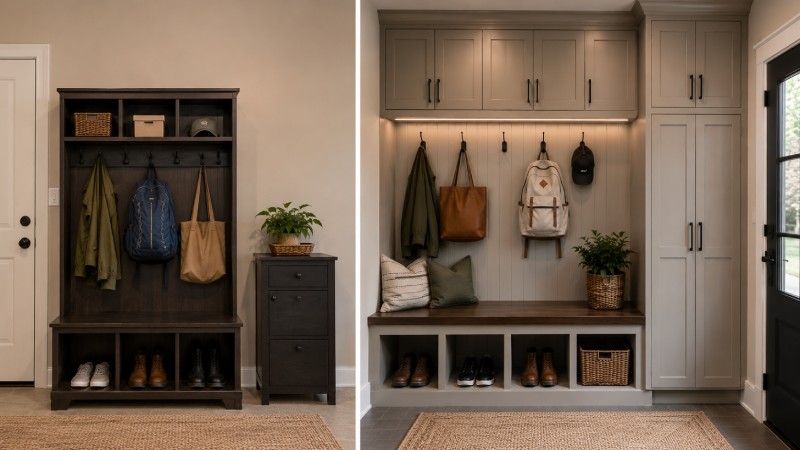
Freestanding storage can help in some situations, though it often falls short in a busy entry. It rarely reaches full ceiling height, which leaves dust collecting voids overhead and misses out on useful upper storage. It also tends to fit the wall poorly, leaving filler gaps and wasted corners that make the room feel pieced together.
Construction quality matters too. A mudroom handles repeated impact, moisture from coats and umbrellas, and regular contact from shoes, bags, and daily use.
Well-made custom cabinets can be specified with stronger joinery, better hardware, and materials suited to that level of wear. That leads to doors that hold alignment better, drawers that perform more smoothly, and surfaces that stand up longer.
Scale is another advantage of custom work. Many store-bought pieces are either too bulky or too small to look intentional.
A custom solution can size each element properly, from the width of each locker opening to the height of the bench and the reach of upper cabinets.
That kind of proportion creates a more settled and finished look.
Mudroom Design Ideas That Keep the Space Easier to Use
The most useful mudroom ideas are the ones rooted in habit. One of the smartest moves is assigning storage by person and by item type.
Adults may need hanging space and a drawer for keys and sunglasses. Children may need lower hooks and open cubbies they can reach themselves. Guests may need a simple open section that stays mostly available.
Another strong idea is mixing visible and hidden storage. Open hooks are great for daily coats.
Closed cabinets are better for items you do not want to see all the time, such as spare shopping bags, pet food, backup paper products, and cleaning supplies. This balance helps the room stay functional without always looking busy.
For a small mudroom, simpler choices often work best. A slimmer bench, taller vertical compartments, upper cabinets, and lighter finishes can help the room feel less cramped.
In many small entryway mudroom ideas, success comes from assigning every necessary item a real home rather than trying to cram in more pieces.
Planning Storage Around Real Life 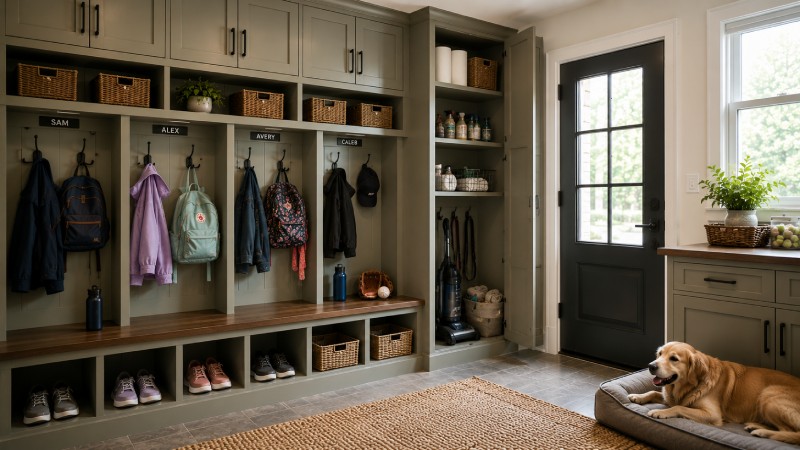
Strong mudroom storage systems begin by sorting belongings according to how often they are used. Daily items belong within easy reach.
Weekly items can move to upper cabinets or deeper storage. Seasonal overflow can live in the highest cabinets or in a nearby coordinated storage area. This approach keeps the room from becoming a catch all.
Families with children often benefit from locker style planning. Each child gets a vertical zone with hooks, a shelf, and lower shoe space.
That arrangement works well because it is easy to understand at a glance. Parents can quickly see what is out of place, and children can follow the system without confusion. Mudroom locker storage works because it is simple and repeatable.
Homes with pets, sports equipment, or hobby gear usually need more than basic coat and shoe storage. Towels, leashes, dance shoes, soccer bags, baseball equipment, and winter accessories all need a place. An experienced cabinet maker will ask about these items early because the room only works well when it reflects real household use.
When a Laundry Mudroom Combo Makes More Sense
A custom laundry room combined with a mudroom can become one of the hardest working spaces in the home. It supports arrivals, cleanup, laundry, folding, and household supply storage in one connected area. When it is designed well, it reduces clutter and shortens the number of steps needed for daily chores.
This setup works especially well when homeowners need laundry room cabinets, a folding counter, hanging space, and storage near the garage entry.
The design can include upper cabinets for detergents and paper goods, base cabinets for utility items, a counter over front load machines, and tall storage for cleaning tools or drying racks. The room becomes useful without looking harsh or overly utilitarian.
The best versions of this layout feel unified. Cabinet style, trim, and finish should connect the laundry side and the mudroom side, even though each area supports a different job. One side may focus on shoes, coats, and bags.
The other may handle linens, supplies, and appliance support. That balance helps the room do more without feeling crowded.
Materials and Finish Choices That Hold Up in a Busy Mudroom
Material choice matters because the mudroom is a high contact area. Painted wood cabinetry remains a strong option for many homes, especially when the goal is a classic built in look. It suits shaker, transitional, and many traditional styles well.
When finished properly, it offers a clean appearance and can be maintained with routine care and occasional touch up.
Stained wood and oak veneer can also be excellent choices, especially when the homeowner wants warmth and visible grain. Stained surfaces often hide small marks better than some painted finishes, though they still need proper cleaning and protection from standing moisture.
Matte finishes are popular because they reduce glare and support both modern and classic interiors. Slightly higher sheen finishes can be easier to wipe down, though they may show fingerprints and surface flaws more quickly.
Cabinet construction details matter too. Frameless cabinets often provide easier interior access and a cleaner modern look. Framed cabinetry can suit more traditional designs and support classic proportions.
Inset cabinet doors offer a furniture style appearance with a very tailored look, though they require precise fabrication and can raise the budget.
Soft close hinges and drawer slides are worth serious consideration in a mudroom because they reduce slamming, limit wear over time, and make the room feel quieter.
Mudroom Cabinet Material and Finish Guide
| Option | Best Use | Main Advantage | Care Notes |
| Painted hardwood or paint grade cabinetry | Classic, transitional, family homes | Clean built in look with flexible color options | Wipe spills promptly, use mild cleaner, expect touch ups in high contact areas over time |
| Oak veneer or stained wood | Warm, natural, craftsman, or transitional homes | Grain adds depth and can hide small marks better than some painted finishes | Dust with a soft cloth, avoid harsh cleaners, protect from standing moisture |
| Matte finish | Modern or understated spaces | Softer look with less glare | Darker colors may show oils from hands, clean with non abrasive cloth |
| Satin or semi gloss finish | Busy family spaces | Easier wipe down and a bit more light reflection | Surface imperfections may be more visible |
| Inset door style | High end traditional or furniture style cabinetry | Tailored appearance with precise fit | Requires skilled fabrication and installation |
| Frameless construction | Clean lined custom storage | Better access to cabinet interiors and efficient opening width | Hardware quality matters for long term performance |
What Affects the Cost of Custom Mudroom Design in Medina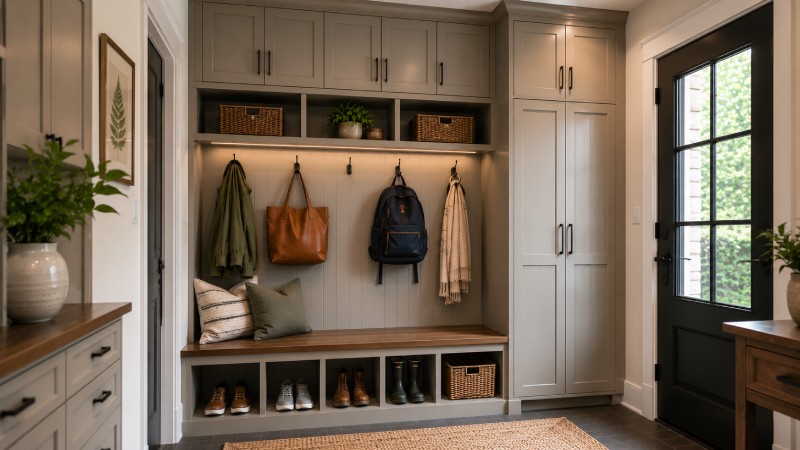
The biggest cost drivers are size, layout, and detail level. A simple wall with a bench, hooks, and upper cabinets will cost far less than a full mudroom renovation with floor to ceiling lockers, specialty storage, trim work, and a connected laundry room storage plan.
The more tailored the room becomes, the more design time, shop labor, and installation precision it requires.
Material and finish choices also shape the budget. Paint grade cabinetry, stained wood species, specialty veneers, decorative panels, and premium hardware all come with different costs. Door style matters too.
A flat panel painted door is different from an inset cabinet construction with furniture style details. Homeowners should weigh look, durability, and long term use together instead of focusing on one line item in isolation.
Existing room conditions can affect cost as well. Uneven walls, flooring transitions, electrical changes, appliance relocation, and trim work may all add labor.
That is why site measurement and a detailed design discussion are so important at the start.
A good custom shop helps homeowners understand where the budget goes and which choices have the biggest effect.
What to Expect During a Custom Mudroom Project
Most projects begin with a consultation and detailed measurement. This is when the team studies the room, learns how the household uses it, and identifies issues such as traffic bottlenecks, poor storage habits, outlet placement, or door conflicts.
The strongest projects begin with a clear look at what is not working now.
The design phase turns those needs into a plan. That may include cabinet elevations, storage mapping, material and finish selections, and hardware choices.
Homeowners should expect conversations about how many pairs of shoes the room should hold, how much hanging space is needed, whether the bench should include drawers, and what items should stay hidden behind doors.
Once the design is approved, fabrication and installation follow. Precision matters at every stage, from door alignment to trim fit to hardware placement. Custom work should feel carefully executed, not rushed.
For project specific concerns such as wall conditions, moisture exposure, safe mounting, and floor transitions, homeowners should always consult experienced professionals instead of making assumptions.
Why Medina Homeowners Choose Custom Over One Size Fits All Storage
Homeowners choose custom mudrooms because they want more than a better looking wall. They want better daily function. The value shows up when backpacks stop landing on the floor, shoes stop blocking the door, and every family member knows where coats and bags belong.
The room starts supporting the household instead of slowing it down.
There is also a visual advantage. A custom mudroom can echo the style of the kitchen, nearby built ins, or other millwork in the home.
That consistency matters in open layouts where the entry is visible from living spaces. A fitted, intentional look makes the house feel more complete.
Long term value comes from fit, durability, and everyday use. A room that works well every day is easier to maintain and easier to appreciate.
That is one reason many homeowners who begin with a mud room later move on to custom closets, laundry cabinetry, or other custom built ins throughout the house.
How to Choose the Right Cabinet Maker for a Mudroom Project
Start with relevant experience. Not every shop that builds cabinets approaches mudrooms with the same level of planning. Ask to see projects that include mudroom cabinets, benches, locker storage, laundry combinations, and built in entry solutions.
These spaces require practical thinking as much as visual skill.
It also helps to ask who handles the project from design through installation. Many homeowners prefer working with a smaller team that stays involved throughout the process. That can make communication easier and help the finished room stay true to the original design intent.
Top Grain Interiors is known for that personalized approach, which fits the expectations of many Medina area homeowners.
Pay close attention to how the shop explains materials, hardware, workflow, and installation.
A skilled professional should be able to explain why one cabinet style suits your goals better than another, how a finish will behave in a busy family space, and which details will have the biggest impact on daily use. Clear answers early usually point to a smoother project overall.
FAQs About Custom Mudroom Design in Medina
How much storage should a mudroom have?
That depends on how many people use it and what they bring in each day. A good starting point is one main zone per family member, plus shared storage for cleaning items, seasonal gear, and pet supplies.
The best plans count real items such as coats, shoes, backpacks, and sports gear rather than guessing.
What is the best layout for a small mudroom?
A small mudroom usually works best with vertical storage, a compact bench, upper cabinets, and carefully controlled cabinet depth.
The goal is to keep the walkway clear while still giving every important item a place.
A custom layout often performs better than store bought furniture in tight spaces because it uses the full wall more effectively.
Are mudroom lockers better than open hooks?
For many families, yes. Mudroom storage lockers help assign space clearly and keep each person’s belongings contained. Open hooks are still valuable for quick access coats and bags, though they work best as one part of a larger storage plan rather than the only solution.
What cabinet finish is easiest to maintain in a busy mudroom?
Painted finishes, stained wood finishes, and durable lower sheen options can all work well when chosen carefully.
Busy family homes often do best with surfaces that are easy to wipe clean and forgiving enough for repeated contact.
The best choice depends on style, traffic level, color, and how much wood grain the homeowner wants to see.
Can a mudroom and laundry room share one design plan?
Yes, and in many homes they should. A combined laundry mudroom can support arrivals, folding, cleanup, and storage in one connected room. The key is giving each task a clear zone so laundry work does not interfere with entry traffic.
Is custom mudroom cabinetry worth it?
For homeowners who want tailored storage, a cleaner daily routine, and cabinets that actually fit the room, it often is.
A custom plan makes better use of wall height, corners, and household specific needs. The real value comes from how the room performs over time, not just from how it looks on day one.
Ready to Create a Mudroom That Works Every Day
A well-planned mudroom does more than store coats and shoes. It supports the pace of daily life, protects nearby rooms from clutter, and gives the household a better start and finish to each day.
When storage is built around real routines, the improvement is obvious almost immediately.
For Medina homeowners, a custom mudroom design offers a smart path to a more organized home. With the right mix of mudroom cabinets, bench seating, locker storage, and durable finish choices, even a hard-working entry can feel polished and calm.
Whether the project involves a dedicated mudroom, a mudroom remodel, or a connected custom laundry room, the goal stays the same: create a room that looks right, works hard, and lasts.
Top Grain Interiors brings that thinking to every project, with custom cabinetry and interior woodwork tailored to the home, the family, and the way the space is truly used.
If your entry is ready for a better plan, this is the right time to start the conversation.