
Most homeowners don’t start a bathroom remodeling project because they want something trendy. They start because the space no longer works. Drawers are shallow, vanities feel cramped, tile looks tired, or the layout fights daily routines. Over time, these small frustrations stack up, turning a room meant for comfort into a constant annoyance.
The stress grows once planning begins. Inspiration photos look great online, yet they rarely explain how storage works, how finishes hold up, or how the bathroom layout fits real life. A bathroom remodel idea that looks perfect in a magazine can fall apart when cabinetry, lighting, and plumbing are not planned as a single system.
A well-designed bathroom solves those problems from the inside out. At Top Grain Interiors, every bathroom design begins with how the room is used, then builds outward with custom cabinetry, durable materials, and thoughtful layout choices. Below are nine bathroom remodeling designs that consistently deliver comfort, longevity, and visual balance for Medina homeowners
What a Well-Designed Medina Bathroom Remodel Really Looks Like
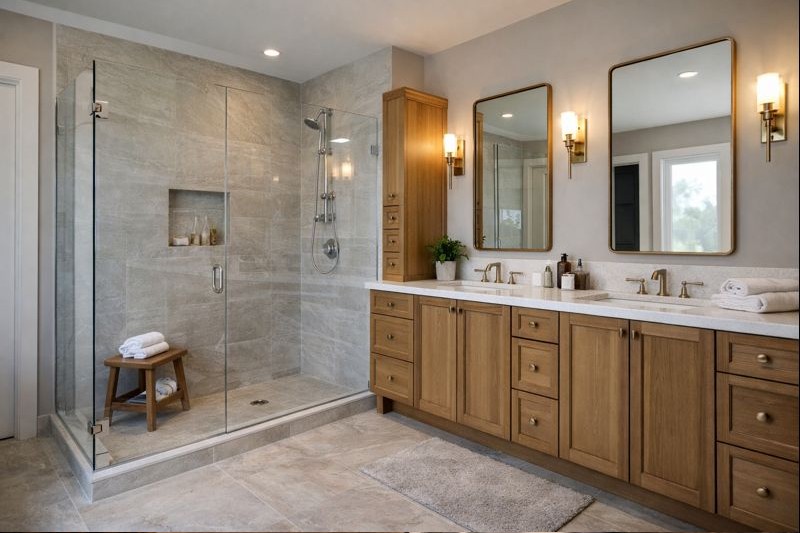
A strong bathroom design does not rely on flashy finishes or short-lived trends. It improves how the room feels and functions every day. That means clear traffic paths, storage that matches habits, and surfaces that age gracefully.
In Northeast Ohio homes, humidity control, durability, and ease of cleaning matter just as much as style. Bathroom remodeling designs that succeed here balance visual appeal with practical construction details, especially around cabinetry, ventilation, and moisture resistance.
The designs below are grouped by purpose. Each one solves a different set of problems, so homeowners can match a style to their space rather than forcing a look that does not fit.
Before Choosing a Design, Lock In the Non Negotiables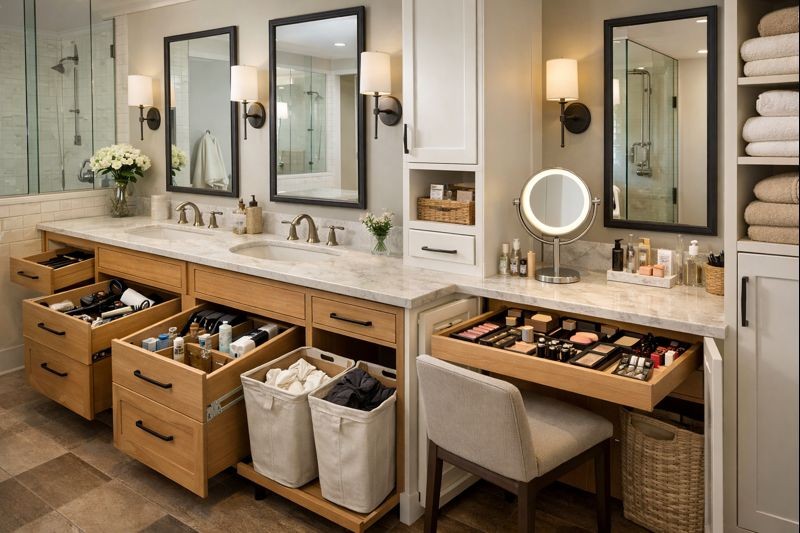
Start with the type of bathroom
A primary bathroom, guest bathroom, and powder room serve very different roles. A primary bathroom needs layered storage, calm lighting, and room to move. A guest bathroom should feel welcoming and easy to maintain. A powder room can carry more personality with fewer functional demands.
Identifying the bathroom type early helps narrow bathroom design ideas and prevents wasted square footage. This step also shapes vanity size, cabinet depth, and fixture placement.
Define habits, not just style
Design works best when it reflects real routines. Who uses the bathroom first in the morning, how towels are stored, and whether makeup or grooming happens at the vanity all matter. These answers guide drawer configuration, countertop height, and mirror size.
Custom cabinetry shines here. Drawer dividers, pullout trays, and built-in hampers create order without clutter.
Decide what stays and what moves
Plumbing changes raise both cost and complexity. Keeping the tub, toilet, or shower location can free up budget for better cabinetry or tile. When layout changes are needed, they should serve a clear functional goal rather than cosmetic preference alone.
Design 1: The Spa Shower Bathroom
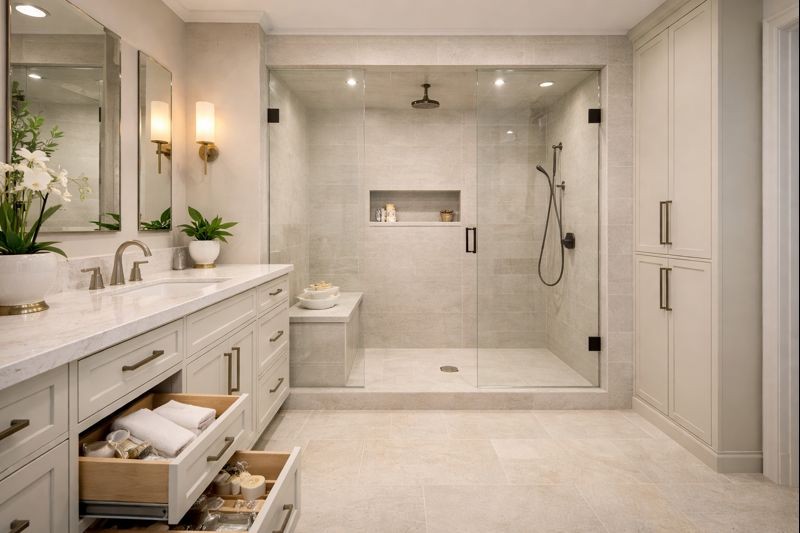
This design centers the walk-in shower as the focal point. Clear glass doors, minimal hardware, and continuous tile surfaces create an open feel, even in a modest bathroom space.
From a cabinetry standpoint, spa-like bathrooms rely on hidden storage. Deep drawers beneath the vanity hold daily items while tall linen cabinets store towels out of sight. Soft-close hardware keeps the room quiet and composed.
Material choices matter. Porcelain tile with a matte finish offers slip resistance and easy care. Built-in shower niches should align with grout lines to keep the look clean and intentional.
Design 2: The Timeless Tile Bathroom
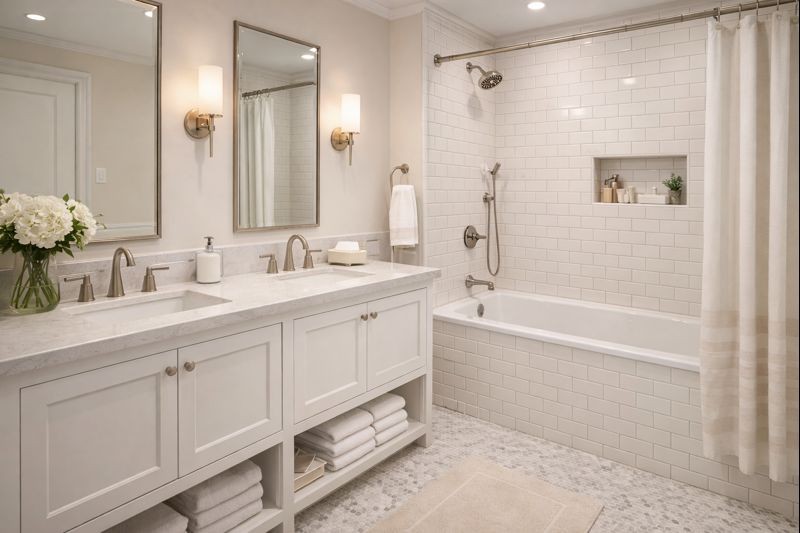
A timeless tile bathroom avoids extremes. Neutral bathroom tile, balanced proportions, and simple patterns create a look that stays relevant for decades.
Subway tile, large format porcelain, and classic mosaic floors all work when paired with restrained grout color. Grout selection deserves careful attention, as contrast can feel bold while blended tones feel calmer.
Cabinetry in these bathrooms leans toward inset or partial inset doors for a tailored look. Painted finishes in soft whites or warm neutrals pair well with stone or quartz countertops and understated fixtures.
Design 3: The Modern Warm Wood Bathroom 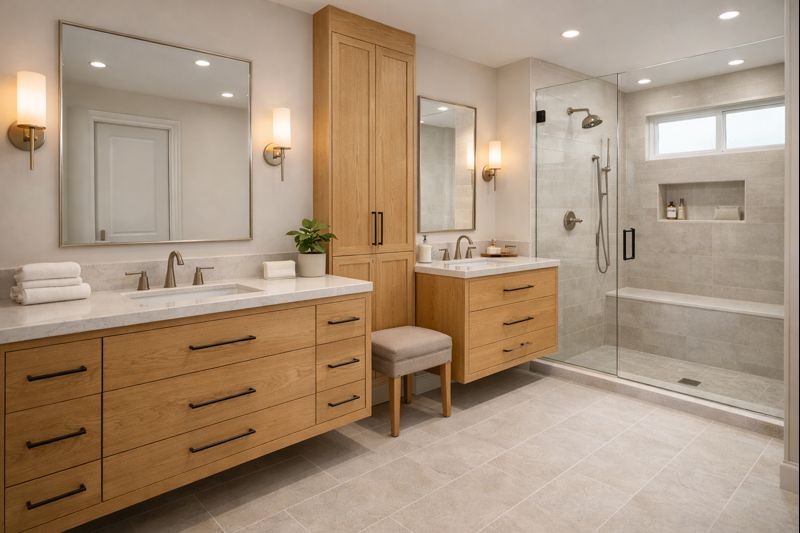
This design blends clean lines with natural materials. Wood tone vanities or built-in linen cabinets add warmth without sacrificing a modern feel.
In a bathroom, wood finishes must be sealed properly. Rift or quarter-sawn oak veneers perform well due to their stability. A satin finish protects the surface while keeping the grain visible.
Floating vanities are popular here, though furniture-style bases work just as well in larger bathrooms. The key is balance between wood, tile, and light, so no element overwhelms the space.
Design 4: The Bold Accent Wall Bathroom
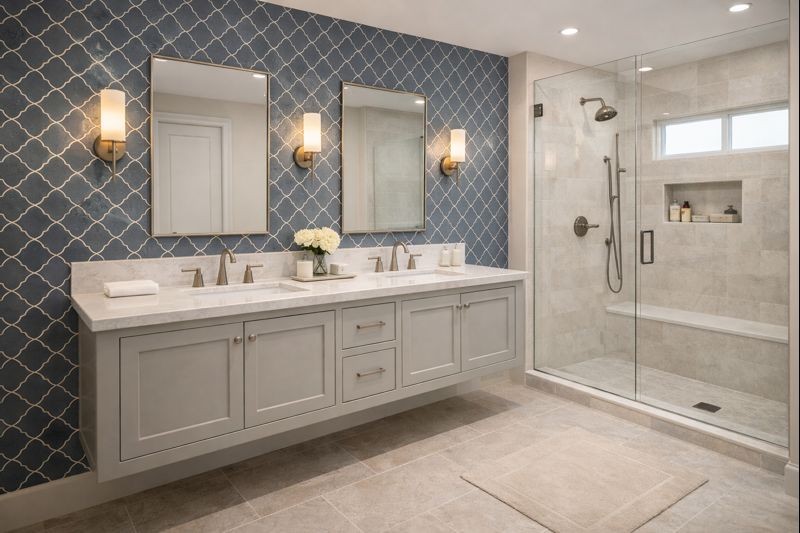
An accent wall adds personality without taking over the room. This approach works best when the rest of the bathroom remains calm and cohesive.
Accent walls often appear behind the vanity or inside the shower. Options include patterned tile, textured stone, or wallpaper rated for bathroom use. The surrounding surfaces should stay neutral to keep the accent from feeling busy.
Cabinetry plays a supporting role. Simple door styles and muted finishes allow the accent wall to stand out while keeping the bathroom style grounded.
Design 5: The Boutique Hotel Vanity Wall Bathroom 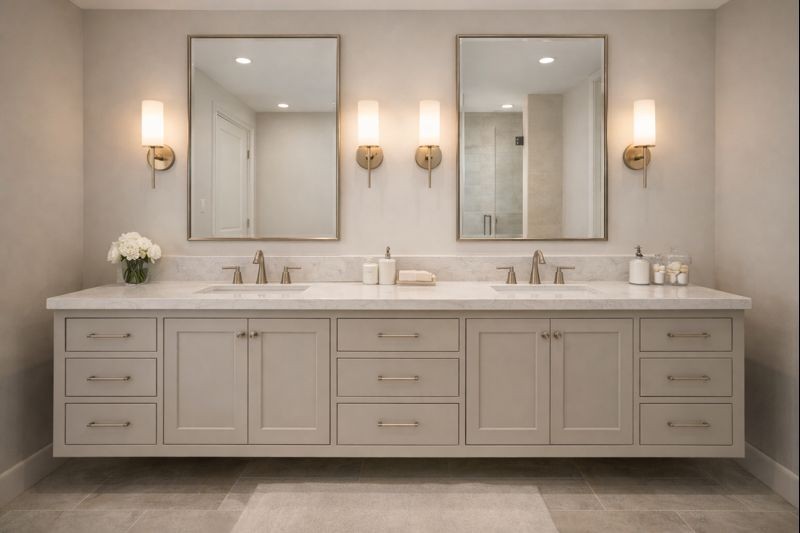
This design puts the vanity wall front and center. Symmetry, lighting, and proportions define the look more than color or pattern.
A double vanity with centered mirrors works well in primary bathrooms. In smaller spaces, a single wide vanity with generous drawer storage can achieve the same presence.
Custom cabinetry allows precise control over height, drawer layout, and integrated outlets. Wall-mounted sconces placed at eye level reduce shadows and improve daily grooming tasks.
Design 6: The Small Bath That Feels Bigger
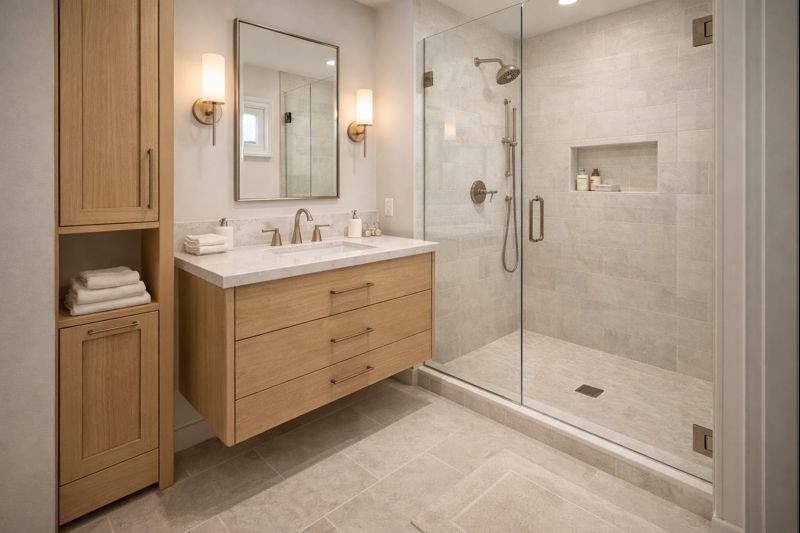
A small bathroom benefits from fewer visual breaks. Continuous flooring, wall-mounted vanities, and glass shower panels help the room feel open.
Storage must work harder here. Recessed medicine cabinets, tall vertical storage, and toe kick drawers capture space that often goes unused. A small vanity can still offer deep drawers when designed correctly.
Light colors reflect natural light, while mirrors placed opposite windows help brighten windowless bathrooms. Every element should earn its place.
Design 7: The Family Ready Bathroom
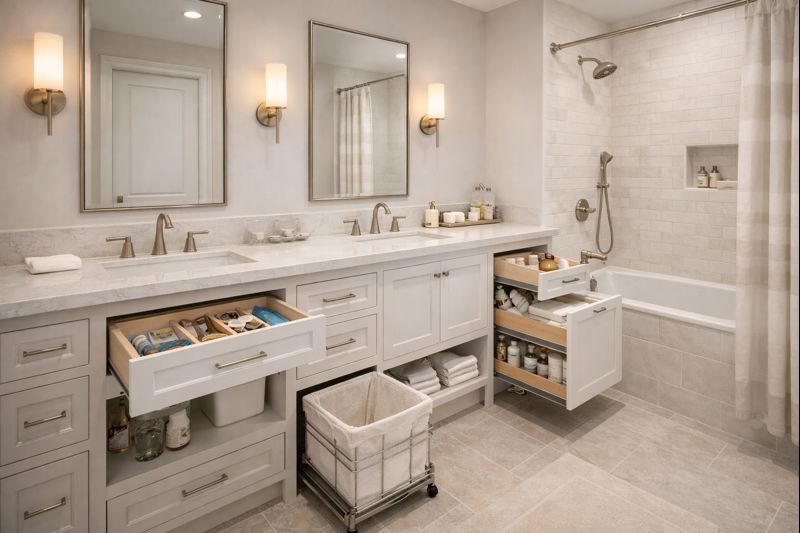
Family bathrooms see heavy use, so durability and organization lead the design. Closed storage keeps counters clear and speeds up daily routines.
Cabinet interiors can be customized with divided drawers, pullout hampers, and adjustable shelving. These features keep shared items organized and easy to reach.
Flooring should be slip-resistant and easy to clean. Porcelain tile performs well here, paired with grout chosen for stain resistance.
Design 8: The Aging Ready Bathroom
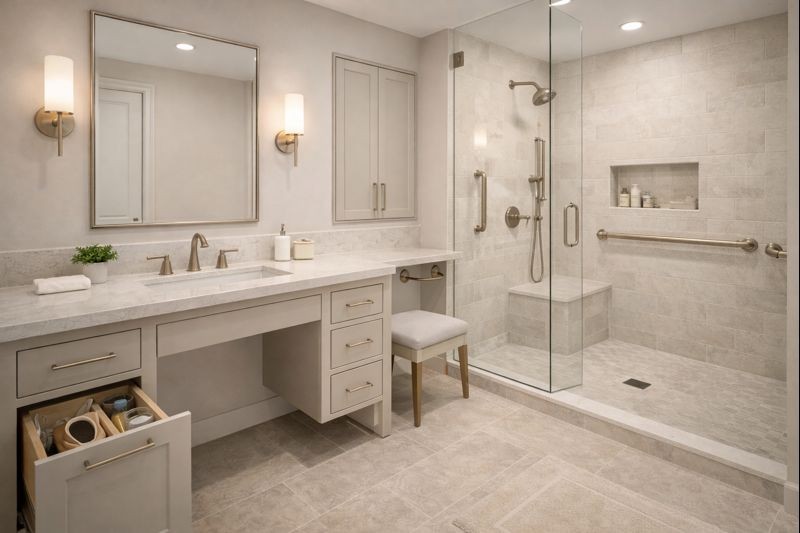
An aging-ready bathroom focuses on comfort without looking clinical. Wider clearances, stable surfaces, and thoughtful storage placement make daily use safer.
Walk-in showers with built-in benches, handheld faucets, and non-slip floors support long-term use. Vanities can include knee space or lowered drawers for seated access.
Cabinet hardware should be easy to grip, and lighting should eliminate shadows. These choices support comfort while keeping the bathroom design polished.
Design 9: The Tub Forward Bathroom
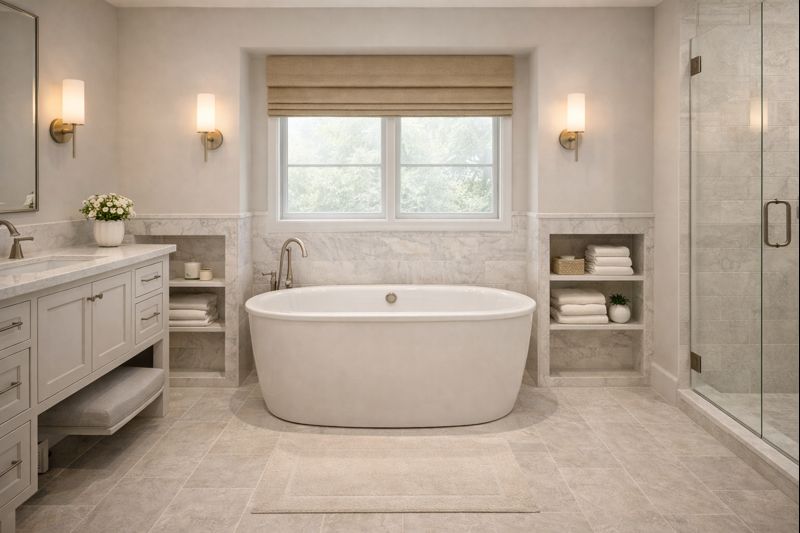
In this design, the bathtub becomes the visual anchor. Freestanding tubs, drop-in tubs with deck space, or undermount tubs all work when framed correctly.
Surrounding the tub with built-in shelving or cabinetry provides storage without clutter. Proper lighting highlights the tub while supporting relaxation.
Material selection matters. Natural stone, marble, or porcelain tile should be chosen with maintenance in mind. A tub-forward design works best when paired with simple finishes elsewhere in the room.
Choosing the Right Design for Your Home
Each of these bathroom remodeling designs serves a different goal. The right choice depends on what feels broken in your current bathroom.
- Storage issues point toward family-ready or hotel-style vanity designs
- Comfort concerns align with spa shower or aging-ready layouts
- Resale confidence often favors timeless tile or warm wood designs
- Visual impact suits an accent wall or tub forward bathrooms
A professional bathroom design process helps refine these choices before construction begins.
Where Custom Cabinetry Changes the Outcome
Stock vanities rarely fit a space perfectly. They leave gaps, waste inches, and limit storage options. Custom cabinetry solves these problems by tailoring every dimension to the room.
Inset doors offer a furniture-like appearance, while frameless construction maximizes interior space. Soft-close hinges and slides improve durability and daily comfort.
Finish selection also matters. Painted cabinetry offers flexibility in color, while stained wood highlights natural grain. Each finish should match the bathroom’s moisture levels and maintenance expectations.
What the Design and Build Process Looks Like at Top Grain Interiors
A successful bathroom renovation follows a clear sequence. It begins with in-home measurements and a discussion of goals. From there, layout drawings and cabinetry plans take shape.
Cabinet construction happens in-house, allowing control over materials, joinery, and finish quality. Installation follows once the room is prepared, ensuring proper alignment and fit.
This hands-on approach allows Top Grain Interiors to manage details that often get missed when cabinetry and remodeling are handled separately.
Bathroom Remodeling FAQs
How long does a full bathroom remodeling usually take?
Most projects take several weeks once construction begins, depending on scope and material lead times.
Is a walk-in shower better than a tub for resale?
Both can work. The best choice depends on the home’s overall layout and target buyer.
What vanity height works best?
Comfort height vanities around 34 to 36 inches suit most adults, though customization allows flexibility.
Are wood cabinets safe in bathrooms?
Yes, when built and finished correctly. Proper sealing protects against moisture.
Can a small bathroom still have custom cabinetry?
Absolutely. Small bathrooms often benefit the most from tailored storage solutions.
A Better Bathroom Starts With Better Planning
A well-planned bathroom remodel improves daily routines, adds lasting value, and reflects how a homeowner actually lives.
The right bathroom design balances layout, cabinetry, and materials from the start.
Top Grain Interiors brings decades of custom woodworking and bathroom renovation experience to every project.
With design and installation handled as one process, homeowners gain clarity, craftsmanship, and a bathroom built to last.
For Medina homeowners planning a new bathroom, thoughtful design paired with custom cabinetry makes all the difference.
Schedule a free in-home bathroom design consultation with Top Grain Interiors in Medina to turn your layout, storage, and finish ideas into a plan that actually works for your home.