
You sit down to work and reach for a binder. A stack tips. Cables peek out. A favorite title gets buried. The room looks busy when you need it to be calm.
When storage falls short, attention wanders. Books scatter into piles. The printer steals desk space. You start every session by clearing a path instead of getting after it.
Thoughtful office bookcases fix the mess. Power hides inside the cabinets, shelves fit the way you read and file, and the room supports your day.
At Top Grain Interiors in Medina, we design, build, finish, and install custom office bookshelves and home office storage under one roof, so the plan on paper becomes the room you use.
Medina Home Offices – Setting Clear Goals
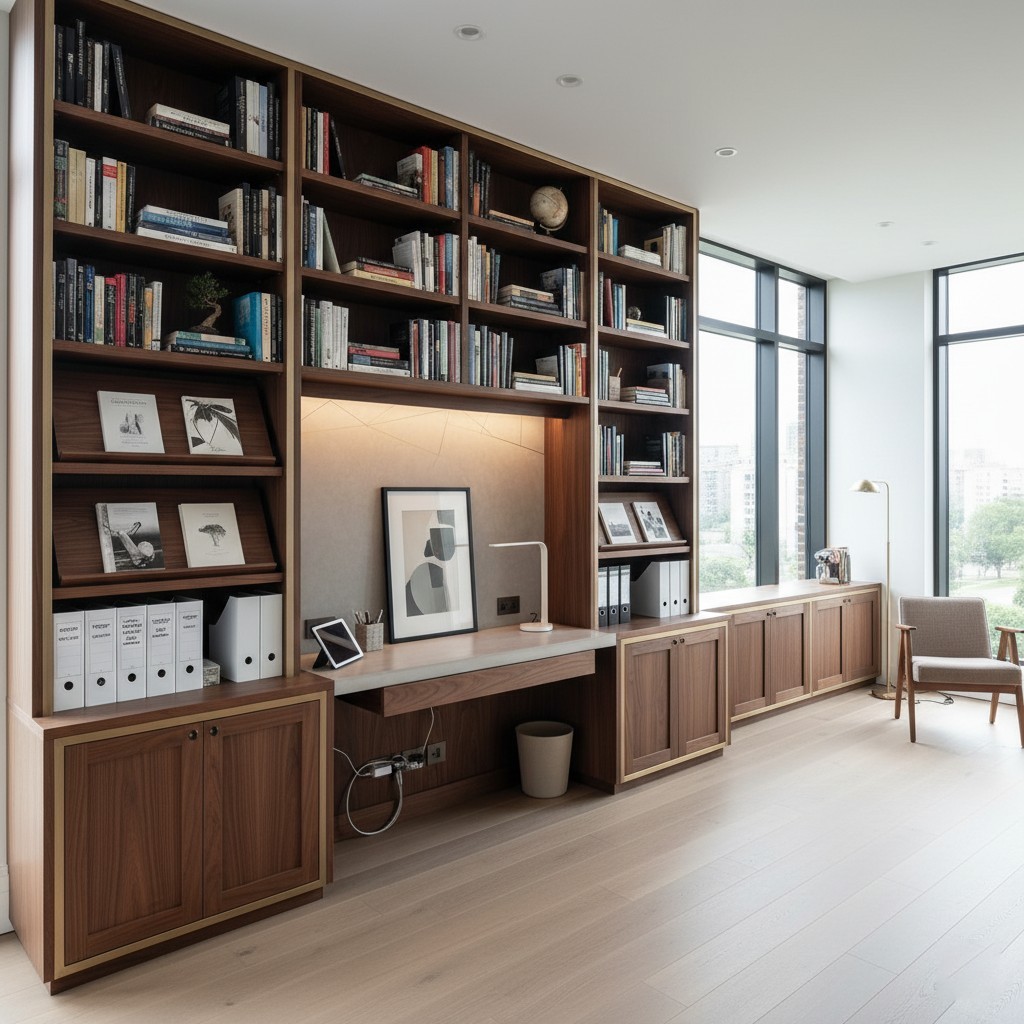
Before we sketch a single shelf, we map the way you work.
- What do you reach for first?
- Where do you sit for long calls?
- Which walls can carry tall bookcases and which need lower cabinets to protect daylight?
That quick discovery sets the size, door mix, and lighting plan.
Set zones in plain language. Keep reference books and current files at arm’s reach. Use base cabinets for bulky paper, bins, or gear. Place display items at eye level so the backdrop looks sharp on video. Label the bays to match your routine. The room will feel intuitive on day one.
Plan for growth. Leave a shelf or two for future binders. Add a clean cord path behind the desk for a second monitor or a docking station. When storage respects your habits, you stop juggling and start working.
Formats That Fit Your Room
Rooms shape bookcases. A full wall library suits long, solid walls. Half-height base cabinets with open shelves above keep windows clear and add a counter surface. In tight studies, a tall narrow shelving unit near the door holds daily items without crowding your main wall.
Corners and niches hold untapped space. Custom carcasses scribe to wavy walls and odd angles, so you capture inches that stock furniture leaves open. Where a desk faces the center of the room, a return-style credenza behind your chair keeps a printer, paper, and folders close without cluttering the desktop.
Sightlines matter. Place low bookcases under windows to keep light, then anchor the space with a tall section on a solid wall. The mix looks balanced and gives you both display and deep storage.
Storage That Works Every Day
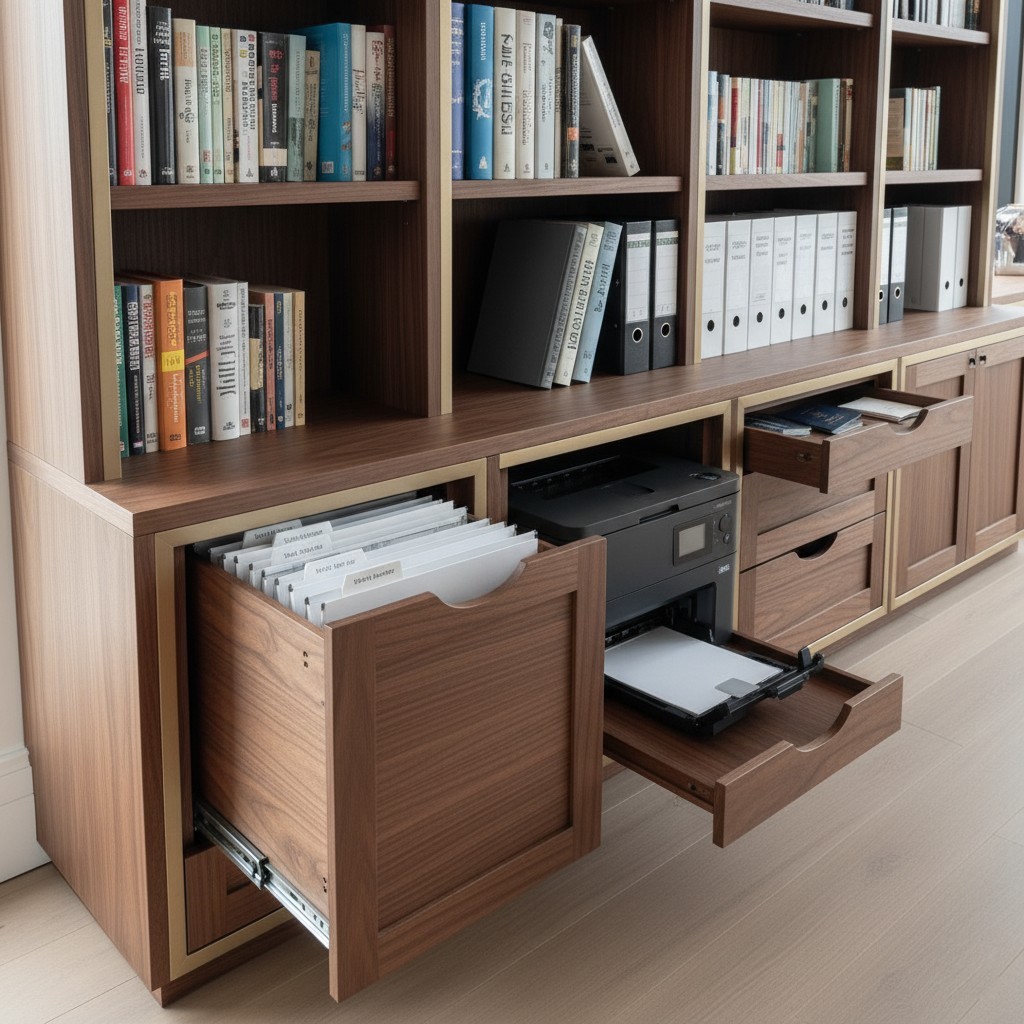
Open shelves invite reading and add warmth. Closed cabinets hide bins, folders, and spare gear. A smart home office blends both. Keep daily books and décor on open shelves, then tuck binders, reams, and tools behind doors below. Adjustable shelves let the layout flex with your collection, so paperbacks, tall art books, and ring binders all stand straight.
Build task features into the plan. Full extension file drawers keep folders square and easy to sort. Printer pullouts allow trays to open fully without tugging cords. A locking drawer protects passports and checks. If you keep many heavy books, step up shelf thickness or add a hidden stiffener to prevent sag.
A helpful guideline keeps the body relaxed. Store daily items between knee and shoulder height. High bays carry display and seldom used books. Lower bays carry paper and supplies on soft-close slides for quiet access.
Style, Doors, and Architectural Details
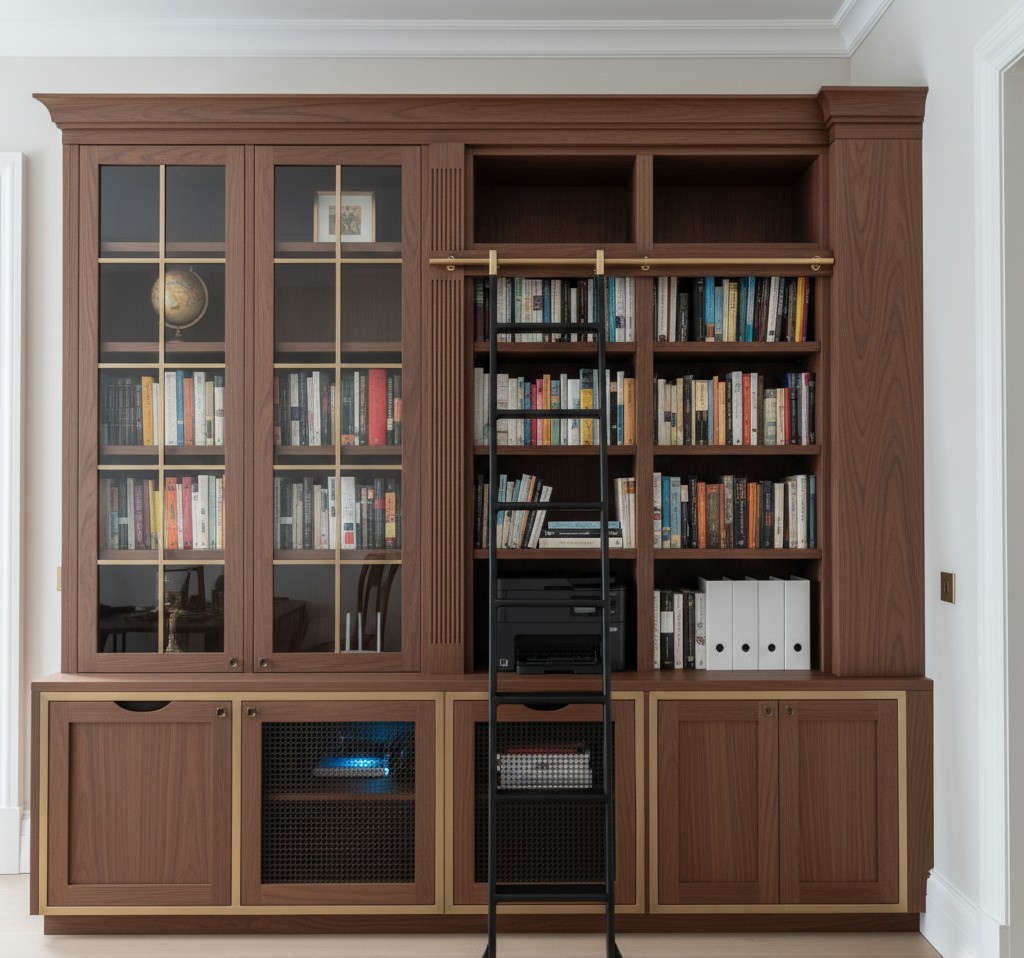
Style drives mood. Face frame cabinets with inset doors read classic and furniture grade. Frameless boxes read clean and modern with maximum opening width. Either path can look refined when the faces align and the reveals are tight.
Door choices tune function and feel. Glass doors protect favorite titles from dust while letting color and texture show. Metal mesh breathes if you park a modem or router inside. Reeded or fluted accents add texture to tall ends and pilasters. If you picture a library ladder, add a rail and mind clearances, especially if children visit.
Trim ties the room together. Match crown to nearby casing for a true built-in look. Scribe stiles to uneven drywall so light does not reveal gaps. These small steps separate custom millwork from freestanding office furniture.
Office Bookshelves Materials and Finishes That Age Well
Pick materials for strength, look, and care. Use this quick guide to choose wisely.
| Material | Best Use | Strengths | Care |
| Solid hardwood, like oak, maple, cherry | Face frames, doors, trim | Long wear, repairable, rich grain | Keep humidity stable to limit movement |
| Furniture grade plywood | Shelves, sides, backs | Strong for span, holds fasteners | Edge band or solid lip exposed edges |
| MDF | Painted doors and panels | Smooth paint surface, stable | Protect from standing water, mind long spans |
| Wood veneer on plywood | Panels and ends | Real wood look on stable core | Clean with non abrasive products |
| Tempered glass | Doors, display shelves | Dust control, light spread | Observe shelf load ratings |
Stain shows grain and adds warmth. Paint calms visual noise and pairs well with glass doors and open shelves. Warm whites, mushroom, and taupe brighten small rooms. Deep navy or charcoal suit larger offices, especially with brass or matte black hardware. Specify durable topcoats so daily touch does not wear through.
Shelf span affects performance. For most book loads, keep 3/4 inch plywood shelves to roughly 28 to 32 inches wide. For wider spans or big art books, use 1 inch or add a solid front lipping to keep lines straight.
Lighting That Flatters Books and People
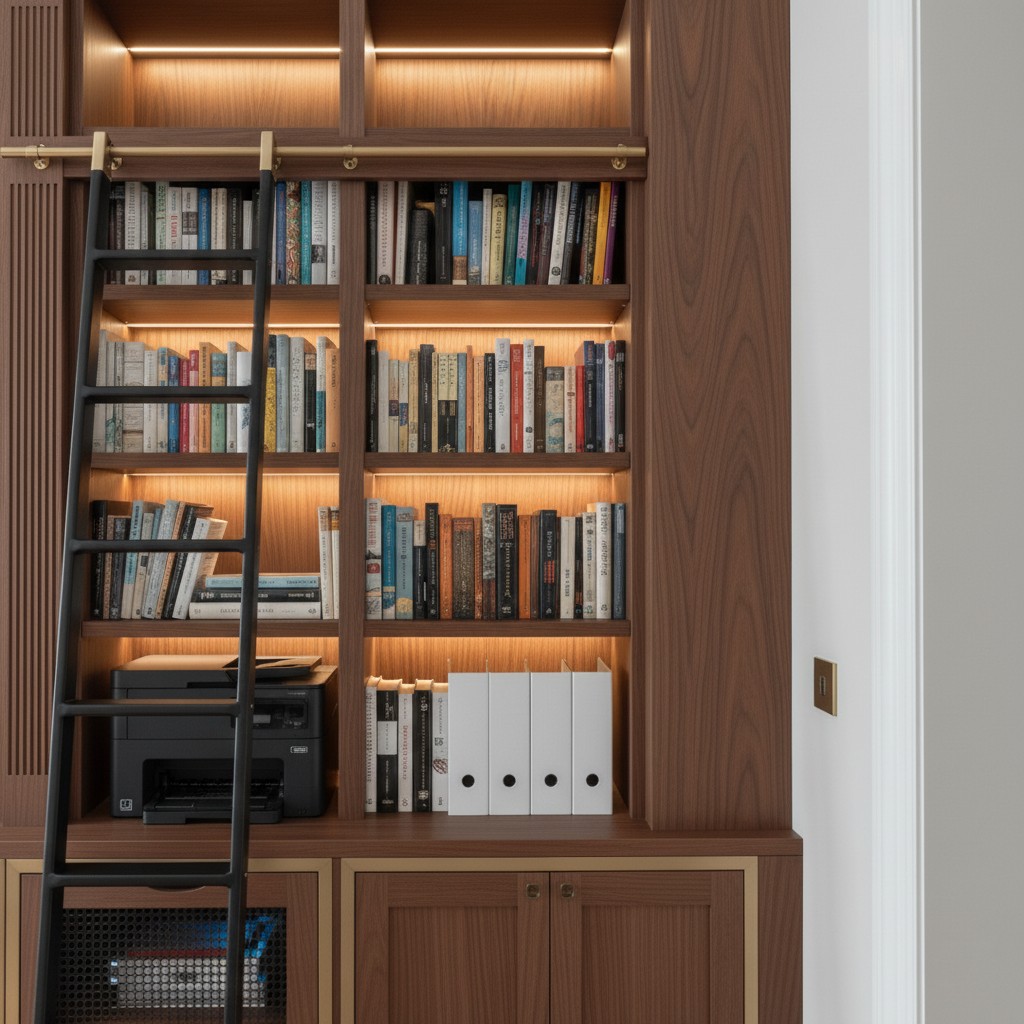
Layered light brings shelves to life. LED strips under shelves wash book spines evenly. Puck lights inside glass bays add sparkle to awards and art. Warm white in the 2700 to 3000 K range keeps paper easy to read and skin tones natural for video calls.
Plan drivers, dimmers, and wire paths with the cabinet layout, not after. Low voltage cables route in hidden channels and removable backs. Use a dimmer to shift from work mode to evening reading. Leave vent space near any device that produces heat. Light looks best when the cabinet shop finish is smooth and corners are crisp.
Power, Data, and Cable Management
Start with a power map. Give the printer its own outlet behind a base cabinet. Add grommets where devices sit so cords drop cleanly. A removable false back hides routers and surge protectors, yet leaves them easy to service. Pull a spare data line for later. Your setup will change, and a quiet chase keeps you from drilling holes later.
Vent electronics. Use mesh doors, louvered panels, or a pair of neat vent slots at the top and bottom of a bay. Drives and modems run cooler and last longer. Keep charging drawers in the plan if you want a clear desktop with cables out of sight.
Layout and Accurate Sizing
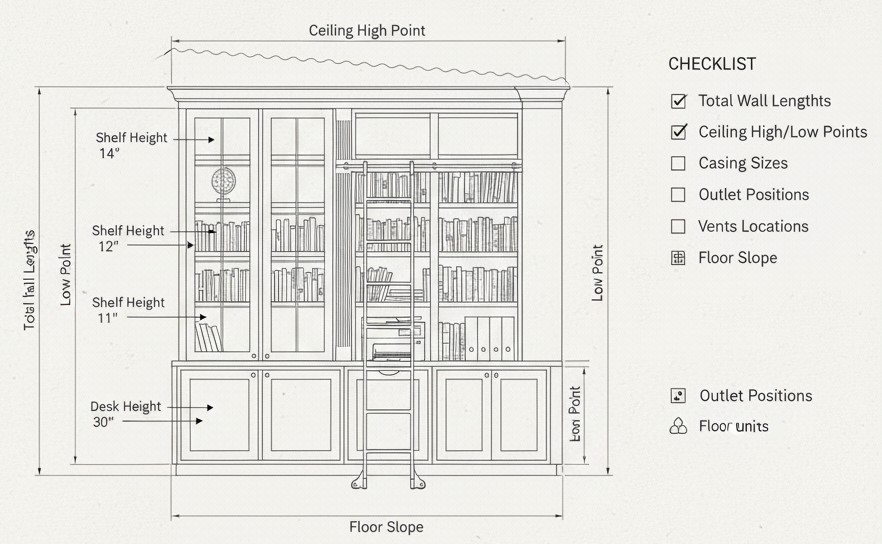
Start with careful measurements. Check ceiling height in several spots, confirm corners for square, and find every vent and outlet. Measure trim widths, window sills, and door swings. Good numbers prevent design surprises and make installation tidy.
Size shelves for real books. Many hardcovers need 11 to 12 inches. Tall art books can reach 14. Mix spacings so the pattern looks deliberate. A standard desk sits around 29 to 30 inches high. Place the first shelf above the desk at a comfortable reach, then balance the bays for even rhythm across the wall.
Create a checklist:
- total wall lengths,
- ceiling high and low points,
- casing sizes,
- outlet positions,
- vent locations,
- and any floor slope.
Accurate inputs save time in the shop and lead to a tight final fit.
Build Quality and Installation
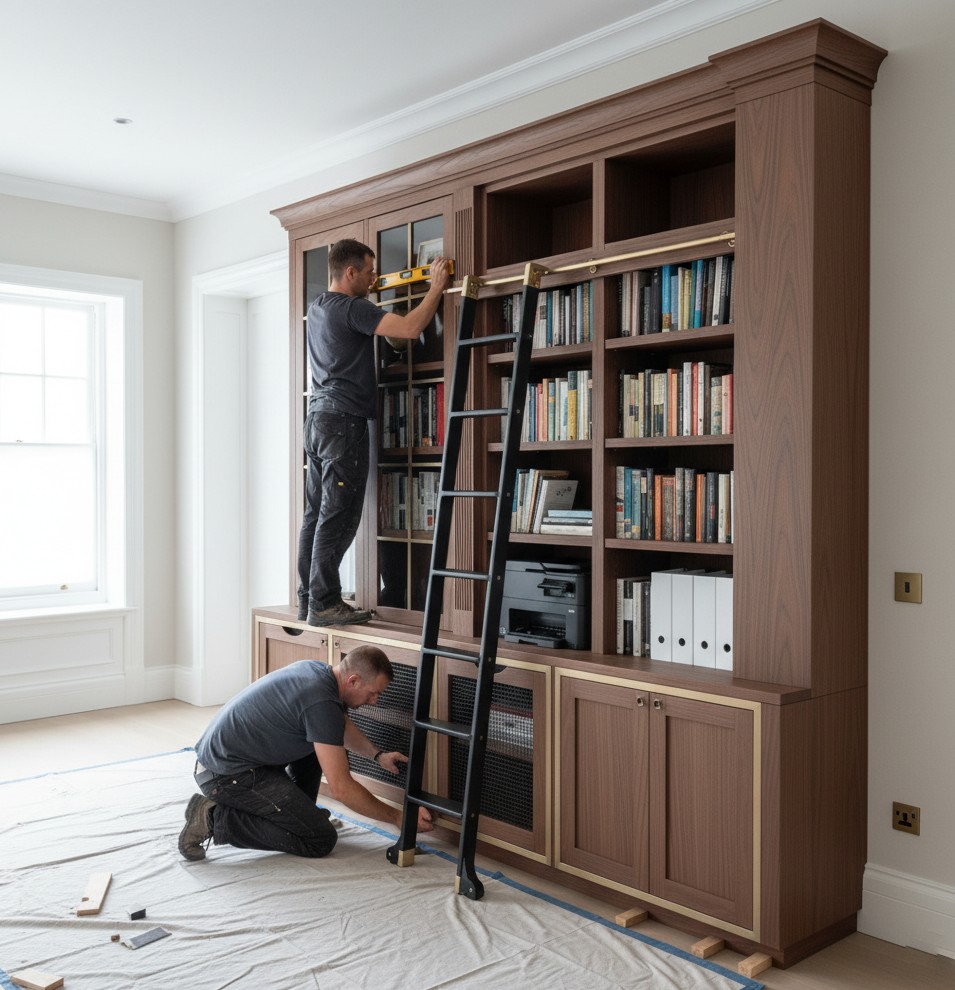
Strong carcasses and clean joinery hold value. We align shelf pin holes before finish so shelves sit level across bays. Plywood backs stiffen tall units. For painted work, we sand between coats and touch tiny seams after install so the whole run reads like furniture.
Installation begins on the base. Floors rarely sit perfectly level. We shim, fasten to studs, stack uppers, then set the crown.
Doors and drawers get their final reveal on site. Seasonal humidity matters in Northeast Ohio, so we recommend a steady indoor range to keep everything running smoothly.
A tidy job protects your home. We cover floors, manage dust, and walk the space before we start. That care shows in the finished room.
Office Bookshelves Budget Planning With Clarity
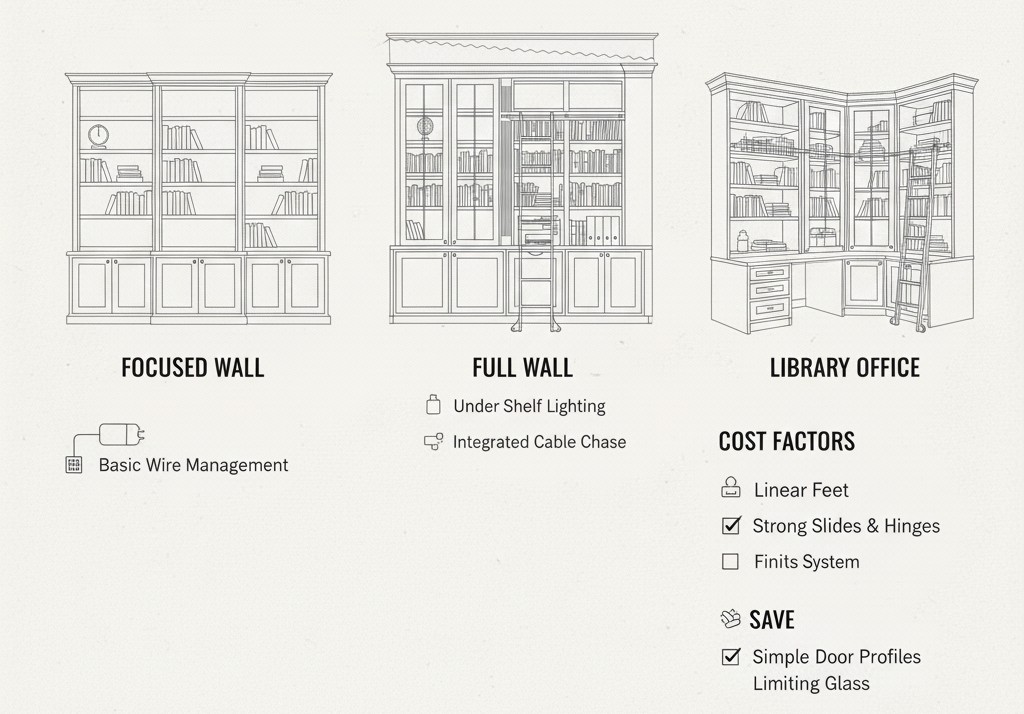
Cost follows scope. Linear feet, the number of doors, and the finish system set most of the budget. Glass or inset doors add fitting time. A shop-finished paint system with a durable topcoat requires more steps than a stain. Lighting and power planning add parts and labor yet pay you back daily.
Think in tiers:
- Focused wall: base cabinets with open shelves above, paint or stain, basic wire management.
- Full wall: floor to ceiling storage, a mix of open shelves and doors, crown to the ceiling, integrated cable chase, under shelf lighting.
- Library office: corner wraps, a ladder rail, glass doors on key bays, in-cabinet lighting, desk integration, premium hardware.
Spend where you touch and see the most. Choose strong slides and hinges, thicker shelves where you stack heavy books, and smart lighting. Save by keeping door profiles simple and limiting glass to showcase sections.
Why Choose Top Grain Interiors For Office Bookshelves
Top Grain Interiors is a local custom shop dedicated to built-ins, bookshelves, and full home office solutions for Medina and nearby communities. The same crew handles design, build, finish, and installation, which keeps quality and communication tight.
The company has crafted cabinetry and woodwork since 2003 under owner Misho Papuga, with projects ranging from home offices and bookshelves to kitchens, mudrooms, and wine rooms. Clients come to us when they want one team to plan and execute the whole project.
Many homeowners pair office bookcases with mudroom lockers, laundry room cabinets, or a bar and wine area for a cohesive look across the floor. Our services page and portfolio reflect this mix, which helps you keep style and finishes consistent throughout the home.
FAQs
1. What are the benefits of built-in office bookshelves compared to freestanding units?
Built-in office bookshelves maximize every inch of wall space, hide cords, and create a polished, permanent look that blends with the room’s trim.
Freestanding bookcases work for short-term setups but rarely match the fit or durability of custom cabinetry.
2. Which materials are best for office bookshelves?
Furniture-grade plywood and solid hardwood frames offer strength and long life.
MDF works well for painted finishes, while wood veneer adds real-grain warmth. Each choice depends on your preferred style and daily use.
3. Can office bookshelves include storage features like drawers or printer pullouts?
Yes. Custom office bookcases can combine open shelves for display with lower cabinets, file drawers, and slide-out printer trays to keep your workspace organized and clutter-free.
4. How do I choose the right size and layout for my office bookshelves?
Start with wall measurements, ceiling height, and how you use the room.
For small offices, mix low bookcases under windows with a tall section on one wall. Larger rooms can handle a full wall of shelving or a wraparound library layout.
Final Words – Ready to Plan Your Office Bookshelves in Medina?
A good office makes work feel simple. Start with your routine, choose formats that fit the room, and build in lighting and power that keep the desk clear.
If you are in Medina County or nearby, book a design consultation with Top Grain Interiors to plan office bookcases that look refined and work the way you do.
We bring design, shop craft, and installation together so your home office stays organized and good-looking for years.