
It’s Sunday afternoon, you finally sit down with a coffee in hand, and instead of a peaceful view of your living room, you see cords spilling out from the TV stand, stacks of books without a home, and toys lined up against the wall. The room feels less like a retreat and more like a storage unit.
That frustration only grows when family or friends drop by. No matter how much you tidy, the mismatched furniture pieces and lack of storage make the space feel unfinished. It’s not just about clutter, it’s about a room that never feels settled.
The good news is that you don’t need to fight your living room anymore.
Built-in cabinets designed specifically for your home create order, add character, and turn an ordinary space into a polished interior that works for both quiet evenings and big gatherings.
For Medina homeowners, custom-built-ins from a trusted local shop like Top Grain Interiors offer a long-term solution that balances beauty with function.
Why Built-Ins Fit Medina Homes
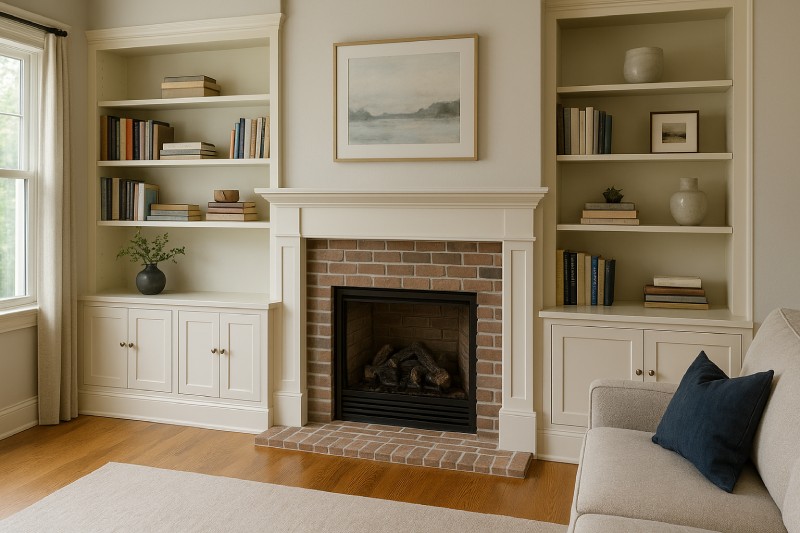
Medina homes, whether classic Colonials near the square or newer open-plan builds, share one challenge: open living rooms that demand both storage and style. A coffee table with drawers or a store-bought bookshelf rarely fits the scale of these spaces. That’s where built-ins shine.
Custom cabinetry is designed wall-to-wall and floor-to-ceiling if needed. Instead of forcing a generic unit into an alcove, a built-in works with the quirks of your architecture, whether it’s a bump-out wall, sloped ceiling, or deep recess beside a fireplace. That precision is what makes a room feel intentional.
Homeowners also gain a sense of permanence. Built-ins aren’t temporary furniture; they are crafted as part of the house itself.
The wood grain, trim details, and finish choices are matched to existing doors and baseboards, giving the space continuity. This makes the living room feel like it belongs in the home’s original design, not like an afterthought.
Core Configurations for Living Room Built-Ins
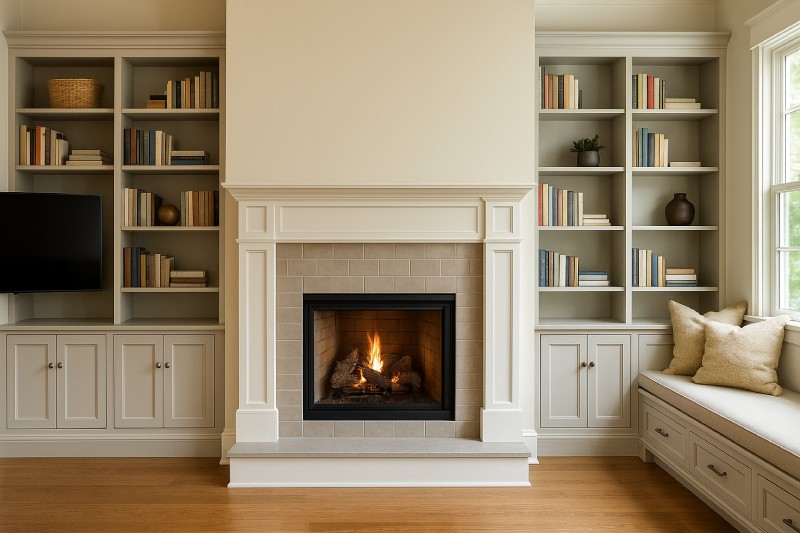
Every home has different storage needs, which is why there’s no single blueprint for built in cabinets in the living room. The most common configurations include:
- Media Walls: Base cabinets conceal electronics while adjustable shelves above provide display areas. Cords and devices are routed through hidden channels.
- Fireplace Surrounds: Cabinets and bookcases flank the fireplace, either symmetrical or intentionally varied, bringing balance to a central focal point.
- Window Seats: Bench seating with hidden storage beneath cushions, framed by bookshelves or cabinets on either side.
- Alcove Units: Perfect for spaces where store-bought pieces never fit, alcoves become functional with fitted shelving and base cabinets.
- Half-Height Consoles: Low built-ins under windows that keep sightlines open but still add hidden storage.
- Library Walls: For avid readers, floor-to-ceiling shelves with rolling ladders or glass doors create a home library within the living room.
Each of these options can be adapted with drawers, cabinet doors, open shelves, or glass-front display units depending on what you want to store and show.
Planning the Perfect Fit: Dimensions, Clearances, and Venting
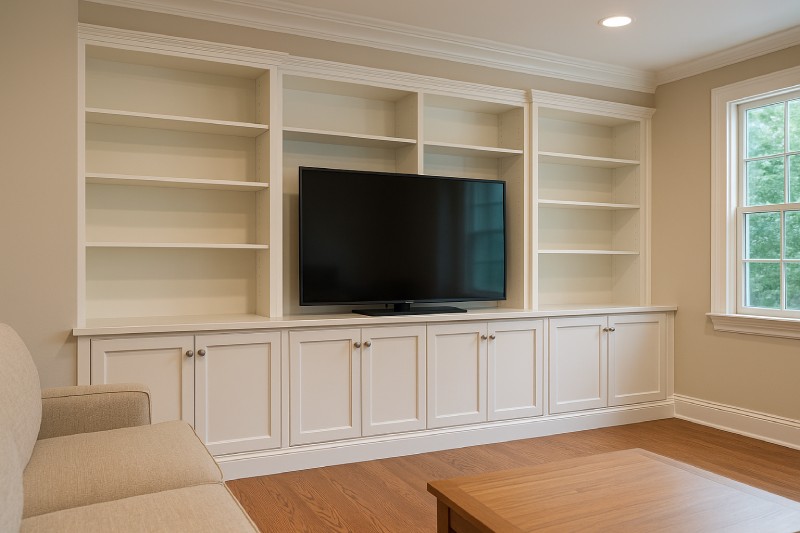
Designing built-in cabinetry is more than sketching a pretty picture. Proper planning ensures the piece functions as beautifully as it looks.
Depths: Media cabinetry is often 16-20 inches deep, enough to hold electronics without overwhelming the room. Going deeper is sometimes needed for AV receivers or gaming consoles, but only if balanced with overall room scale.
Heights & Sightlines: Base cabinets are usually 30 inches tall, topped with adjustable shelving to suit your ceiling height. Spacing shelves between 10-14 inches allows flexibility for books, baskets, and decor.
Clearances: Comfort matters. Leave enough walkway clearance-at least 36 inches in traffic paths-so built-ins don’t crowd furniture arrangements.
Ventilation: Electronics need airflow. Hidden venting panels, perforated cabinet doors, or routed openings on the back panels prevent overheating without ruining the design.
Storage Mix: What Goes Behind Doors vs. On Open Shelves
One of the biggest questions is what to keep visible and what to hide. Built-ins let you design for both.
- Closed Bases: Perfect for toys, games, blankets, and devices you don’t want to see.
- Open Shelving: Great for books, framed photos, and decorative pieces.
- Glass Doors: Ideal for prized collections, allowing visibility with dust protection.
- Drawers: Small but important. They handle remote controls, chargers, and other everyday items that otherwise float around the coffee table.
A well-balanced design usually combines these elements so the living room looks lived-in but not chaotic.
Style Direction: Make It Yours
Style drives the mood of the room, and cabinetry choices play a huge role.
- Transitional Shaker: A timeless option with clean frames, perfect for Medina homes that balance traditional and modern.
- Modern Slab: Flat cabinet doors with minimal hardware, often painted in bold tones like navy blue or black oak, for a sharp, contemporary edge.
- Classic Details: Beadboard backs, crown molding, or panelled ends add architectural weight, especially in older homes.
Color is equally powerful. White oak and walnut offer warmth and grain character. Painted finishes in soft whites or greys keep the room light, while deep colors create drama around a fireplace or TV wall.
Materials, Finishes, and Hardware
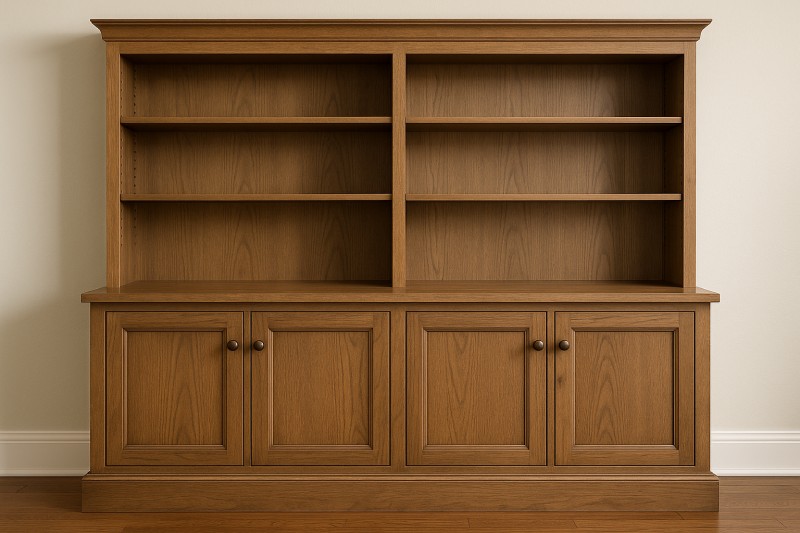
The backbone of any built-in is the material choice.
- Paint-Grade Hardwood Frames with MDF Panels: Cost-effective and stable, often used for painted cabinetry.
- Stain-Grade Woods: Maple, white oak, and walnut are popular for natural wood finishes that highlight grain.
- Finish Sheens: Satin or matte sheens work best in living rooms, avoiding the glare of high gloss.
- Hardware: Knobs and pulls are more than accents. Soft-close hinges and full-extension drawer slides are standard in premium cabinetry, adding everyday comfort.
Pro tip: Inset cabinet doors (set flush within the frame) give a refined furniture look, while frameless doors maximize interior space.
Light It Right: Integrated Illumination and Power
Lighting transforms cabinetry from storage to statement.
- Puck Lights: Small fixtures recessed into display cubbies create a warm spotlight effect.
- LED Strips: Perfect for bookshelves or behind trim, giving an even wash of light.
- Dimmers: Essential for adjusting brightness when watching TV.
- Power Access: Built-in outlets keep chargers hidden while keeping devices ready.
Always coordinate with a licensed electrician to ensure wiring is safely integrated into cabinetry.
Fireplace + TV Harmony
The fireplace and TV often compete for attention in a living room. Built-ins help bring order.
Instead of mounting a large screen above the mantel, consider designing side cabinets with integrated media towers. Pocket doors or sliding art panels can conceal a screen when it’s not in use.
The key is proportion. Tall towers on both sides of the fireplace should align with the mantel height or ceiling line to keep symmetry. For asymmetrical layouts, custom shelves and cabinets allow designers to balance the wall while still providing storage.
Micro-Zones: Bars, Reading Nooks, and Workstations
Built-ins don’t need to be limited to books and media.
- Dry Bar: Include wine racks, under-counter refrigerators, and glass storage for entertaining.
- Reading Nook: Window seats with built-in drawers make cozy corners more functional.
- Hidden Desk: Flip-down fronts or pocket doors hide a compact workstation, perfect for mail sorting or remote work.
These micro-zones expand the usefulness of the living room without sacrificing style.
Budgeting Smartly: What Drives Built-In Cabinet Cost
Built-ins are an investment, and knowing the cost drivers helps homeowners make clear decisions.
| Feature | Impact on Cost | Notes |
| Size & Scope | High | Floor-to-ceiling units cost more than half-height consoles |
| Doors & Drawers | Moderate | More moving parts = higher cost |
| Specialty Finishes | High | Stains, lacquers, or specialty paints add labor time |
| Lighting & Glass | High | Integrated lighting or glass fronts are upgrades |
| Hardware | Low to Moderate | Premium hardware adds quality but not extreme cost |
Typical ranges fall between $500 and $1,200 per linear foot, with design complexity and finish choices driving final pricing.
Process With a Local Pro
A smooth project follows a clear sequence:
- Consultation & Measure – Discuss needs, take accurate dimensions.
- Design & Drawings – 3D layouts to visualize proportions and features.
- Shop Build – Cabinets fabricated with solid wood or paint-grade components.
- Finish & Install – Spray finishes, precise trim fitting, and final adjustments.
Top Grain Interiors handles each step under one roof, which keeps design intent consistent from start to finish.
Styling the Shelves
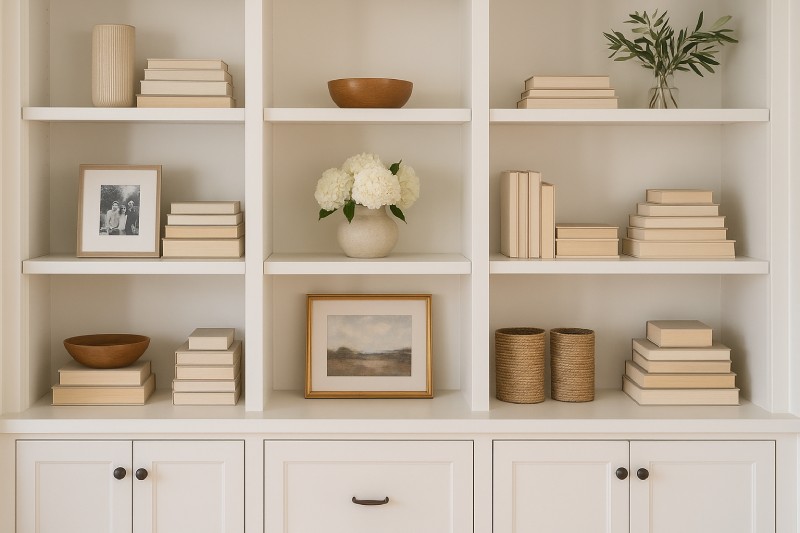
Even the best-built cabinetry looks cluttered if styled poorly. The trick is balance.
Group items in odd numbers, mix heights, and leave negative space so the eye can rest. Books don’t need to be lined edge-to-edge; stack some horizontally to vary rhythm. Seasonal swaps-like framed family photos or holiday accents-keep the display fresh.
A mix of wood, glass, metal, and fabric accessories ensures the shelves feel collected naturally rather than crowded.
Care & Maintenance
Well-built cabinets last decades, but only if cared for.
- Dusting: Use microfiber cloths for painted finishes and lightly damp cloths for stained wood.
- Touch-ups: Keep matching stain or paint for small chips. Professional refinishers can handle bigger issues.
- Hinges & Slides: Adjust if doors sag or drawers stick-most premium hardware is designed to be tuned.
- Protection: Avoid placing heat-producing electronics directly against wood without airflow.
FAQs
How long does a built-in project take?
Most projects run 6-10 weeks from initial consultation to installation, depending on design complexity and finish schedules.
Can you match my existing trim and stain?
Yes. Custom shops in Medina like Top Grain Interiors can profile-match millwork and custom-mix stains to blend with existing woodwork.
Do built-ins add value to a home?
They do. Built-ins increase both functional storage and architectural appeal, which can improve resale value.
What if I want a wine bar or coffee station in the living room?
That’s a common request. Built-ins can be designed with plumbing or refrigeration access if desired.
Are custom cabinets better than stock units from retailers?
For tricky spaces and long-term durability, custom always wins. Stock units are limited in size and finish, while custom cabinetry is built specifically for your home and needs.
Conclusion
Living rooms should feel inviting, not cluttered. Built-in cabinets crafted for your Medina home provide the storage you need and the design you want.
Whether it’s a media wall, fireplace surround, or multipurpose nook, custom cabinetry makes the difference between a room that struggles and a room that serves.
At Top Grain Interiors, we’ve been building premium cabinetry for Medina families since 2003. From design to installation, every project is tailored to the home and homeowner.
If you’re ready to transform your living room, reach out for a consultation and let us bring craftsmanship, comfort, and lasting value into your space.