
Picture this. You open a bottle you have saved for years, and the first sip is flawless. The cellar did its job.
Many Medina homeowners keep bottles in a pantry or a small wine fridge. Over time that invites heat swings, dry corks, and faded labels. Entertaining turns into a hunt across rooms.
A custom wine cellar fixes storage, display, and hosting in one place. With stable temperature, proper humidity, and cabinetry built for daily use, your collection stays safe and easy to pour.
At Top Grain Interiors, we handle design, build, finish, and install so the room you imagine is the room you use.
1. Why Luxury Wine Cellar in Medina
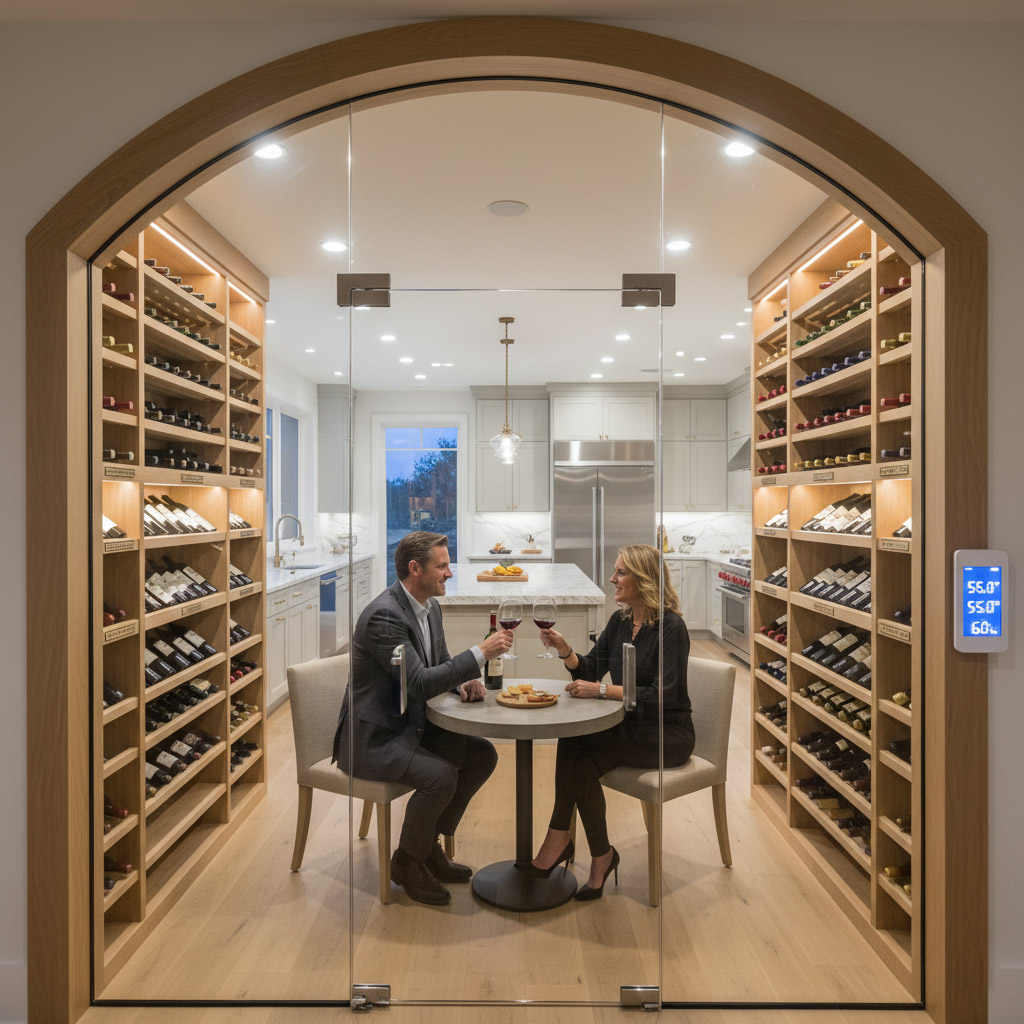
Medina homes often have basements and open living areas that suit a wine room or wine wall. A cellar protects taste with steady conditions around 55–57°F and about 60 percent humidity. That range keeps corks supple and oxidation at bay.
A dedicated room also changes how you host. Labels face forward, glassware is close by, and a small counter makes decanting simple. The cellar becomes a quiet focal point near the kitchen or great room, not an off-limits closet.
2. From Collection To Concept: Define Goals, Size, and Capacity of Your Wine Cellar
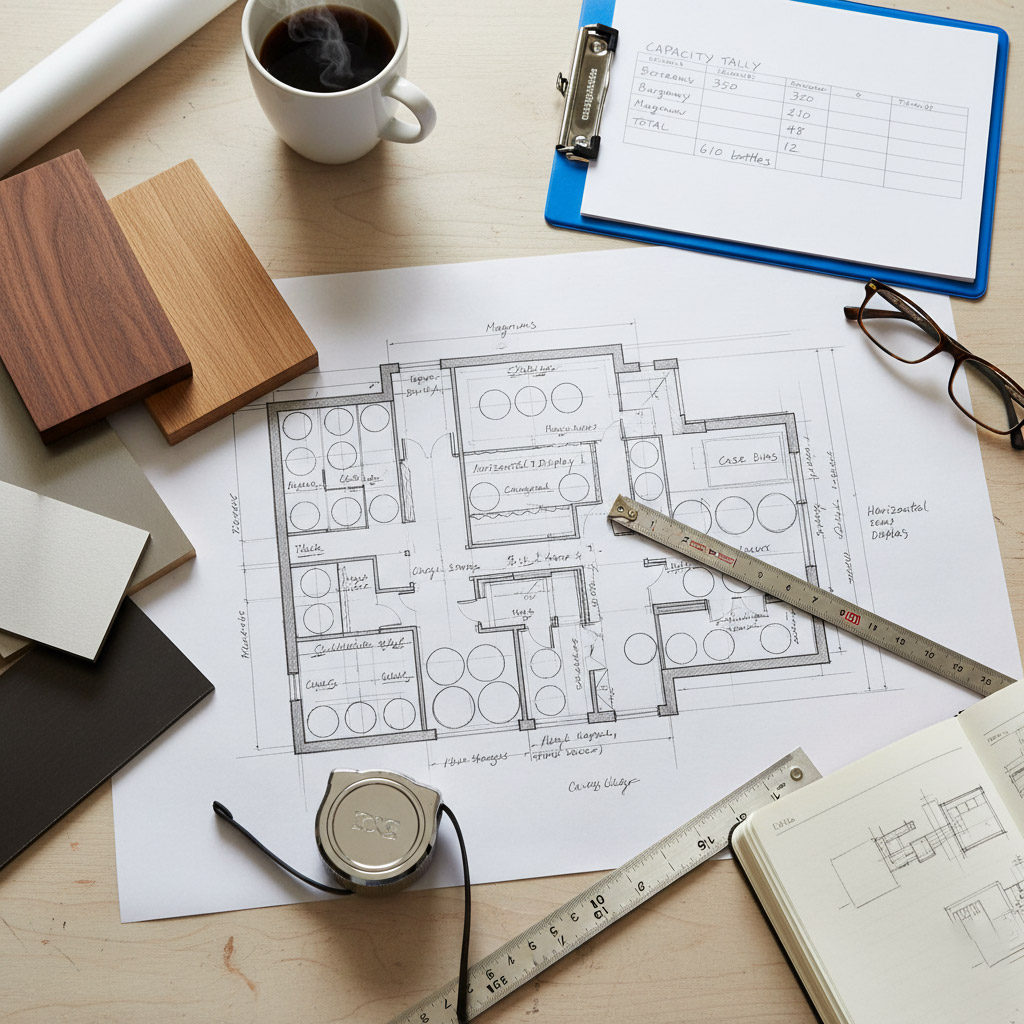
Start with a bottle audit. Count 750s, magnums, and any full cases you plan to store. Plan for capacity to support at least five years of growth, ensuring racks never feel cramped. That number sets the racking mix and the cooling load.
Decide how you will use the space.
Do you want standing tastings for two or a lounge for four?
Will a wine fridge hold ready-to-serve whites while the main racks age reds?
A simple written brief keeps style, layout, and lighting aligned.
3. Wine Cellar Location Strategy: Basement, Main Level Niche, or Addition
Basement cellars benefit from ground temperature, yet still need insulation, a continuous vapor barrier, and a dedicated cooling system. Plan for moisture control and check nearby mechanicals for vibration.
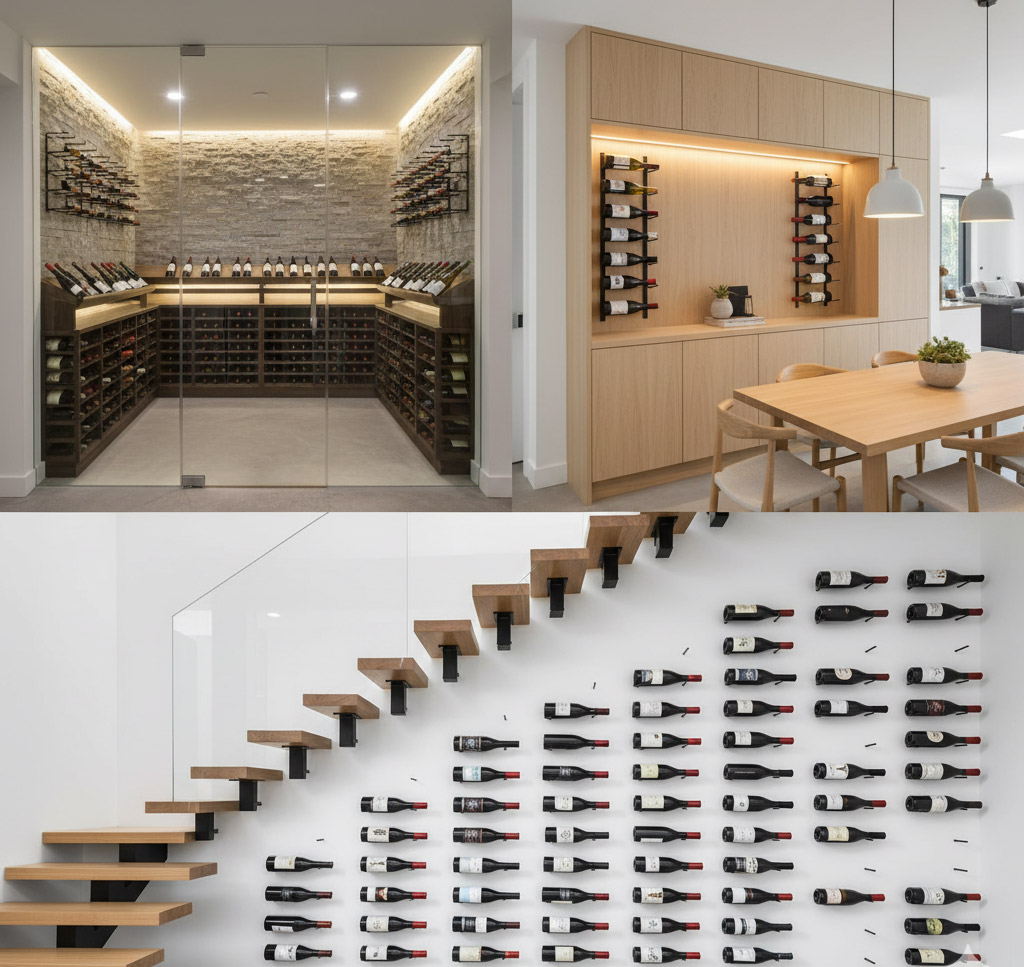
Main level niches favor display. Glass walls, quiet ducted units, and gasketed doors protect conditions while keeping the room visually open. Short on space. An under-stairs wine wall can hold several hundred bottles with label-forward metal racks.
4. Climate Control You Can Trust
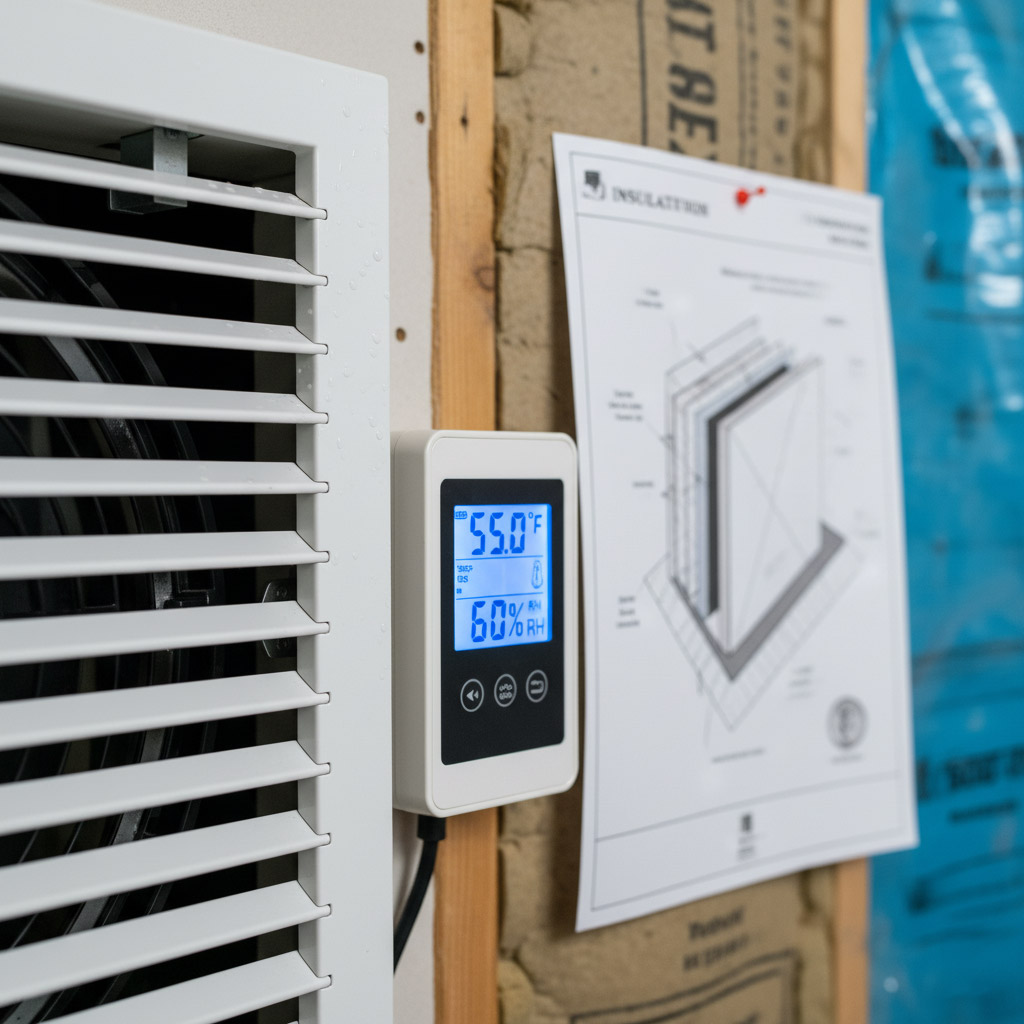
Wine prefers consistency. Hold roughly 55–57°F and 50–70 percent RH. Temperature swings and dry air are the main risks. Use closed-cell foam or equivalent insulation, seal every penetration, and place a vapor barrier on the warm side.
Choose the right cooling units:
- Through-the-wall for simple installs and smaller rooms.
- Ducted self-contained to move noise and heat away.
- Split systems for quiet operation and tight control.
Correct BTU sizing depends on volume, insulation level, and glass area. Add sensors for temperature and humidity with alerts to your phone.
5. Racking Systems and Display Styles That Work
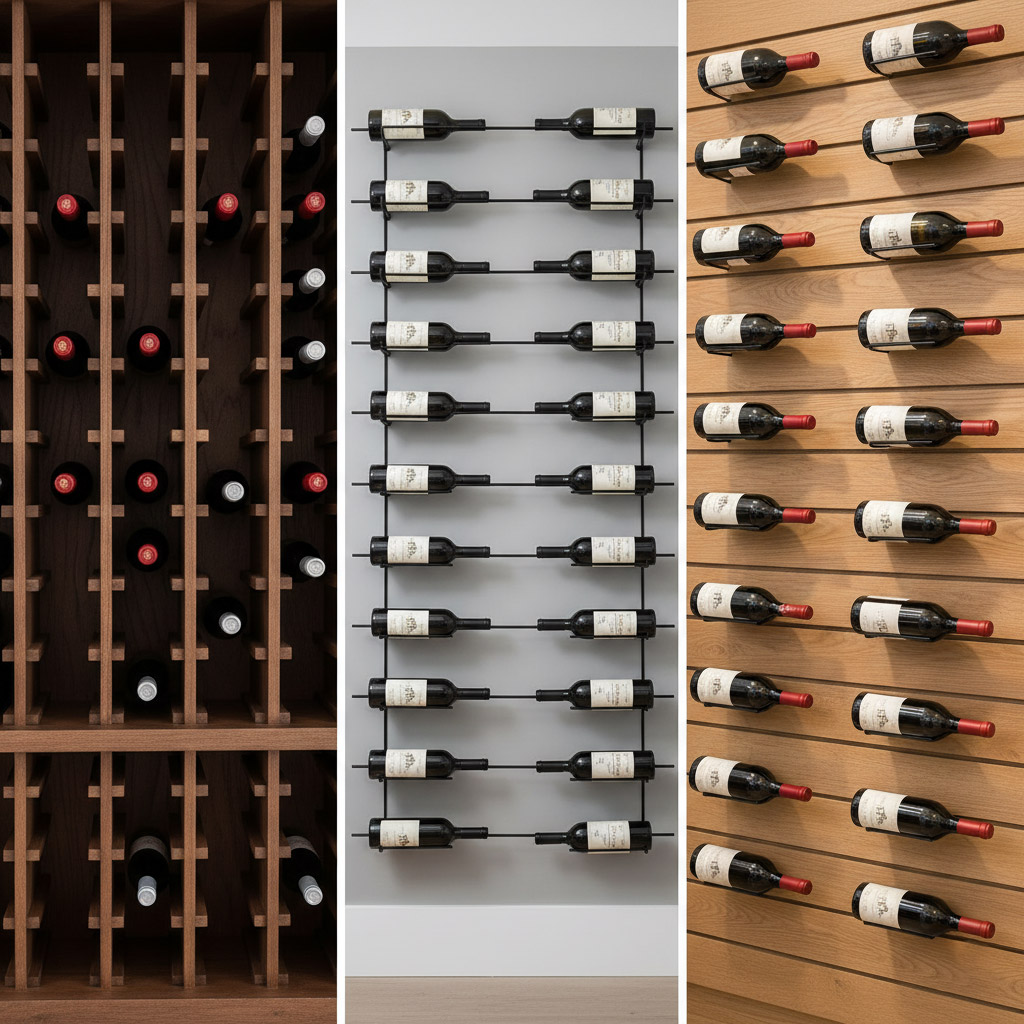
Traditional wood grids maximize capacity and suit mixed collections. Add diagonal bins for cases and set positions for magnums and jeroboams from the start.
Label-forward metal racking turns bottles into artwork. It pairs well with clear glass and modern finishes. For service, include a shallow counter with a durable top for opening and decanting, plus drawers for tools and stoppers.
6. Materials and Finishes With Cabinet-Maker Precision
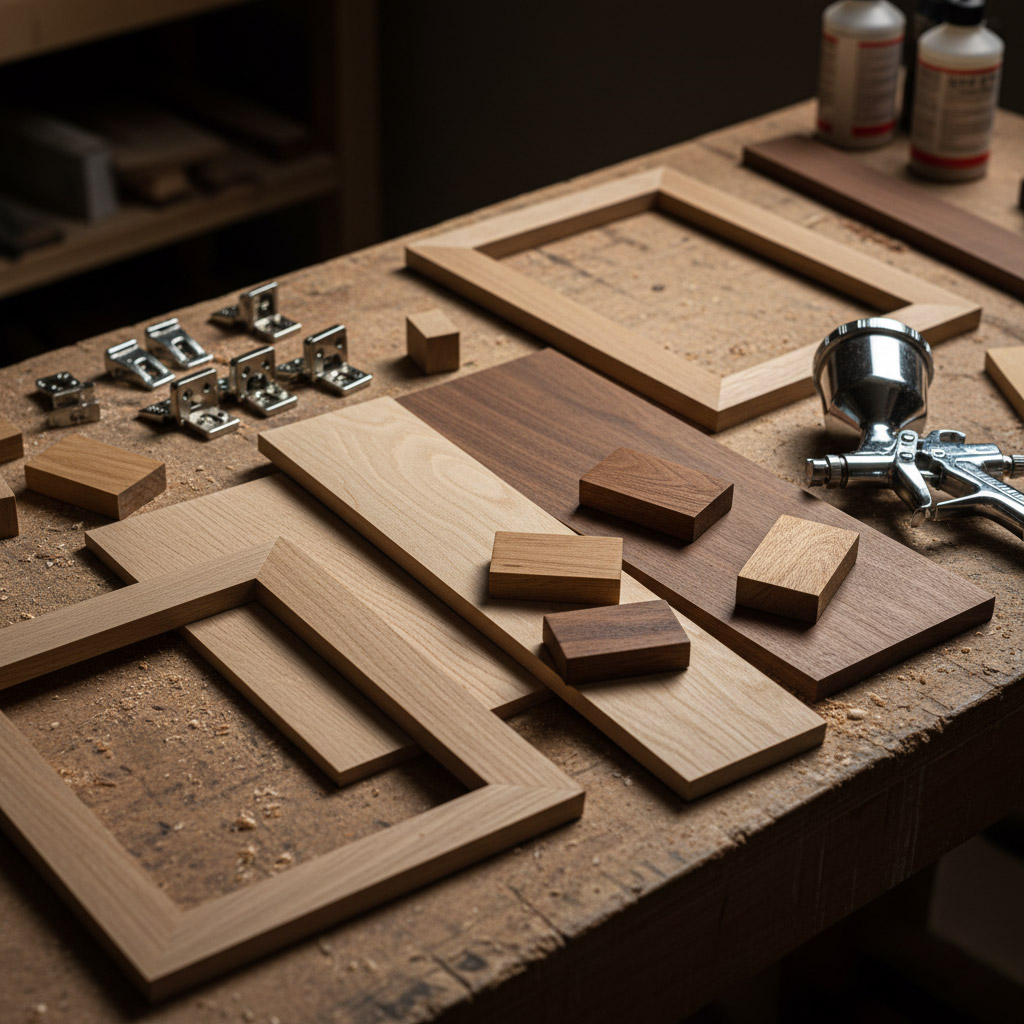
Stable species keep lines clean through the seasons. We often use quarter-sawn white oak, maple, or walnut. Inset furniture fronts bring a refined look to flanking cabinets. Frameless boxes maximize interior space where inches matter. Soft-close hardware protects glassware and cuts noise.
Finish choices should resist moisture and wipe clean. Catalyzed varnish and high-grade lacquer systems offer clarity and durable sheen.
Always sample stains under the cellar lighting. For counters, sealed wood adds warmth, while stone or quartz makes cleanup easy after tastings.
7. Light, Glass, and Acoustics
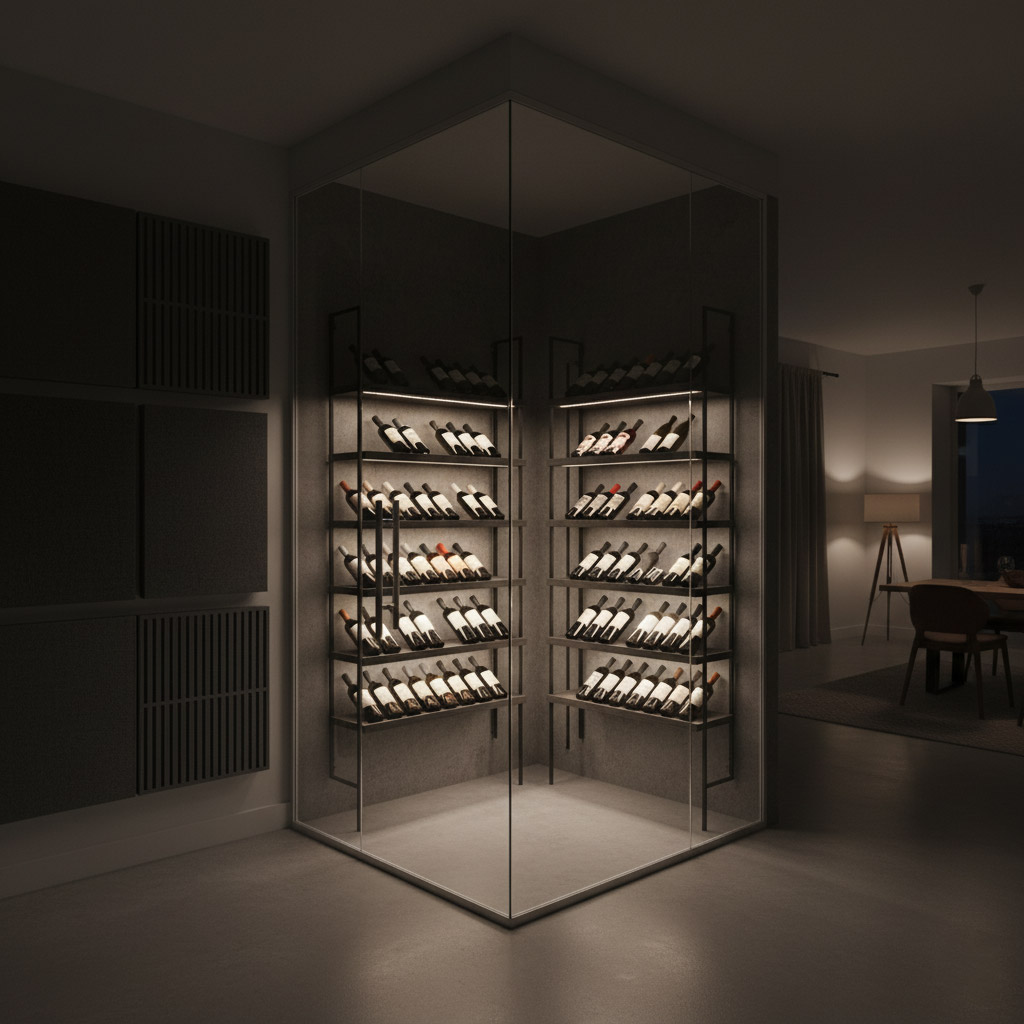
Light the labels, not the room. Use high-CRI LED strips under shelves and small spots aimed at display zones. Keep dimmers low when the space is idle to limit heat and UV.
Glass selection shapes both performance and style. Framed systems with full gaskets seal well and match traditional wood racks. Minimal metal with clear glazing suits a modern wine room. If the cellar sits near living areas, consider ducted or split cooling to locate noise away from the tasting zone.
8. Smart Storage, Security, and Tech
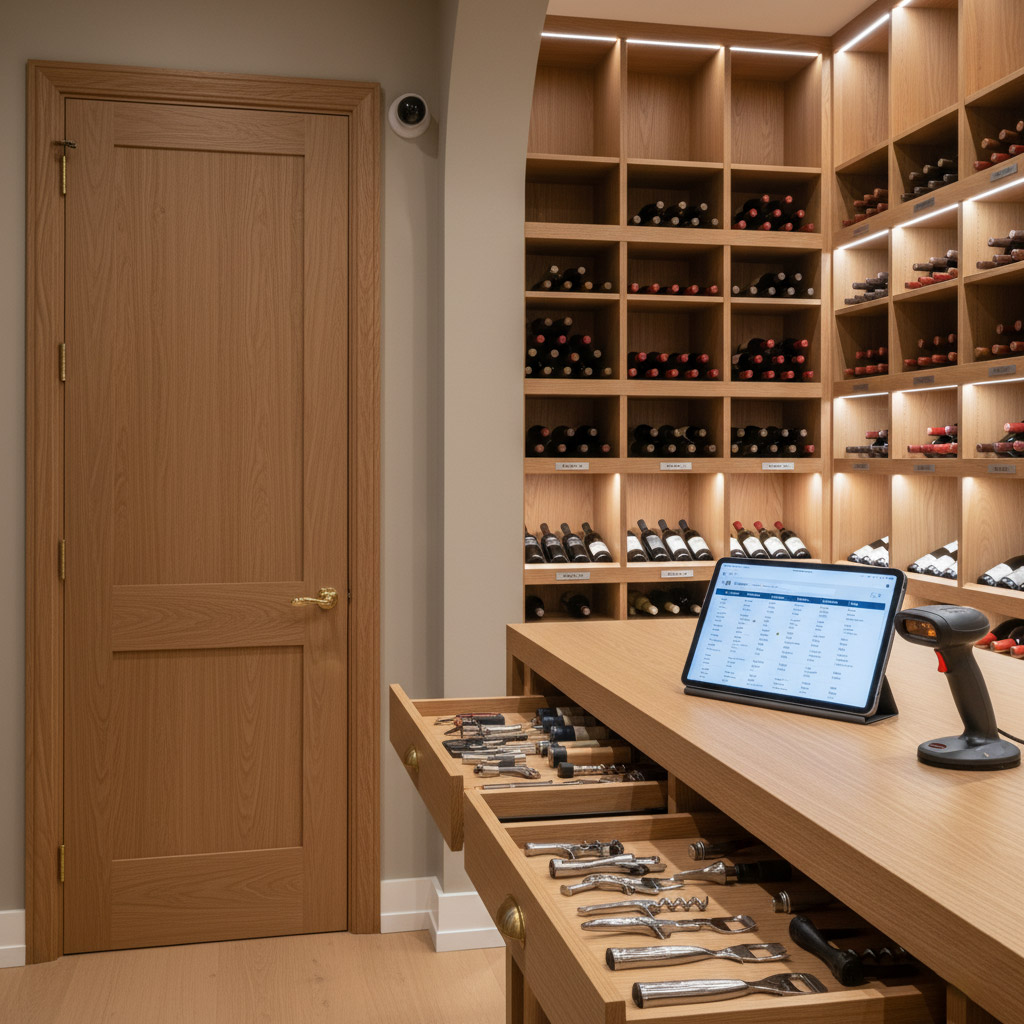
Keep pulls, openers, and stoppers in shallow drawers near the serving counter. A wine cabinet with pullouts holds decanters and glassware. Inventory apps and simple QR labels help track drink windows and regions without guesswork.
Secure the entry with keyed or coded hardware. Collectors often add a discreet camera at the door and lockable cases for rare bottles. Place sensors at eye level and near the warmest spot so alerts catch any drift before it matters.
9. Budget, Timeline, and Build Process of Wine Cellars in Medina
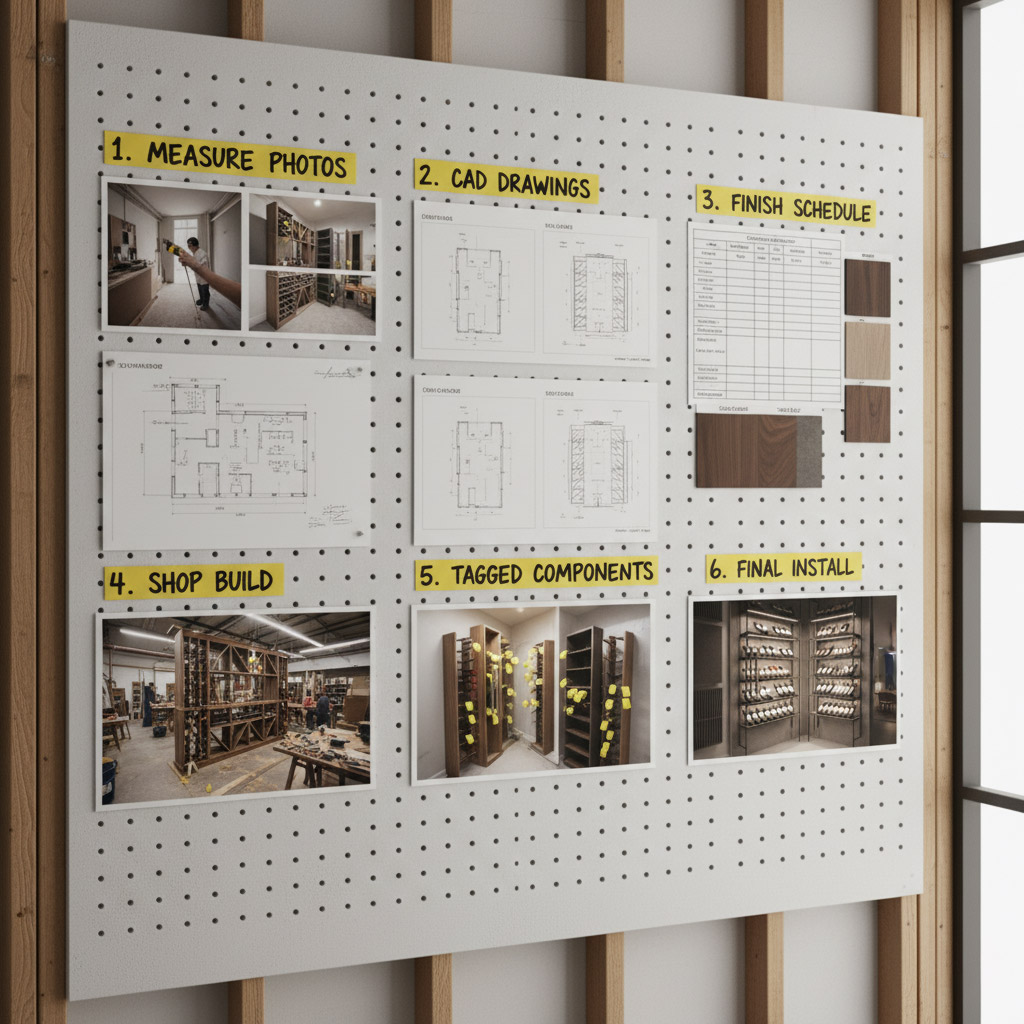
Cost drivers include size, glass area, racking type, and cooling choice. Through-the-wall units are the entry tier. Ducted or split systems cost more but run quieter and keep temperatures more even. Complex millwork, stain matching, and hand finishing add visible craft.
Our process is simple. We measure, design, and present drawings with a finish schedule. After approvals, we build and finish in our local shop, then install with our crew. When you also need a home bar, nearby built-ins, or storage in a mudroom or laundry, the same team carries profiles and finishes across spaces for a unified look.
10. Pair Your Wine Cellar With Related Spaces
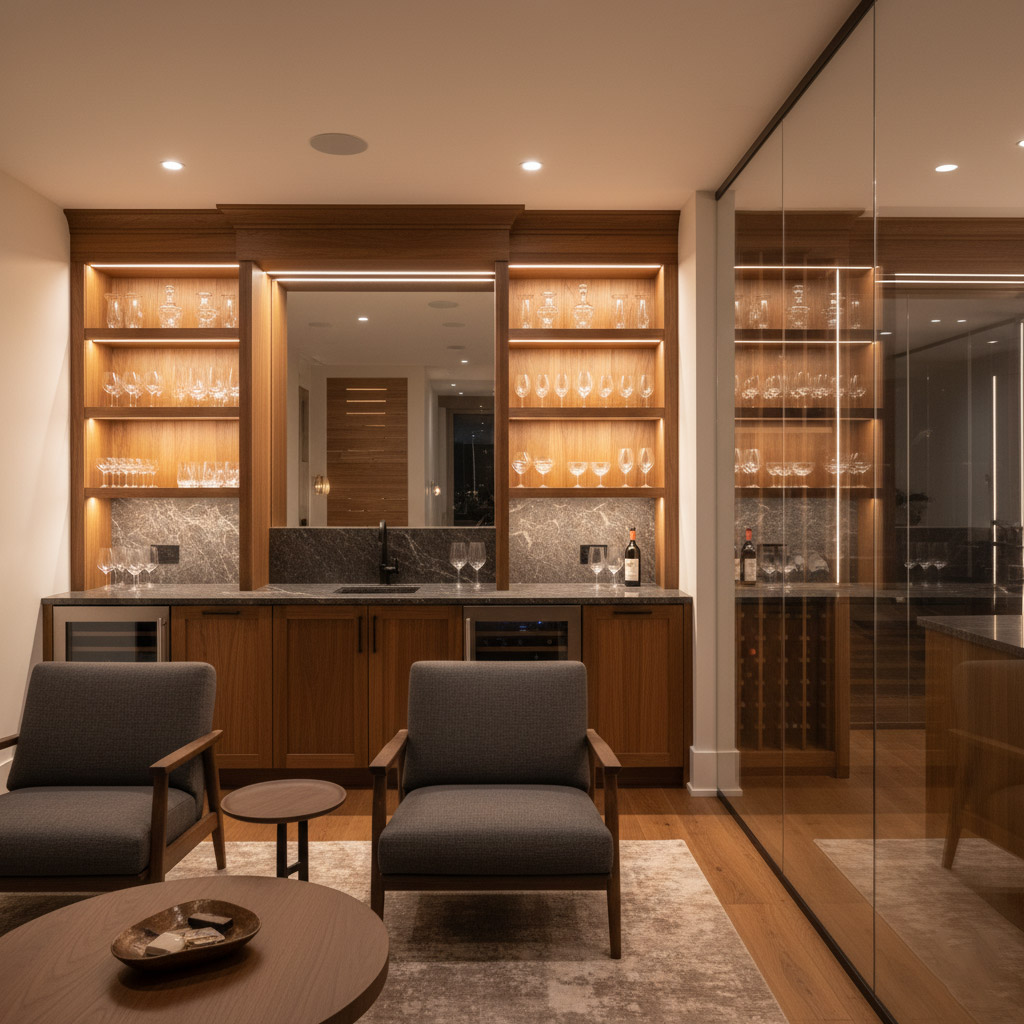
A home bar completes the experience. Plan seating, undercounter refrigeration, display shelves, and task lighting that ties back to the cellar. Keep surfaces open for service with pullouts for tools and linens.
Extend the design with built-ins or a small lounge. Bench storage hides extra glassware and tasting notebooks. If the wine cellar sits near a mudroom or lower-level landing, matching doors and stains carry the theme across the floor. This is where our broader services help. We produce kitchens, offices, closets, laundry, and trim details with the same eye for proportion and finish.
Quick Comparison: Common Racking Materials
| Material | Look & Use | Pros | Watch-outs | Best Fit |
| Furniture-grade wood | Warm, classic, versatile | High capacity, repairable, easy to match | Needs moisture-resistant finish | Traditional wine cellar, mixed bottles |
| Metal label-forward | Clean, open display | Labels visible, pairs with glass | Shows dust, needs precise layout | Modern wine room, feature walls |
| Wood + metal mix | Balanced, current | Texture and contrast | More decisions on finishes | Transitional homes, open living areas |
Tip: approve stain and sheen under the exact cellar lighting.
Wine Cellar Care and Maintenance Basics
- Hold roughly 55–57°F and about 60 percent RH. Log readings monthly.
- Inspect door gaskets and sweeps each season.
- Keep LED dimmers low when you are not in the room.
- Wipe spills fast with non-abrasive cleaners approved for your finish.
- Service filters and check condensate paths on schedule.
FAQs
How big should my home wine cellar be?
Size follows your bottle count and growth plan. We design for current inventory plus several years of acquisitions so racks never feel crammed. During planning, we also set zones for large formats and cases, which affect aisle widths and cooling load.
Do I need a dedicated cooling system if I am putting the wine cellar in the basement?
Yes. Basements help buffer temperature swings, but do not maintain cellar conditions on their own. A dedicated cooling system with proper insulation and a continuous vapor barrier keeps the room stable all year.
What humidity range for my wine cellar should I target?
Keep relative humidity roughly 50–70 percent. Lower levels can dry corks and invite oxidation. High levels risk mold and label damage. A hygrometer plus sealed construction keeps you in the safe zone.
Final Words – Ready To Plan Your Luxury Wine Cellar in Medina?
A cellar should do three things well. It should protect your wine, present it clearly, and serve it the way you host.
When those three line up, you will reach for a bottle with confidence and enjoy the room every time you open the door.
If you would like help turning your collection into a purpose-built space, Top Grain Interiors is here to design, build, finish, and install your custom wine cellar, home bar, and the supporting cabinetry that ties it all together.